Software
Houzz Logo Print
pitangadiego

Propagation pix

19 years ago
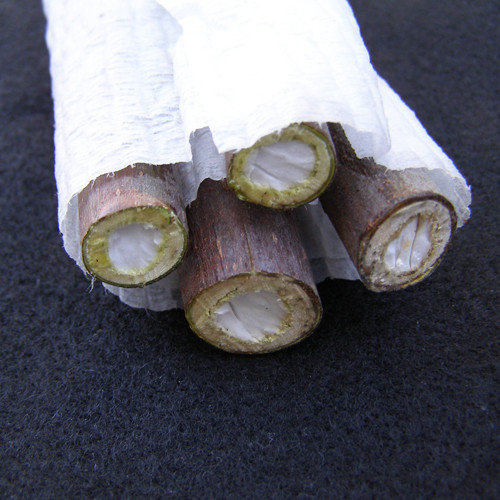
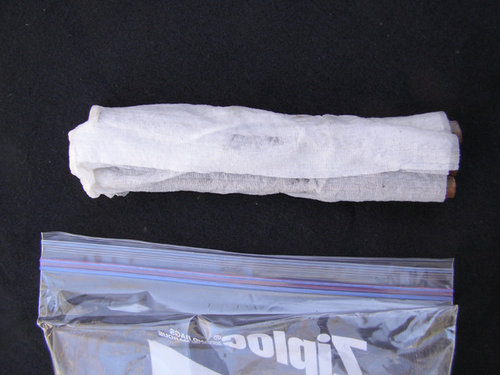
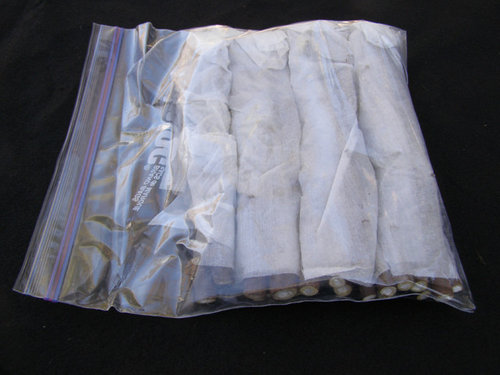
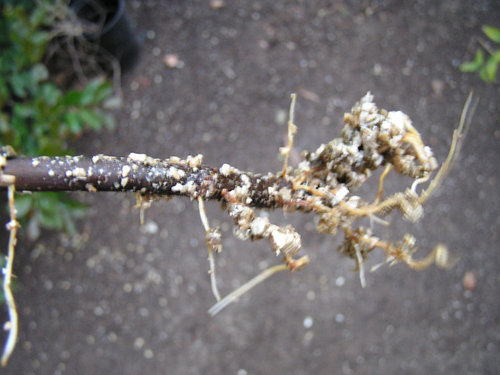
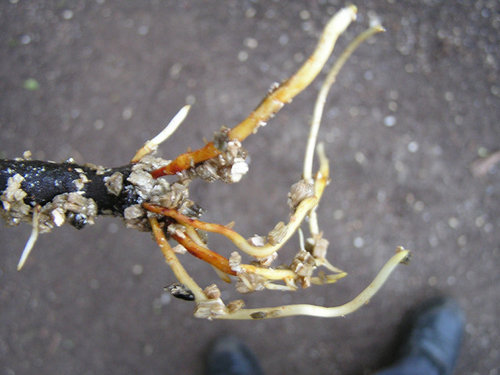
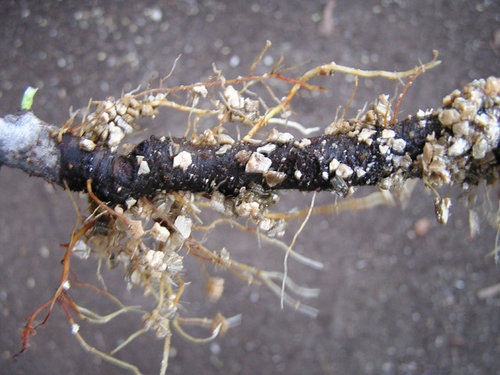
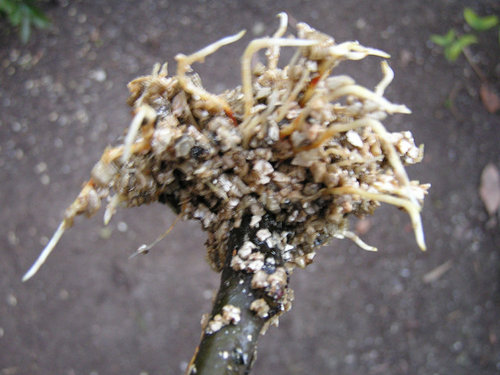
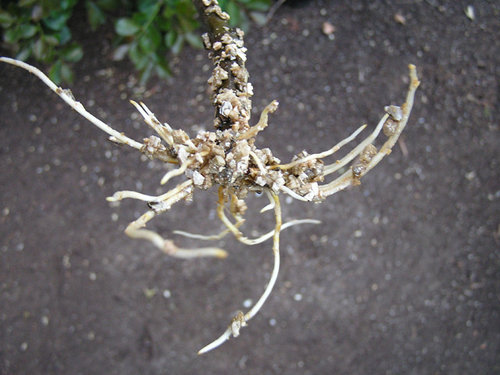
Preparing cuttings, wrapped in slightly damp newspaper, and placed in a plastic bag, in a warm place. I can't lay my hands on the pix of the cuttings when the root initials have formed, but they are little white bumps, and if left a little longer, they start elongating into roots.


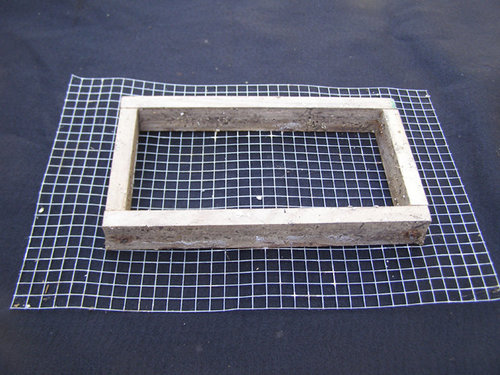
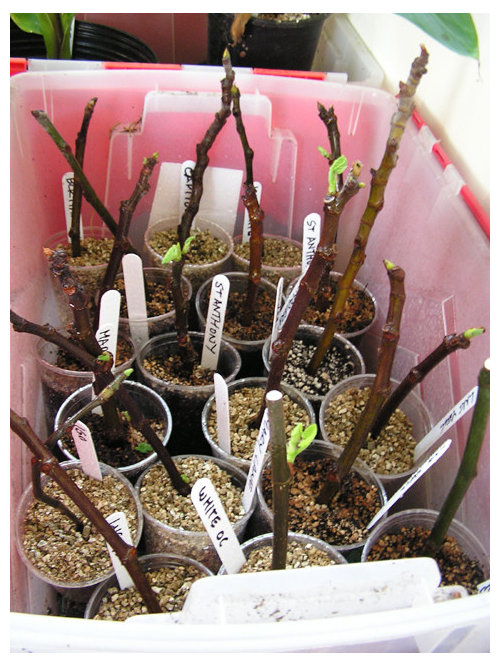
Screen (on 1x2 strips) to keep cups out of standing water (opside down).


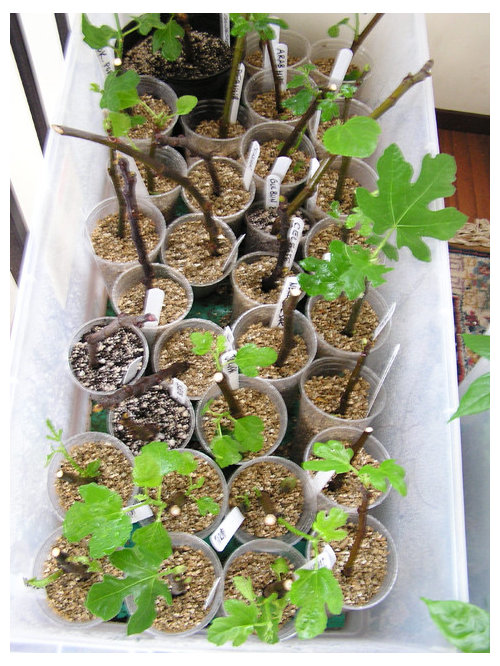
Clear plastic cups on top of the screen, in a storage box. I am using 100% vermiculite now. These pix were from the transition year, when I did some in vermiculite and some in potting soil, and almost all the cuttings in the soil failed.


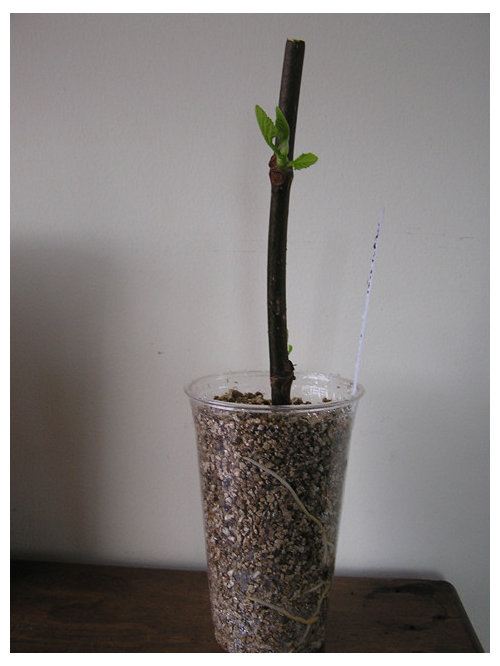
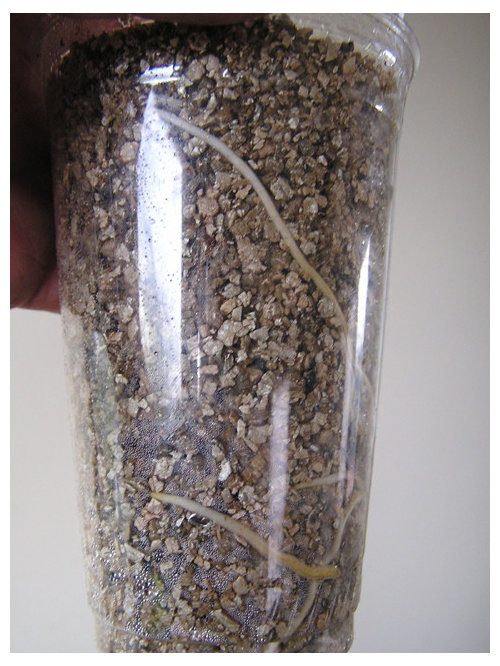
First roots are visible through the cup.


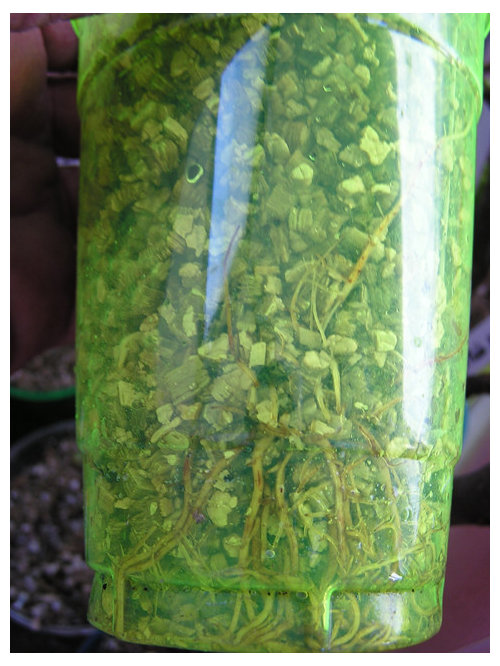
Rooted cutting removed from cups and ready for repotting into 1 gallon pot.


Comments (31)

  • 19 years ago

    Nice pictorial, thanks!.....Elder

  • 19 years ago

    Thanks for the picture show. It was great. Thanks

    Vern

  • 19 years ago

    Jon, Do you place a hole in the bottom of plastic cups as well?
    Do the rooted cuttings go through a shock when you pot them up at all?
    What type of soil do you pot them in afterward.

  • 19 years ago

    Also, you transfer from bag to cups when you see bumps?
    You are putting an amount of water into the bottom of the box?
    Watering how often when in box?

    Thanks for the info!

    Gary

  • 19 years ago

    Yes, you ABSOLUTELY must have holes in the bottom of the cups. The Vermiculite, if allowed to be a little on the dry side (just before repotting, only), will fall right out with the rooted cutting when you tip it upside down, and shake free from the roots, with little or no damage. I see no signs of shock on transplant, if you are gentle. I use a perlite compost mix for potting them up, with about 50%-70% perlite.

    The only water in the bottom of the box is what flows out of the cups when the cups are watered. That is sufficient to add humidity to the environment. That is why I use the screen, so that the cups to not stand in the water, and wick up excess moisture. With the clear cups, and vermiculite in a warm environment, you will see condensation on the inside of the cup when the moisture level is sufficient. When the condensation is gone, it is too dry. Generally I water about one a week, and a gallon of water will do 40-50 cups.

  • 19 years ago

    Pit,
    ONE question,

    I know that there is a questionable dispute as to
    what to use as the 'original' rooting medium (PERLITE,
    VERMICULITE, bad DIRTY, etc, or any combination...)

    You chose perlite (the white stuff), no problem so far,
    a very well draining medium, and I tend to agree.

    My concern is 'the' disturbing of the new very fragile
    fig roots.

    Why not just up-pot the new figling from a ~12 Oz cup
    to a 'bigger' pot without 'BARE-ROOTing' it? That may
    do a less 'root messing around' thing. And ANY small
    scale initial rooting material (bulk) should not make
    any significant difference to 'the same' future
    established fig tree in it's future environment...

    George (NJ).

  • 19 years ago

    First off I am using VERMICULITE, the tan stuff.

    Second, when I have used other rooting media (such as a perlite/compost mix), excess water has been an issue. But more importantly, organic mixes tend to stick to the cup, and there is far more problem with root damage in moving up to the next size pot with that mix. Out of 300 cuttings rooted in vermiculite last season I only lost about 1-2% after they were potted up to one gallon size, for any and all reasons, so "bare rooting" was not an issue, if your are gentle. Also if you let the roots develop more, in the vermicutlie, they become less fragile and less likely to be damaged as they get bigger/longer/thicker/older/ etc. I have had cuttings live, rooted and leafed out, in vermiculite only, for a year - so there is no hurry to repot them at the first sign of roots.

  • 19 years ago

    This is a frequent an interesting debate, it returns each year ;-)

    I have tried a lot of times different perlite-vermiculite and perlite-peat mixes, always decreasing vermiculite proportion, in my opinion vermiculite tends to be too wet and the cuttings rot. At last, I use straight perlite, it drains quickly but has the best balance between water and air. In any case, it is very important the rooting environment, I root my cuttings in a mini-greenhouse with high moist air, on the contrary, Pitangadiego root in open recipients with drier air.

    Once the cuttings have rooted, I transplant them to pots (0,5 gallon pots) with coconut fiber and perlite (1+1) and I fertilize in each irrigation with 200 ppm N (See the below link to understand fertilizing). The pots are outdoors in semi shadow.

    I have to clarify that the coconut and perlite mix is only a provisional mix. Due to its aerated and loosing structure it favors the rooting process, but has a poor cation exchange and consequently it is necessary to fertilize frequently.

    Once the fig grows vigorously and the roots peep out in abundance over the lateral pot soil surfaces, it is best to repot in a bigger pot with standard soil mixes or plant it in the garden.

    Here is a link that might be useful: Fertilizing

  • 19 years ago

    Yes, the vermiculite holds water, which is its' benefit in this situation. The key is to use the coarser vermiculite, or to sift out the finer particles and flakes. If it is to fine, it will pack down and become to damp (much like oatmeal), and exclude the air. Your high humidity situation probably allows the use of the perlite, which holds very little water, but you also have little transpiration loss, which compensates.

  • 19 years ago

    can you do this with other plants ie blueberry?

  • 19 years ago

    Some other plants can be propagated from cuttings, but I can't speak for any of them.

  • 19 years ago

    May I ask, what time of the year do you take the cuttings from the fig tree?

    Nikitas

  • 19 years ago

    Yes, you may ask. Late January.

  • 19 years ago

    Here's a pic of some of my babies looking all grown up in their 1-gallon pots. I started all my fig cuttings this year (54 in all) by the method Jon(?) pitangadiego posted here. I have a couple (St Jean & Excell) that are taking their sweet time but so far, all are doing great!

    I am a total beginner so if I can do it, anyone can! I am having withdrawels though because the top of my refridgerator is now bare. ;O(

    Till next time- fig on friends!
    Christy


  • 19 years ago

    Loooooooooooooking Goooooooooooooood!

  • 19 years ago

    Very nice Christy!

    Im hoping to transfer over 2-3 rooted cuttings myself this weekend into 1 gal containers. I find myself watching my bagged cuttings way too often, this stuff gets addictive!

    I have a bunch of leftover cuttings from last fall of my unknown. I didnt have the heart to throw them out.....if anyones interested dont hesitate to email me.

  • 18 years ago

    Hi pitangadiego
    Been trying to start fig cuttings last 2 yrs. in potting soil or garden/potting soil mix. Good results with Negronne, fair luck with Italian Honey fig,, but bad luck with Brown Turkey cuttings. Just found your propagation pix from last year which are great! They have to be very helpful! I'm near Portland OR and just pruned my figs last week with lot's of cuttings in my frig. I expect to get more this Satruday at the Home Orchard Society exchange. I plan to try your method next week but have a few questions for you or anyone else who cares to comment:

    Do you go from the plastic bag to the plastic cups when the "white bumps" appear or when they have formed actual roots?

    The pix look like paper towels, the text says newspaper. I assume either will work?

    Do you need to dampen paper again after initial time?

    My house temp ranges from 72 in daytime to 66 at night. Will the bag method work in this range?

    Thanks all for your help

    Joe ba-ja@juno.com

  • 18 years ago

    I try and wait for roots, but some don't seem to progress beyond the bumps without movng to some sort of rooting medium.

    Paper is paper. Sometimes you need to remoisten the paper, but not generally. Use a pray bottle.

    72/66 works fine. My desk is usually around 68, and they do fine there.

  • 18 years ago

    pitangadiego:

    Thanks for the comments, I'm on my way!
    Joe

  • 18 years ago

    pitangadiego... hello how long does it usualy take for a cutting to root? once they root and you transplant them into the cups do they require alot of sun? thanks

  • 18 years ago

    what is vermiculite and where can i get it i live in r.i

  • 18 years ago

    hey zane101. its kinda a soil subsitute. It can be purchased pretty much everywhere. I use perilite and I bought it at Lowes.

  • 18 years ago

    hey rkc80 do you use just all perlite

  • 18 years ago

    Sun only somes after they settle into a 1 gallon pot. They root in 1 week to 6-8 weeks, depending on variety, conditions, etc.

  • 18 years ago

    Hi Zane . Check out this link, its great. It will tell you everything you need to know and really simplifies rooting. Instead of wraping the cuttings in paper I use just perilite.What kind of fig trees are you trying to root?
    http://figs4fun.com/basics.html

  • 18 years ago

    rkc80 so you can use 100 percent perilite to root cuttings??? thanks for that link to

  • 18 years ago

    yes you can for rooting.

  • 18 years ago

    when you put the cuttings in that big box do you close the top

  • 18 years ago

    Yes, but you need to have them open part of the time, to get fresh air and reduce mold issues.

  • 18 years ago

    do the cuttings need light ??????thank you
    zane

  • 18 years ago

    hey Zane, i dont think that cuttings need light. when the root and you transplant them then they need light

Sponsored
Bella Casa LLC
Average rating: 5 out of 5 stars17 Reviews
The Leading Interior Design Studio in Franklin County