Software
Houzz Logo Print
pitangadiego

Rooting in a bag 5

19 years ago
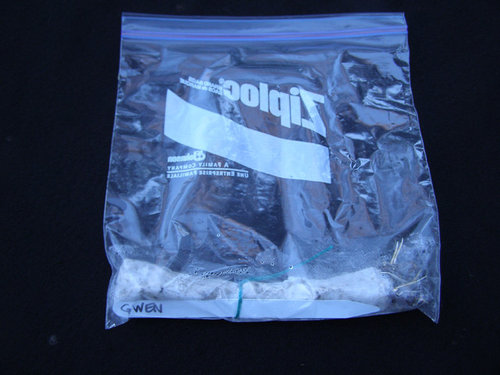
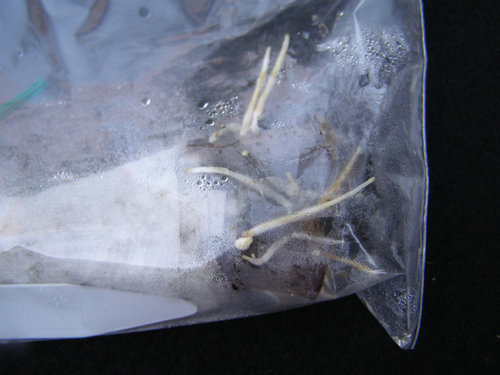
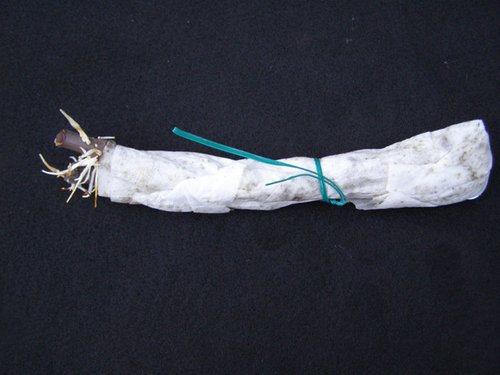
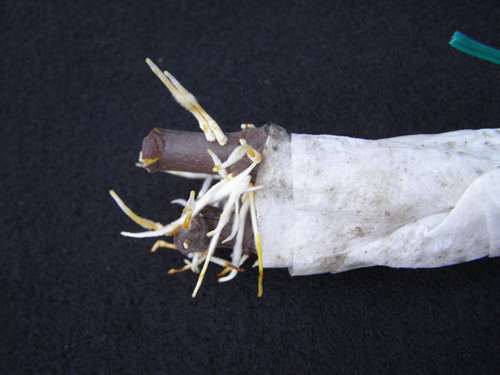
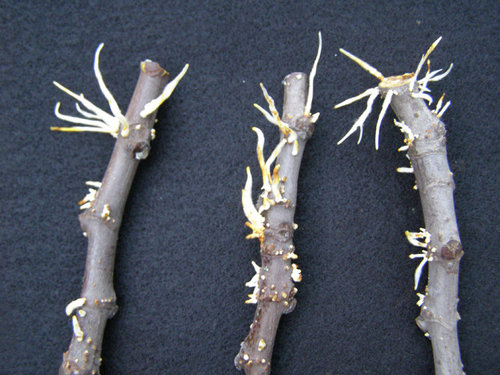
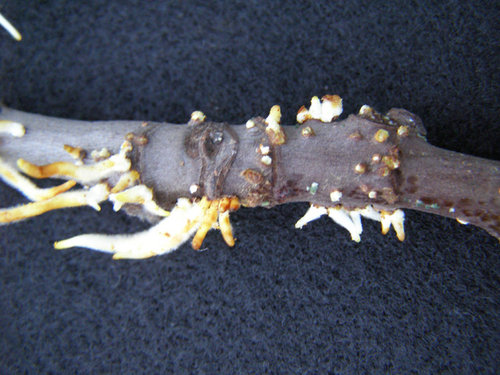
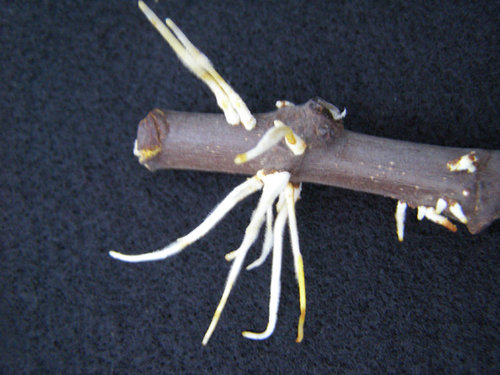
These cuttings were from a friends neighbor's tree. Hers were above her fridge and took 3 weeks. These were on my desk, and took a week longer. Don't know the variety, so using Gwen, her daughters name.


Comments (19)

  • 19 years ago
    last modified: 11 years ago

    And it appears the roots are forming in the same area where the "initials" are concentrated.
    Boy, it must be the San Diego air. Those are roots to kill for!! Just to put things into perspective - I have tried four bags of cuttings, and after five weeks there were plenty of "initials", but NO roots. In fact the intitials were starting to turn brown, so I transferred the cuttings to potting soil and within a week all four varieties had formed roots. I have no explanation, no theories.
    I'm sitting here huffin' and puffin' from pulling my granddaughter on her sled in the new fallen snow. Gee, I had planned to put some of my little potted figs outside in the sun this week, guess I'll have to wait a while longer....Elder

  • 19 years ago
    last modified: 11 years ago

    Hi Elder:it happened exactly the same with my try at rooting in the bag.No success.
    My opinion is that it is the climate,that somehow make it possible in San Diego.Just my two cents.

  • 19 years ago
    last modified: 11 years ago

    I have found that initials are likely to form just from the moisture, but the roots are stimulated by the heat. These sat on my desk at 68 deg for three weeks, and had lots of initials. When I moved them upstairs (maybe 75 deg?), in three days initials turned into all those roots.

  • 19 years ago
    last modified: 11 years ago

    After seeing the pictures posted on this site, I gave rooting in plastic bags a try. First roots sprouted in 10 days in bags sitting on top of my desk (65-68 degrees). Best roots were from 1 year old wood at the base of cuttings. It's now 2 1/2 weeks for some cuttings with roots 1 inch long. When should these be potted?

  • 19 years ago
    last modified: 11 years ago

    Scott. The roots in the pix were about 1" long. At 1" I would pot them. I m still moving them, at that stage, to the clear cups with vermiculite, and when they have good roots in that medium, then moving them to 1 gallon with high perlite potting mix.

  • 19 years ago
    last modified: 11 years ago

    Rooting in a bag didn't work for me, either. Out of curiosity, why not go straight into your one gallon pot?

    ~james

  • 19 years ago
    last modified: 11 years ago

    James,

    There are 101 ways to root a fig, and I have used several of them with varying degrees of success. I learned the bag technique from a fellow who has been doing this for 50 years, so I thought I ought to give a listen to what he had to say. This is my first season doing it, but it has worked remarkably well. And this forum is about sharing, and not everyone has a neighbor or friend with 50 years experience.

    What I have learned it that the biggest key to success is moisture control. The bag "thing" and the vermiculite in the clear cups gives me good moisture control, and more importantly, visual data on what is actually happening. Those are huge pluses in my mind. I know from more than one experience, that if you plant 5 cuttings from the same tree, in the same pot, some will grow roots, some will grow leaves, and some will grow some of each. But you don't know what is happening under the soil line in that black nursery pot. Leaves do not mean roots. When I put a cutting in a bag, and see roots, and then move it to the clear cup, and see lots of roots, and then pot it up, I know going in that I have a good, healthy, viable plant.

    If someone else does it differently, and has good success, I'm all for it. But early on I didn't have a lot of success, and was taught some better ways that improved my success, and my own experiences have taught me some of the critical factors, and now I can experiment with other ideas.

    Not to toot my own horn, but I have people that think I walk on water (so to speak) because I was able to coach them through rooting their grandfather's heirloom figs via e-mail. They had success, and they are ecstatic. Could they have done it a different way? Absolutely, but at least I could confidently say to them, this will work if you are attentive and careful. That's part of what this Forum is about, and it is part of what California Rare Fruit Growers is about. Does that make me an expert? Absolutely not!! But after starting 200 varieties of figs from cuttings, and working on the next 100, if someone can benefit from what I have learned, I am all for that, too.

    If something didn't work for you, think through why not, and make adjustments. Try again. Try a different approach, and when you have success, share it for the benefit of all of us.

    Again, not to toot my own horn, but I venture that I have added more fig pictures to the public square in the last 2 yeas, than have been added in a long, long time. I wish they had been available, so I could have seen what all these figs looked like. But they didn't exist, and, so, someone had to do it. And along the way I have eaten a lot of great figs, made a lot of new friends across the world (literally), and learned a ton of new things. Was it worth it? Absolutely, and hopefuly this year I can add pictures for another 100 varieties. Hopefully many of the UC numbered figs will finally have fruit, and we'll all know what they look like, and whether we should all order 200-43 next year because it is an unsung, awesomely good fig.

    OK, I'm off my horse now.

  • 19 years ago
    last modified: 11 years ago

    Nobody knows all there is to know - we're all learning. And your experiences are helping all of us tremendously. Experts don't know it all - they just know a lot - and I think you qualify!
    Thanks for sharing your knowledge and double thanks for Figs 4 Fun. It is an amazing resource.

  • 19 years ago
    last modified: 11 years ago

    Jon,

    My question was one of efficiency rather than a question of the entire process. It stemmed from the assumption that you only used the clear cups/vermiculite system for rooting. If this was the case, why go through this intermediary step when the cuttings are already rooted.

    Since your interest is visibility as to what is happening below the soil level, could they not go directly into a clear but larger container... say one of the Rubbermaid clear, 1.1-1.3 gallon containers. This would not only save you the time associated with one transplanting, but would also save the tree from going through the shock.

    The statement about the process not working for me was just that. I am guessing it is an issue of heat in Houston. Heck, past April I can't get tap water cooler than 75 degrees until November. Finding a (consistently) cool spot inside or out for the bag to rest in is difficult, at best. I will try it again in NJ once it warms up a bit.

    ~james

  • 19 years ago
    last modified: 11 years ago

    James, Going to the small cups first allows me to see "sufficient" root development before transplanting to the one gallon. Then when they do go to the one gallon, I know for sure that any problems are not with lack of roots. It might take some time for roots to develop enough to see them in a one gallon pot, even if clear. T he lit tle cups are cheap, and so are the nursery pots (all things considered), so didn't see a need to spend money on larger clear containers. And if I need them, my neighbor buys water in one gallo n clear bottles by the truck load (it seems), so I occassionally use them. The one liter water bottles make nice deep pots, though.

    Finally, one extra transplanting is not a big deal for me. When rooting a one or two of a kind curtting, 99% success is more important than a little bit more labor. In a commercial setting, with mass production, it would obviously be an issue.

    Shock has not been a big issue. The vermiculite comes out of the cups real easy, leaving the roots undamaged (see previous "rooting in a bag" posts and pix), and I can be pretty gentle when repotting them.

  • 19 years ago
    last modified: 11 years ago

    Whoa Nellie! Jon, No one had any intention of belittling your methods, your expertise and knowledge, or your contribution. I hope everyone else has the same success using your bag method as you have. Yet, despite the lattitude which the fig tree gives us in our attempts to propagate it, no one system works 100% for everyone all of the time. I hope that reporting my personal failure with your system has not been misconstrued as a personal attack.
    I would also like to mention that I find the roots on cuttings to be especially brittle and subject to breaking off when these roots are two inches or less in length. Last night I transferred twelve rooted cuttings from their initial growing medium to growing out pots, and careful as I thought I was, I managed to break off all the roots on two cuttings. For that reason I urge caution and gentleness when repotting at such an early stage, and would personally not use the intermediate transfer.
    Your pix have been spectacular, and because of them I am trying my second batch of "rooting in a bag".....Elder

  • 19 years ago
    last modified: 11 years ago

    Elder, didn't see it as personal. My point was that others have had success, the fellow I learned it from has been doing it for years, and I am having good success, so I also don't want people to give up too easily. I had always had some success with whatever method I used, but the vermiculite approach I used last year produced about 75% success, and this approach seems to be working even better.

    I think one of the positives of the bag method is that it allows roots to form, while maintaining moisture in the cuttings, which allows better moisture uptake when potted up. Otherwise (absent a greenhouse type environment) the cutting is drying out during the time it takes to grow roots.

    Now, if you need some "San Diego" air to help the process at your end of the country, if that is true magic ingredient, maybe we can work something out.

  • 19 years ago
    last modified: 11 years ago

    Perhaps those trying out the "bag" method who live in colder regions (like myself) ought to try it when our own weather more closely resembles the temperatures and humidity levels that Jon has at this time of the year.

    I've found that the sideways method in pure sand works for me when the natural warmth and humidity are higher than I can easily simulate in the house in winter (forced air heating), while in the spring it works well for me. (in Winter I just rot the cuttings). This time of year plastic cups with a mix of perlite and vermiculite in blue transparent cups (with holes of course) on a heat pad works for me.

    At least in previous years that method has proven best for me at this time of year.

    ~Chills

    btw... I just returned from a trip to my parents house in Fl (which I will likely inherit one day) and while there I planted 2 figs I grew from cuttings. One of the figs had lots of (thin) roots, the other had disappointing roots after a year in a pot.

  • 19 years ago
    last modified: 11 years ago

    Chills, Unfortunately, not every twig has the same desire grow and thrive - some are just weak specimens - and sometimes they kind of string us along, tugging at our hopes. Hopefully your straggler will get with the program in it's new home.

  • 19 years ago
    last modified: 11 years ago

    Unfortunately my first attempt at the bag method didnt work either but I'd like to give it another try. One thing I noticed when I did it was how the paper towel seemed to dry out in just a few days so I would spray the inside a lil just to get it wet again......to those who managed to get this to work, did you experience this at all?

  • 19 years ago
    last modified: 11 years ago

    Fortsi,

    When I wrapped the roots of trees for storage in the fridge, the paper towel dried out as well (even though it was wrapped again in foil.) Two things might help. One, before you put your cuttings into the baggie, put some water into the baggie then shake it out so there are just a few small droplets on the inside. Secondly, you could put your baggie into a larger baggie, and have a bit of water in the larger one.

    I would think that opening the bag to mist the cuttings is not going to make much of a difference. The main purpose of the bag is for moisture control... however you accomplish it.

    It occurs to me (and those of you in the know can shoot holes in this one) that one in a more arid environment could combine a couple of methods that Jon has shown. If you wrapped your cuttings in paper towel as has been suggested, but instead of putting in a baggie, put in a plastic storage container (rubbermaid, tupperware, etc.) which looks ideal for storing spaghetti. In the bottom of the storage bin, you could have a small amount of standing water. Then build a mesh "shelf" for the cuttings to rest on above the water level. It seems to me that if the temperature remained fairly constant outside, the moisture level would remain fairly constant inside. You may be able to add a small amount of bleach in the water underneath the cuttings to hamper mold growth. Any thoughts?

    ~james

  • 19 years ago
    last modified: 11 years ago

    Its funny you mention plastic container cuz when I did the bagging method, I tossed one cutting in an empty 2 liter bottle. Still failed but mind you, cuz I thought I originally read that the temps need to stay above 70* I kept it nearby a radiator so Im sure that caused the towel to dry out faster. Now that Im seeing success in the 67-68* range Im gonna give it another go but keep it in my office this time.

  • 19 years ago
    last modified: 11 years ago

    fortisi,
    I suspect that you are not sealing the bag good enough.
    A complete seal should allow zero moisture loss...

  • 19 years ago
    last modified: 11 years ago

    Fortisi. use a zipper bag or Ziplock bag. It shouldn't loose that much moisture. Adding moisture when necessary if fine. The point is to have high humidity without being too "soaking" wet. The goal is not to keep the scion wet, but to keep the humidity high. If you have a sealed bag, the moisture should last almost indefinitely - certianly the 3-6 weeks it takes to root.

    You want to place the bag in warm air - not next to a heat source. Next to a heat source will cause cooking. You want consistent warm air, just

Sponsored
CHC & Family Developments
Average rating: 5 out of 5 stars6 Reviews
Industry Leading General Contractors in Franklin County, Ohio