Software
Houzz Logo Print
pnbrown

low-input

15 years ago
My goal for some time has been how to produce food wherever one is without importing OM and fertilizers, or at least as little as possible. I think it is true that with correct procedures one can eliminate those largely or entirely, even in the severely poor sand that is most of florida. Lately I have become aware that in many cases minerals must be imported. A big question is how to do that in the simplest manner with the least expenditure and to keep the minerals in the cycle once gained.

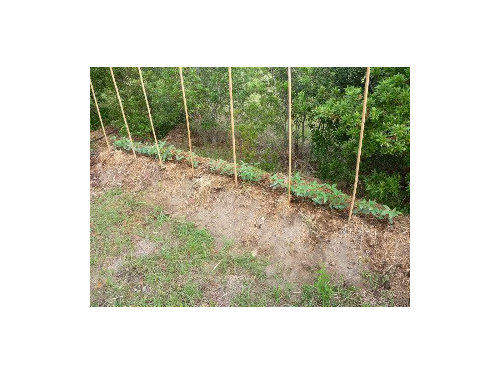
As a small example, and very far from producing a successful crop, is a row of climbing cowpeas that I planted about 3 weeks ago in a heap of what passes for topsoil around here (lake county). I piled it right on top of the bahia sod. They are doing very well so far, in large part due to good shelter from wind, I suspect. Most places, and especially florida, water is a huge input. I have been watering these about every other day. It's about time to wean them to every 3 or 4 days. Before planting I put a quite small amount of very old mushroom compost in the furrow with a little citrus fertilizer. The peas were well inoculated with the correct species of rhizobia. As they came up I put bark mulch around them (not cypress or cedar!), and then later horse-stall litter ( a free resource around here, and within wheelbarrowing distance). But it could be leaves from the curbside, or free compost/mulch from the local dump. The minerals leaching out of the salt fertilizer and the horse manure are hopefully getting caught by the OM in the root zone, or at least fetching up in the decomposing sod at the bottom, which may also be holding some of the irrigation and rain moisture. Eventually the roots will reach that zone. next time I'll put a dash of fertilizer or straight urine or fresh manure on the sod first to replace the N being consumed in the breakdown of the sod.

Comments (5)

  • 15 years ago

    The main trouble in my area is nematodes. Some cowpeas resist nematodes and some don't I planted some non-resistant ones once and they didn't do very well. I guess you could research what the early Florida settlers grew and the methods they used. Even so, they early settlers didn't have all the exotic diseases and insects we have to deal with.

  • 15 years ago

    I like it Pnbrown, very well thought out.

    I think the best way to deal with nematodes is to take the time and the energy to make your soil so full of organics that the nematodes are killed off. Doing so also allows you to plant in the ground and planting in the ground has so many advantages over containers.

  • 15 years ago

    Amber, IME here in lake county and in palm beach county nemotodes are little or no problem if as BR says one keeps sufficient OM in and on the sand. High diversity in the food plant families is super important also. Regarding the legumes I suspect that establishing the rhizobia is all the more important to maintain high functionality to resist problems such as nematodes and other pests, without having to support them like infants in a bed of pure imported soil.

    It's an interesting point: what did the spanish and anglo pioneers do for food crops in florida? I have not been able to find much specific info regarding actual (rather than supposed) techniques and varieties. For example, despite much searching on the net I could not find one specific reference to a named OP dent corn used in florida. The author Rawlings wrote a lot about food production amongst the Crackers of this region, but how well and closely she observed vs how much just jumping to conclusions I don't know. She makes no mention at all of varieties so I think she was not extremely close to the ground - as it were - in that regard. In the Yearling she has one of the Forester brothers plowing the ground for the Baxter's corn patch. What does this mean, "plowing"? A full turning plow, new england style? There wouldn't be much point to doing that in florida sand, the sand doesn't hold enough moisture to rot out turned-over sod effectively. More likely the horse was drawing some kind of scraping tool to clear off most of the small growth. What were they fertilizing a biggish corn-patch with? Corn is a monster feeder, and cow manure from one milk cow being fed poor local scrub fodder isn't going to do it. The only possibility for people with little means to grow a big corn crop would be to clear the hardwoods from a "hammock" and plant the corn in the drying muck freshly exposed to sun, a devestating and horrific thing to do to the environment. Not to mention any heavy rainstorm would drown the crop.

    I suspect with a few exceptions for the very richest locations the pioneers of florida were importing their meal and flour, trading timber and pelts for it. They were probably able to raise their greens and legumes.

  • 15 years ago

    Update. The extraordinary rainfall has not hurt, for sure.

    The pea-patch is still thriving:

    This is a pepper that had already produced earlier in a small pot; I put in this plastic cage during the cold weather, it has had solutions of manganese, granite dust, mycorrhizae and manure. It's gone totally nuts on the blooming, probably 50 or so:

    A box-store squash plant set next to a un-built house footing. I didn't think it would survive at first. Note the plastic pot with the bottom cut out and set over the plant - this is great trick for protecting small transplants from that never-ending west wind. The footing should be painted black, but even so it helped a lot on the cold nights.

    One of the sweet potato slips that have just gotten established and don't have to be watered daily now. I have a couple hundred coming by mail hopefully within days; establishing those will be even more difficult and time consuming
    due to plant stress from shipping.

    Afternoon shade would appear to be an advantage even this early in the season, this tomato gets full shade from about 3pm on but is growing well:

  • 15 years ago

    Everything looks green and healthy.

Sponsored