Software
Houzz Logo Print
svanessa_gw

Condit Fig leaf ID and fig database

18 years ago

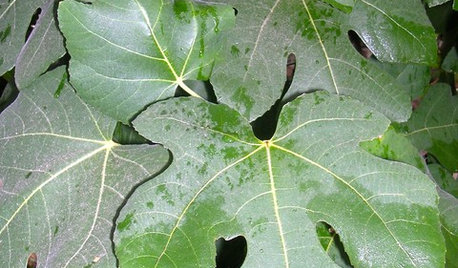
Quick question regarding {{gwi:842171}}, the names given to the leaf type seem to reference a specific tree such as Brunswick or Calimyrna. Is this chart that specific or does it really mean Calimyrna-style or Brunswick-style leaf?

My question relates to some of the unknown figs I have and am trying to ID. The Italian fig and my bosses Portuguese fig have a Brunswick-style leaf. My Grandmother's green fig has a Calimyrna-style leaf but is not a Calimyrna looking at the fruits (closed eye).

I too am playing with a database of figs using MS Access. I planned on using these leaf shapes as part of the ID criteria.

I took a college class last year on putting a database on a website using ASP (vs PHP). What a PITA but it would be a valuable tool. I was going to set it up so easy choices are made, narrowing down the possibilities starting with color of fruit, then leaf shape using a drop-down box of Condit's choices, moving on to other charistics of the plant until one reached its final conclusion with all the caviats of "This is possibly an 'X' fig". But I work full time and have 2 side jobs so I haven't got too far with this as yet. :-)

Sue

Comments (3)

  • 18 years ago

    You can use ACCESS with PHP. Usually PHP is easier and faster than ASP.
    In my opinion, the leaf shape is not a good filter to identify the fig variety. In the same fig tree, you can find a different shape leaves. After a heavy pruning or when the fig is young, the shape leaves are very different.

    In Turkey, the main fig producer are using this method developped by Uygun Aksoy :
    The text below is written in Catalan,

    lÂIPGRI en publicà la versió defi nitiva, que diferia poc de lÂesborrany original: hi afegia alguns carà cters que consideram de poc valor descriptiu (mides del borró, arrels adventícies, color de la gota de lÂull, adhesió dÂesquames ostiolars, carà cters de les lenticel·les i sensibilitats a factors abiòtics) i dÂaltres que ja ens avançà rem a afegir a la nostra proposta de
    descriptor (color dÂesquames ostiolars i longitud del peduncle).
    Aquest descriptor ha estat pensat per a Ficus carica i altres espècies del gènere, i dóna molt de protagonisme a les fi gueres del tipus dÂEsmirna, fet comprensible per a una regió que és capdavantera en la producció mundial dÂaquest tipus de fi gues seques. SÂadapta a un format normalitzat del tipus IPGRI;8 això implica una detallada descripció dÂun elevat nombre de característiques de la cultivar, estandaritzat per a feines de recuperació, conservació, divulgació i utilització de germoplasma. Per tant, completa prou els carà cters morfològics (oferint diverses opcions de resposta), nÂamplia els fi siològics i els agronòmics i, fi nalment, nÂintrodueix de químics i reserva un apartat fi nal per als marcadors bioquímics i moleculars.

    This is the automatic translation to English.
    The IPGRI published the final version, which differed little from the original draft: it added some characters that we consider of little descriptive value (sizes of the bud, adventitious roots, color of the drop of the eye, adhesion of ostiol scales, characters of the lenticel·les? and sensitivities to unbiotics factors) and other that already we advanced to add to our proposal of descriptor (color of ostiol scales and length of the stem).
    This descriptor has been thought for Ficus carica and other species of the genre, and it gives a lot of protagonism to the figs the type of Esmirna, understandable fact for a region that is a leader in the world-wide production of these dried figs type. It adapts itself to a normalized format of the type IPGRI;8 this implies a detailed description of a high number of characteristics of the to grow, standards for works of recovery, conservation, divulging and utilization of germoplasm. Therefore, it completes enough the morphological characters (offering several options of answer), it broadens the physiological end and the agronomic ones and, finally purpose, introduces chemists and reserves a final section for the biochemical and molecular scoreboards.

    Bon courage, ...

  • 18 years ago

    Sue, In the interest of additional information you might want to go to a website called ERIC (Educational Resources Information Center) and search out 'plant indentification'. There are already some programs available which are along the lines of the project you are attempting, although they are more general in nature rather than, say, fig specific.

  • 18 years ago

    I apologize for being a pest, try typing in your search blank Dormant Winter Twigs - Using a Dormant Winter Twig Key. This site contains a good explanation of features found on twigs. These can be used to determine species of deciduous trees, there may be something useful for figs. The site also gives several examples of forestry keys in use by some universities.

Sponsored
Haus Studio
Average rating: 4.8 out of 5 stars28 Reviews
Franklin County's Preferred Custom Cabinetry & Design Studio