Software
Houzz Logo Print
mbc82889

vegetable farming

15 years ago

Is April too late to start growing the following plants from seed outside:

Tomatoes

Onions

Green Peppers

Peppers

Squash

Carrots

Watermelon

Cantaloupe

Basil

I also wanted to know what the best way to grow the seeds would be. I do not have seed trays with cells in them. Should I put the seeds directly in the ground where I plan to grow them or do it in a smaller patch with a clear cover to keep rain out then transplant them to the larger growing area?

Comments (23)

  • 15 years ago
    last modified: 11 years ago

    Too late on the tomatoes, onions and squash.

    The peppers can be started now from seed but why? Just go buy some plants but if you are determined to start from seeds give them them a spot where they will get significant afternoon shade or you can hang shade cloth or window screening over the peppers come mid summer which will allow in the ground peppers to produce until frost.

    Lopes and watermelon like the heat so plant them now, today:)

    Basil loves the heat so this is the perfect time for it.

  • 15 years ago
    last modified: 11 years ago

    For future reference, you can bookmark this planting & gardening guide from the University of FL - scroll down for the table of planting dates...

    Here is a link that might be useful: FL veggie gardening guide @ UF/IFAS

  • 15 years ago
    last modified: 11 years ago

    It's a matter of cost. I can't just go out and buy 100 tomato plants @ 2 dollars each. I must use seed in order to make money. on top of that, the hardware stores don't offer the varieties or selection I'm looking for

  • 15 years ago
    last modified: 11 years ago

    MBC,

    Understandable. I don't mean to insult you and don't take it that way but.....take it from a guy who grew up farming......while planting seeds watching plants grow and selling the fruits of your labor sounds good it is difficult in easy farming areas which Florida is not. If you have to ask if it is too late to plant xxxx you probably lack experience and may find raising veggies to sell frustrating. Again not trying to bust your chops, just friendly and free advice.

    One tip for you to save money......if you have to buy plants a lot of places sell 4 packs so 4 plants for $1.69 or whatever. Many times instead of one plant per cell if you look through the flats of containers you will find 4 packs with 2 plants in each cell or 2 plants in 3 of the 4 cells, you get the idea. So for the same $1.69 you get 8 plants. I raise all my own seedlings for transplant in the winter but this year I lost all my Yum peppers. They are popular so they only sell them in single pots not 4 cells but I was still able to find pots with doubles and triples in them. With a bit of care you can separate the doubles and they do just fine.

    I have no clue where you are (you should at least put your zone in) but earlier on Craigs list there was a person selling flats of seedlings very cheap......think it was trays of 250 plants for $20, worth a shot to look though it is getting late now, especially for tomatoes unless you are up in north Florida.

  • 15 years ago
    last modified: 11 years ago

    I agree with bambooo.
    I know that Florida farmers don't grow tomatoes, peppers and most veggies from seeds because it takes time (means money)and great chances of loss. They always buy seedlings from reputable nurseries. Tomato seeds are not that easy to grow without special greenhouse conditions: light and heat in winter and protection from bugs, over-drying and sun in the summer.
    Once I talked to a strawberry plant owner. He said he buys and plants new strawberry plants every year instead of just dividing his own plants because better starting material equal better crops later.

  • 15 years ago
    last modified: 11 years ago

    MBC,
    In Florida we start many of our spring seeds in Jan & Feb. If you are starting seeds now you are at least 2 months late. Most of our tomato plants are at least 2 to 3 feet tall by now with green tomatoes on them. Tomato plants decline in June due to the daily rain, high heat & humidity. Once the night time temperatures stay above 73 degrees tomato plants do not set fruit.
    Some of the veggies you list can only be grown as our winter crops, carrots, onions, and the onions have to be the short day variety here in Florida.
    I am not trying to discourage you, just trying to make you aware of what all us transplants from other states had to learn the hard way. You would think Florida is a great place to grow veggies... nothing could be further from the truth. I have had gardens in many different parts of this great country of ours from east to west and north to south and Florida is the most difficult. It is not impossible... just difficult. We are in the overlapping edges of tropical & temperate zones and inherit the worst of each climate and not to mention the myriads of bugs, critters, and plant diseases that also call Florida their home. The sugar sand dirt here in Central Florida is best used in an hourglass egg timer rather than a garden dirt. You will spend more money amending the soil with composted organics than what you will make by selling your crops unless you find a never ending source of free clean organic material. Florida dirt chews through organic material faster than a bush hog chews through brush.
    After you contend with the above mentioned, you now have to deal with Mother Nature where I believe she once left a lover scorned and comes back at her peak monthly cycles to take revenge on us poor unsuspecting innocents.
    From what you originally posted, I see me as I first set foot on Florida soil (sugar-sand) and had dreams of trying to grow something other than friggin' weeds.

    Lou

  • 15 years ago
    last modified: 11 years ago

    LOL! Lou, as usual, you've nailed it. All the more reason we're going the aquaponics route.
    cora

  • 15 years ago
    last modified: 11 years ago

    I have also done a lot of food production and on balance florida is more difficult than points north, IME. If a person was experienced and patient they might manage to pay their real estate taxes though growing and selling vegetables.

    I have a long way to go on figuring out the best dodges for beating the dry wind at this time of year and high evaporation rate combined with non-wetting sands, but if I didn't have a clue when to start seeds or how I would hope I wasn't depending on my garden for food let alone money.

    If you are just starting out in location and experience then you need to build both for several seasons before thinking of trying to sell anything. If you want to plant things now that will give you some harvest then think legumes (cowpea and lima families), sweet potato, hot peppers, okra, malabar spinach, seminole pumpkin. Direct-seeded crops from BIG seeds are much easier to deal with in difficult circumstances than transplants or tiny seeds. Transplants do next to nothing or die if you are not on it constantly. For example, you can stick a sweet potato tuber in the sand now and the plants will come up and do fine because they have that big tuber to power them through their tender phase. The natural cycle of the plant works very well. The problem is that the natural cycle gives very little yield- the plant is not interested in feeding us only in perpetuating itself. The productive and un-natural cycle is to break off the little plants and plant them out separately, where they will promptly die if not watered twice daily for about ten days in this climate.

    Legumes are outstanding for this climate: big seed to give the seedling a good start, nitrogen fixer if provided with the correct bacteria, drought tolerant, many kinds reduce the prevalance of root-knot nematodes, light frost-killed so makes a very convenient cover crop. I think there is potentially a good market for shell-stage legumes as well because they are not easy to find.

    There is a reason you don't see big veggie farms around most parts of central florida: soil and climate conditions are unprofitable. The st john's river valley is an exception. I wouldn't want to be any where near that groundwater. Nor would I want to be near the commercial mucks of south florida and the polluted groundwater there.

  • 15 years ago
    last modified: 11 years ago

    well I appreciate the input from you all. I didn't think I'd get 2 people to reply. Bamboo, I know it takes experience to grow, but it doesn't take experience to learn. what's the worst that can happen? I lose 1 or 200 bucks on a risky investment? in other words, you're telling me it takes experience to get experienced at something that requires experience? nobody would ever get experienced if the requirement to do so was experience on what you're experiencing. How is somebody supposed to get experienced at something if they can only do it if they have experience? If everybody needed experience before they did something for the first time, nothing would ever get done. The truth of the matter is, we learn from our mistakes. I have done research on growing and this is part of it. at least I'm not going into this blind. I could start out with 2000 plants, and I have the room too, but I'm starting small to see what happens. I think I'll do the tomatoes in august so they can grow during the fall, or I'll just build a greenhouse. and about the sand. I live in kissimmee, florida or aka cow and swamp city. The soil here is about as good as it gets in florida. the sand is not consistent all throughout florida. There are places with good soil. I plan to do some PH and calcium testing on it soon. I just don't see the sense in all of this land going to waste, it's just sitting here rotting away. and buying seeds is a better idea now more than ever because of the risk involved in growing vegetables in florida.

  • 15 years ago
    last modified: 11 years ago

    It sounds like a fun and challenging adventure! Would you be willing to send us some photos of the land and your project? I think I want to enjoy the trip with you. Wish I had all that land to play with. :)

    Tina

  • 15 years ago
    last modified: 11 years ago

    I would be the last person to discourage anybody from utilizing space to grow food. Go for it, definitely. And since you are at least a half-zone warmer than my place in northern Lake county you can probably produce some higher-value crops like bananas, papayas and pineapples as in-ground plantings. Maybe, at least long enough to get a harvest in between mild winters.

    I think that you would be smart to pay attention to what is being told to you here, though. No need to have to make every mistake if some can be avoided by hearsay. Regarding the possibility of "good" land. From what I can see there is very little in florida between high and dry (excessively drained) and low enough to be saturated in the wet season and after heavy rain (poorly drained). I already mentioned some of those. If the land you are talking about is near swamp then I reckon you will have problems with in-ground production. For these reasons, and the typically low fertility that most growers stay out of the ground in entirely artificial soil. That tack is extremely expensive and only pays with high value crops like ornamental plants, which is why you see lots of ornamental grow-out nurseries all over central florida and just about zero truck farms.

    In the early days veggies were a high-value crop and so there were lots of truck farms despite the difficult conditions.

  • 15 years ago
    last modified: 11 years ago

    My grandfather was a year around farmer, farmed the summer crops in Georgia and the fall/winter crops on the edge of the Everglades, and he supported fifteen kids so I guess he did alright. Of course in those days DDT wasn't banned and I wondered why he was so successful and why he and my grandmother died of old age while all my aunts and uncles died of cancer...but, even with pesticides that COULD control the bugs he didn't grow anything here in the summer. Hummmmmmmmmmm.....

    Tom

  • 15 years ago
    last modified: 11 years ago

    Education can save you a ton of heartache and backache.
    Go to solutionsforyourlife.com and read.
    Read everything you can about growing vegetables for your area.
    Read everything you can about commercial vegetable production.
    These sites are very printer friendly.
    Call your local Agricultural Extension Agency and ask questions.
    Your tax dollars have paid for this information and decades of research.
    Might as well take advantage of someone else doing all the trial and error.

    Here is a link that might be useful: UF Extension Service

  • 15 years ago
    last modified: 11 years ago

    I live in Cocoa by 95, so we're fairly close, garden zone wise. I have been doing some home gardening for the last few years, my garden is sandy soil with the organic fertilizer from Miracle Gro, bagged cow poop, some cheap top soil and a bit of coffee grounds, pine needles and oak leaves, as frugal as can be.

    I started trying to grow seeds this year because so many of my veggies purchased as 9pak seedlings last March died away by June from heat, but we had a freeze... what like February? couldn't buy seedlings before then ...I got maybe 2 cukes, 10 beans, one baby squash and then the heat and bugs just desecrated them in less than a month.

    I did plant my seeds in Jan/Feb. as suggested by others...had to keep plastic on them for another week long freeze, and lost some then.
    Unfortunately it just gets so darn hot so quick, and no rain that everything withers up, then it rains for a week straight and drowns them.

    I have had the best luck so far with collards, roma tomatoes, eggplant, loofah sponges and hot peppers in the summer til around July, then they even mostly give up. A serrano pepper plant I bought lasted til the freeze though. Try and give them a plot that gets afternoon shade. I actually used umbrellas for seedlings at one point...but it's not really the sun but the temperature that won't let it flower.

    If you find you still have the desire to grow from seed by this fall, then I also did really well with swiss chard, different lettuces, beets (the tops are yummy too)and turnips that i started from seed last November, the chard and lettuces are done already though, wilted away last month once it hit 80 for a couple days, doesn't matter how much you water. Brussel Sprout 9 paks from the big box store did well over winter also with a March harvest, as did the bags of green and red onion bulbs that were pretty affordable. I think spinach could do well if planted as seed in November, but mine already bolted that i started from seed in January, as did my broccoli and cauliflower, I got about 3 meals worth off 10 plants, not a great ratio.

    I also have a screened in porch that has a big wooden planter for herbs. Basil, Mexican Culantro, Chives and Parsley do pretty well til about August under screen.

    It is really sad watching your little veggie plants just wither away from the heat in our area, barely able to put out a little baby before the heat of May (and holy crap the bugs!) shows up, besides the time and money waste.

    so I think the others posting were trying to help you understand that it's pretty limited on what Central and South Florida can grow in the summer, I was born in S. Florida, no gardens there mostly either, just to hot.

    Also, most of my papaya, pineapple and bananas are dead (again) from another horrible sustained freeze in our area, and (another) 6 ft high Avocado died i spent 40 bucks on...covered with lights and blankets. Our weather has a 40 degree difference within a few days for months, it's a challenge for sure...i love the mother nature scorned lover reference! so true!!
    So good luck. Let us know how it goes and what worked, it's all great advice everyone tries to offer, and has helped me alot. I probably would have saved some decent cash if i found this message board before I tried to be a farmer, hence the nickname I chose when i found this site, haha

  • 15 years ago
    last modified: 11 years ago

    Cocoa, I have lost money on trees also. Of about a dozen different trees that I bought a few years ago from an expensive nursery near Tampa that has a lot of unusual stuff, and spending about $600, 3 are alive and well. Two are mulberries and are really putting out fruit now. 4 avocados and 2 sapotes froze, 2 figs died for reasons I don't know (although I have another fig that is doing very well), 2 jujubes ditto.

  • 15 years ago
    last modified: 11 years ago

    thank you for the extra help guys, I really do appreciate it and hope I can get more advice in the coming days. I'm only 21 so I know I'm going to screw some or all of this up but I have nothing better to do until I ship off to basic so I thought I'd give it a try.

  • 15 years ago
    last modified: 11 years ago

    I 2nd gatormom's advice on utilizing your county extension agency - so much good (& free) stuff & knowledgeable folks there!

  • 15 years ago
    last modified: 11 years ago

    Good for you. If more young folk had an interest in horticulture we'd all be better off. The produce situation in this country is abysmal (search "brix").

    Check my thread 'low input' here for some ideas to grow on low budget. For a hot-weather crop right now you can go to the grocery store and buy dried black-eyed peas, garbanzo beans, and even lentils and plant them. For a quick start soak them a half-day and plant in a well-soaked furrow, then cover with a light layer of dry grass clippings. After they come up water every couple days, depending on whether your ground is very drained or low. Even low ground dries out between rains. It's a reasonable assumption that you will need dolomitic lime, available at any box-store or feed store, especially if the land is near swamp. That is a cheap amendment and gives magnesium as well as lime.

    It's all about mulch.

  • 14 years ago
    last modified: 11 years ago

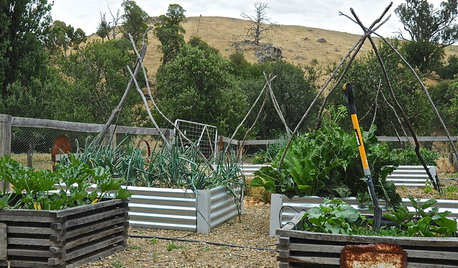
    I found this blog to be very helpful. Thank you! I live in Central FL, does anyone know of a top soil farm where I could go with a truck, fill up for the raised garden beds I want to build? If possible, it would be great if the top soil or pre-mixed soil was organic. Thank you!!

  • 14 years ago
    last modified: 11 years ago

    There is the mushroom plant in zellwood. They sell the spent medium cheaply and it makes pretty good OM (needs to be fortified with minerals). An expert recently told me to let it sit for a while and get rained on to wash out the salts, though we have used tons of it without always doing that.

  • 14 years ago
    last modified: 11 years ago

    NEVER USE TOPSOIL........unless you want to raise weeds.
    Call around to local landscape/dirt/crushed stone/etc providers. Ask if they sell potting mix. I get 1 yard(full pickup) for around $30. It should be a mix of peat and pine fines(some even have perlite and fertilizer already in it).
    You can add perlite and mulch/cow manure, if you need.
    john

  • 14 years ago
    last modified: 11 years ago

    Weeds are so easy to control in a raised bed situation that I would never let that make the decision. If one is going to go to the trouble of hauling material often useful ones can be gotten much cheaper than others.

  • 14 years ago
    last modified: 11 years ago

    The Orange County dump also has free compost, I am probably on my 8th truckload now. There will be weeds but that is what they invented the hula hoe for.

Sponsored
Wannemacher Interiors
Average rating: 5 out of 5 stars26 Reviews
Customized Award-Winning Interior Design Solutions in Franklin Cnty OH