Software
Houzz Logo Print
roflol

OG ID, please?

19 years ago
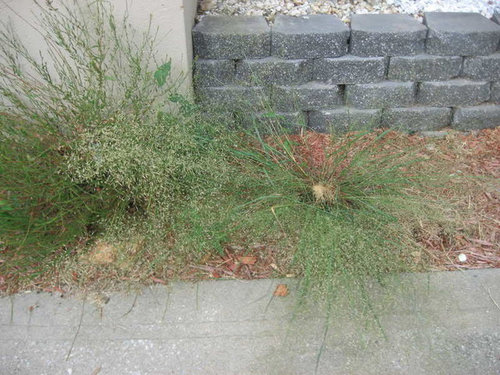
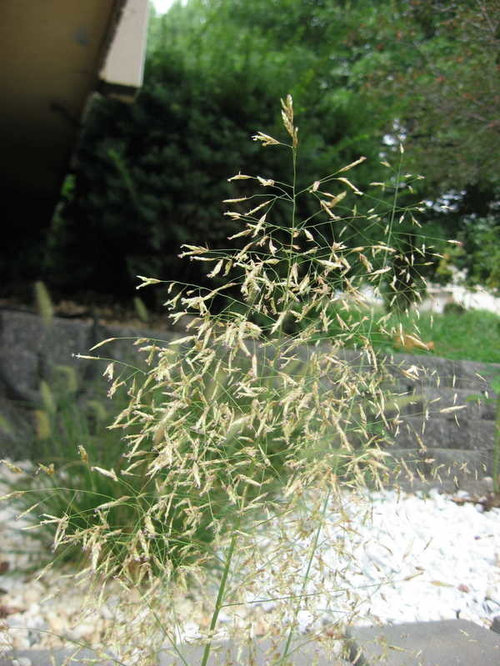
Bought both on deep discount at a nursery, both looked very similar including the seed heads at the time except size - one was smaller - but the tags were different. Both are planted in full sun, don't get much water from me.

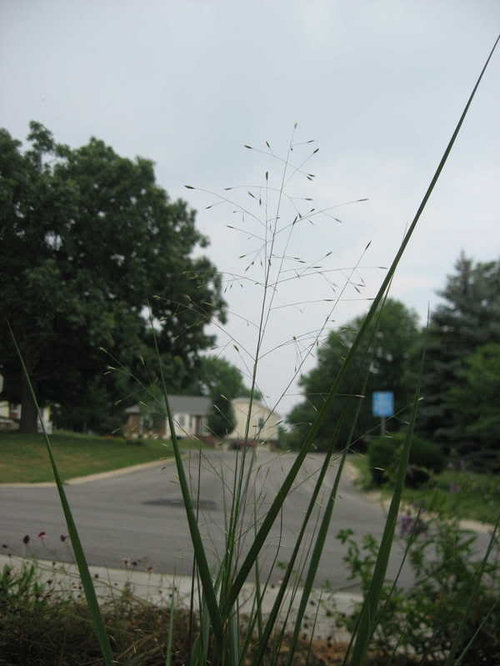
The first two pictures are the same plant (in the first pic, it's the one on the right) - I held up a seed stalk for the second pic, but they've all simply flopped off to the sides.

Below is the seedhead of the second plant, and is how they both looked last year (and the reason I bought them, because the seed head was so airy):

Anybody know what these are? Thanks in advance.

Terri

Comments (12)

  • 19 years ago

    It's hard to tell from the pics, but based only on the spiky blades in the last photo, I'm gonna guess i's a Muhlenbergia.

  • 19 years ago

    Sorry about the pics, I couldn't get good shots of the grasses against the ground so the second plant I had to get on the ground and shoot up. The blades are not sharp/spiky, it's just a young plant and it's blades are not as long; it did struggle over the winter in an exposed spot, the one in the first pic had the benefit of southern exposure and protection from the north wind.

    I had seen a post (seems like it might have been by you, donn?) about Eragrostis spectabilis being mislabeled as Muhly and at the time I thought this might be what I have (Eragrostis) because of the inflorescence (it's not pink, if that means anything).

    I know there are subtleties about plants like this that make a world of difference... please tell me what else you need to know about the plants to ID them... as flattened as that first one looks at this point, I wonder if I should yank it now (which I hate to do) before those seeds (if viable) get started. Thanks again.

  • 19 years ago

    I don't think it's E. spectabilis. It makes a nice rounded clump of fairly broad and plain foliage, topped with a mist-like purple inflorescense much finer than what you show in the pictures. I'm sure it was mistaken for Muhly because of the inflorescence, which is similar in texture, but not at all pink or white like Muhly.

  • 19 years ago

    Terri,
    Grass number 2 (in picture number 3) sure looks like the leaf blade & inflorescense of a Panicum. How tall is the plant? Could we see a picture of the 'whole' plant?

    Donn,
    Grass number 1 (pictures 1 and 2) sure looks like an Eragrostis to me. The 'whole plant' picture looks like an Eragrstis grown too rich or too little sun. You know I am growing E. spectabilis seedlings from your seed to compare with my E. spp. which could be E. spectabilis or E. trichoides.

    I'm sitting here with 3 infloresences; Panicum, Molinia & Eragrostis. Eragrostis is the only one with the same flat overlapping scales on the individual seed heads.

    hmmmmmm....
    A.

  • 19 years ago

    A, grass #2 is 17 inches longest blade from which emanates a 22 inch inflorescence. Interestingly, the seed heads are starting to fill out a little bit like the other grass's.

    Grass #1 is 29 inches longest blade from which with longest inflorescence 38 inches - in fact, most of this plant *is* inflorescence, maybe that's why it's flopped like it has? This plant does not lack sun, but does not get watered other than rain; I don't amend soil but who's to say the local clay isn't rich for this grass, lol. There are smaller inflorescences that look just like the inflorescence on grass #2. There is also a third type of inflorescence, very brushy and golden, and I wondered about that. Pictures below:

    The brushy/golden inflorescence of grass #1:

    Grass #2 in all its glory (breeze kept blowing inf. over):

    Thanks again for your help. :-)

  • 19 years ago

    Terri,
    It looks just like my Eragrostis and you are right flopping usually occurs as the infloresence elongates. The flower stalks on this grass are sooo long they couldn't possible stay upright. Even clumps planted in full sun, sandy soil & no water (really no water this year) eventually fall over into an arching flop. Not quite as floppy as your very first picture but, the plant is young.
    As for the brushy golden infloresence - it is either broken or bent somewhere & drying off OR is just an early flowering branch that has gone to seed & is drying up - this is normal & the whole plant will do it eventually. The flowering branches then usually break off & roll around the garden like tumbleweed :o)
    a.
    oh ... Donn, could you post a picture of the form of your Eragrostis, please ....

  • 19 years ago

    I am almost positive that is Eragrostis spectabilis.

  • 19 years ago

    Now that I am looking it up, every picture I have seen of E spectabilis has purple seedheads on the inf, and - unless it's a brief phenomenon and I missed it - these don't seem to have that. Is there an Eragrostis site I can look at to see if it's another type?

    A, re the floppiness... does it ever grow out of that, or will it do that always? I dislike this tendency so early... I like grasses like my foxtail and my maidengrass that can hold their heads up high until the snow knocks 'em down. If (whatever this is) is going to do this, maybe it's time to either move it somewhere where it will get support, or vote it off the island altogether.

    Thanks again for the input. :-)
    Terri

  • 19 years ago

    I'm afraid I can't illustrate the form, because this patch is a dozen or so third year plants in a 3 square foot area of nursery bed. This is from one side (pardon the encroaching Elymus hystrix seed head):

    {{gwi:865843}}

    This is from the other side, and illustrates the height of the new, green inflorescense. These are about to turn purple:

    {{gwi:865845}}

    The inflorescenses are more tightly packed, shorter and finer than the one being held up in the last photo. Mine never get more than an inch or two above the foliage.

  • 19 years ago

    Donn,
    Very helpful pictures actually. The 'form' of your Eragrostis is quite different from mine. Based on the descriptions in both Greenlee & Darke, I would be fairly confident in saying you have Eragrostis spectabilis and that Terri & I have Eragrostis trichoides. Note: the picture of Eragrostis trichoides in Darkes book looks like it may be a misprint - it doesn't look the least like an Eragrostis. However, the picture in Greenlee's book looks quite a bit more like my plant.

    Terri ~ I LOVE my weeping love grass & have in planted in several spots in the garden. It stays upright the longest in the driest, poorest soil. However, it does have incredibly long inflorescences - easily 2 feet or more - so, it is best planted somewhere you can enjoy the 'flop' of its elegant seed heads. On the edge of a wall, in a pot or falling out over a path or driveway. Added feature - this grass is amazing as 'dried flower' material and lasts a good year or more in an indoor arrangement.

    Embrace the flop - planted in the 'right' spot you will love it! The colour is not as red, more of a pinkish-beige cloud.
    Here a couple of my plants. Note: they are just starting to bloom - the bloom will extend another foot or more before it is done!


    A.

  • 19 years ago

    Jeepers, A, if mine had done what yours is doing I might consider embracing the flop. As it is, I think I will cut off the inf's of the larger one to lighten its load, and see what happens next year (I have enough junk flopping on that side of the house - ask me what Hopi Red Dye Amaranth does in this same area without any support, lol).

    Thanks for the information all around.

    Terri :-)

  • 19 years ago

    I found something interesting yesterday - dug up the clump to plant something else in its place, and the dang thing had not put out new roots beyond what it had in the dinky container last year when I planted it, I can pretty much swear! The root ball was in the same shape as the container had been. I wonder if that's why it flopped so totally and completely.

    I will never claim to be the world's best planter... I know the drill about "dig hole 3 x size of root ball, blah blah blah" but clay and rock makes me lazy and merciless so I dig hole 1 x size of root ball, chink out sides of hole to give roots a head start, drop it in, water it, and call it a day. Sometimes things live, sometimes they die, sometimes they take over. Guess that's why I buy things on sale.

    I found more google hits as Eragrostis trichodes, sand lovegrass, native plant in Texas and other states from what I read. I also got germination from the seeds I took from the plants last year, and the seed heads come up looking right. The smaller one is still looking nice and upright. I debulked the flopped one and will find another spot to put it to see if it does better elsewhere.

    I was floored when I saw that root system... the fact that it could have put out so much at the top with so little holding it up at all. This plant's got chutzpah!

Sponsored