Software
Houzz Logo Print
topnotchveggie

Diagnose? Pumpkin Virus/Disease?

19 years ago
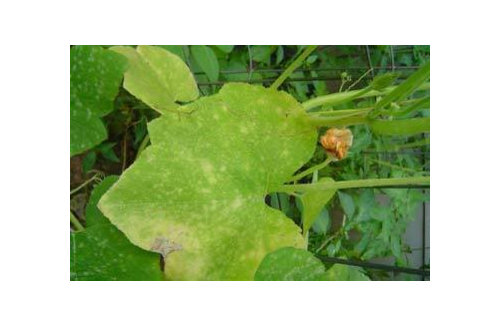
I sowed/transplanted both Connecticut Field and Prizewinner plants in the middle of June. They have all been vining and setting flowers. However, I have yet to see any type of pumpkin grow? I see the bees buzzing around from flower to flower, but nothing yet. I have also noticed some flowers close up and drop off to the ground?

Lastly, I have also noticed white circular marks form on the leaves and vine(s) of the plants over the past week, which has progressively gotten worse. It has spread from one plant to three (and counting). I need your assistance with diagnosing this situation? Is this a virus/disease? How does one rid the plant(s) of this? What are some precautions for the future? I have attached photos below. If you need more information, please let me know. The plants are planted on mounded hills. Thanks for your help.

{{gwi:101600}}

{{gwi:101601}}

{{gwi:101602}}

{{gwi:101603}}

{{gwi:101604}}

{{gwi:101605}}

{{gwi:101606}}

{{gwi:101607}}

{{gwi:101608}}

Comments (5)

  • 19 years ago

    Looks like powdery mildew. This can be a BIG problem for squash and pumpkins. If left unchecked it will kill the plants. I'd look into a systemic fungicide A.S.A.P. I've never used one. So someone else will have to advise as to specifics. "Daconil" comes to mind. But I know nothing more on the subject.

    George
    Tahlequah, OK

  • 19 years ago

    Yes, that certainly does look like powdery mildew. You'll have to use a fungicide to get rid of it. I have also heard that you can use milk as a fungicide, but I have never tried this, nor know anything about it.

  • 19 years ago

    Yikes. What product(s) would you recommend using? Is there something I can use to resolve the problem that is considered "organic" or "non-harmful"/"healthy" for the garden? Any home remedies? Thanks.

  • 19 years ago

    I generally garden organically. Haven't tried milk. More often than not I pull the plants when they get powdery mildew, unless it's at the end of the season and they can kind of "slide out" at the end of the season. I've only heard of Daconil and can't say anything more about it. But it is my opinion that if you want to save those plants you'll have to use a systemic fungicide, since the infection is more than just on the outside of the leaves. You might post on the Vegetables forum and see what information you get there.

  • 19 years ago

    I have used Daconil for the first time this season and it works great. I know nothing of using milk as a fungicide, but I can tell you that I used a gallon milk jug to dilute the fungicide to the appropriate concentration and it looks EXACTLY like milk so I made extra certain to clearly label the container so that no one assumed it was actually milk.

    Here are some precautions for the future:

    1. Throw out (or burn) infected vines at the end of the season
    2. Water in the morning and always try to avoid getting the leaves wet (I use drip irrigation on my squash)
    3. When you first spot the fungus just start cutting off the leaves and throw them out. I did this for about a month and it works great but then I went a couple days without removing leaves and i was "forced" to use a fungicide. New leaves were forming faster than the fungus spread so I wasn't concerned about removing too many leaves.

    I have had powdery mildew in previous years on my gourds and it usually has little effect on them and I just let it go crazy. It seemed to stay low to the ground and not ever make it up the dead dogwood tree they were growing on.

    As far as orgainic treatments go an organic gardening book I have recommends copper fungicides and dispersible sulphur to treat powdery mildew. It also notes that while these were not derived organically they are non-persistent (active for only one day).