Software
Houzz Logo Print
linnea56chgo5b

old DL form vs new form

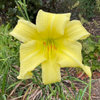
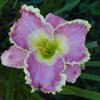
I'm not sure what terms to use to descibe DL form. My older ones (Chicago Royal, 1970, for example) are all what I call "star-shaped": longer narrow petals. Not as exaggerated as spiders. The more popular newer DL's seem to be rounder and fatter: with petals and sepals both wider than the old kinds. There seem to be a lot of varieties hybridized between 1970 and say, 1990, that are transitional: not as "star-shaped" but not as "fat" and round as the newest things.

What do you call these two different types? Newer ones often are additional features; are more recurved, have ruffles and such, but I think I've figured out those more obvious terms :)

I'm looking for late season bloomers but find few of the "fatter" ones as late bloomers. I wonder if there is any particular reason for this? Maybe this is a question only a breeder can answer.

Since I have a lot of older varities I already have many with the star-shaped form, though none are late.

Comments (16)

  • 20 years ago

    Hybridizers had to work at getting the modern form. It was next to impossible to get wide round petals and ruffles because the genetics were not concentrated. Through inbreeding the genes were established by way of occasional breakthroughs. The hybridizers used wider and rounder seedlings as they became available. Then came the ruffles, and we now have several traits that hybridizers work for.

    I am not sure about terms for the different forms. To me, better is a good descriptive word for the modern form...and especially the clear colors. Muddy is a good word for the old typical daylily color, and if they weren't muddy, they were some shade of melon.

    Granted, inbreeding has brought us weak plants, but to me the modern daylily is a true work of art. As far as late bloomers, most fancy new cultivars are introduced from southern gardens. In the south, early blooming is better because the bloom season lasts forever, and late bloomers have no value.

    I suggest that if you want a certain trait in your plants, try hybridizing. That way you have them tailor made for your garden. Walking into your garden and seeing flowers bloom for the first time ever adds some glamor and excitement in your gardening.

  • 20 years ago

    Sorry, but I have to disagree with the above post. To me new is not always better. And I am not a "fan" of the new bagel shaped daylilies with distorted edges (sometimes called chicken fat).

    I also disagree that older daylilies are muddy or melon.

    Mary Todd is not muddy or melon.
    Red Volunteer is not muddy or melon.
    Dallas Star is not muddy or melon ....

    It's all a matter of preferences as is everything else. But I object to broad statements that are really just someone's opinion.

    I prefer spiders and Unusual Forms, and the classic simple daylily form.

  • 20 years ago

    I too disagree with muddy or melon for older daylilies, but I also plead guilty to prefering the older, classic shapes. I think the epitome of this elegance happened sometime in the late 60s/early 70s (think JUDITH, Harris, 1977). I stumbled across some of these beauties when I decided to try some lates and ordered all the affordable ones Oakes listed. Among them were EGYPTIAN SPICE (Reckamp, 1969) and GOLDEN PRIZE (Peck, 1969), both stunning with perfect form and breathtaking color. LAST ACCOMPLISHMENT (Spalding, 1970) combines similar form with a pale, non-peachy pink. These are some of the Grace Kellys of the daylily world.

  • 20 years ago

    I respect your opinion, of course. Broad statement...that started with "to me"...hmmm, is that broad? My opinion was only one of the paragraphs. But, I completely understand your taste.

    The color statement was broad. I said "typical", which is quite accurate. There are some older varieties that are not typical. I have followed the trends of daylilies as they apply to hybridizing. There are definite improvements, which in no way means that all older varieties are obsolete even if they are obsolete in "typical" current hybridizing. And, there are still some new cultivars that fit your taste.

    The "arguments" about daylily taste are as old as daylilies, but there are always newcomers to the daylily world. So, why not open the whole debate each year? Nothing more fun than going out to the garden early each bloomseason day and seeing if you hit the seedling lottery. And nothing more fun than arguing daylily taste.

    So, to continue the debate...there are muddy old daylilies everywhere. The melons are among the best ones. Now we have CLEAR colors and fancy NEW cultivars...and maybe some that are disease proof in the future. Yes, BETTER is a very accurate word. And does that word dominate other opinions...no. Just a fact, thats all.

  • 20 years ago

    I really prefer the older form (more open and star-shaped, gracefully recurved but not round), but I also like some of the "new" characteristics (colored picotee edges, clear colors, delicate detailed eyes, more true pinks/purples/lavenders). I'd like to try breeding some of my own daylilies, for my own pleasure, to try to combine the graceful older form and the newer clearer/unusual colors, and maybe an nice edge/eye, in a late-bloomer for the North.

    Quite a few of the older forms have nice clear color - 'Dallas Star,' 'Mary Todd,' 'Catherine Woodbery,' 'Spellbinder,' 'Anzac,' and 'Ida Miles' are all good cases in point. But there weren't as MANY clearer colors to choose from 20-40 years ago. (There are also still muddy newer intros.) I too would like to see some of the "new" traits in more dormant/cold-zone-hardy/late blooming daylilies.

    This thread reminds me of discussing soft drinks - Coke or Pepsi? Coke Classic or New Coke? Diet Pepsi or Pepsi One? Diet or Regular Coke or Pepsi of the following flavors: Lemon, Lime, Plain, Cherry, Vanilla, Cherry-Vanilla, Strawberry-Vanilla, etc. etc. etc. To each their own taste and opinion.

    Laurel

  • 20 years ago

    I'm the OP, and I see a place for both forms in my garden. My old wine-colored Chicago Royal will always hold a place in my heart. But I'd like a variety of forms. With my purchase of mewer forms, I now have both the star-shaped and the round and ruffled for early and midseason bloom. But for late bloomers I have nothing. And in looking for some in the last week, I noticed that most of the lates were not "round". The second poster gives me a clue that I had suspected: that the round are coming mostly from the south; and the lates from the north: and that perhaps the northern breeders were going for different traits (like long bloom) and that's why the forms on the lates are mostly star-shaped. The sites where I was looking didn't have dates, and I have no so far checked their lists to see if these ARE actually older forms.

    Anyone else have additional clues, let's hear them!

    So now back to the first question: are "star-shaped" and "round" the accepted names for these forms? (I don't like the name "chicken fat" and am working at erasing it from my memory. I'm calling it "picotee edge" or "shirring" and that's that!)

  • 20 years ago

    I have to agree that some of the older daylilies are ones that I find particularly attractive. I really love some of the older Allen Wild daylilies and I don't understand why they seem to have gone "out of favor". Last year I bought some Sugar Candy (Wild 1975) and there is nothing muddy about the color. I love it - a bright blue orchid with a tangerine throat. It is reblooming for me right now. And this year I purchased Fruit Loops (Wild 1980) and the cantalope color edged in red violet is just wonderful. Both are the "old style" thinner petals and sepals style but I love them even if they are considered old school. Every one likes something different, I guess, and that is why there are so many registered daylilies! I still think I like many of the older ones better than the new ones.

    Linda

  • 20 years ago

    I have a couple of late bloomers that, I swear, are having a contest to see who can bloom the most. After All, a fairly large, tall plant with quite large yellowish flowers, not bright yellow, sort of creamy. Very branched and many buds.

    August Orange (on the other side of our small deck, is a star-shaped intense, glowing orage--flowers all over the place.

    Both of these plants are still going strong.

    Kay

  • 20 years ago

    For my beverage of choice I go with the plain old Diet Coke. The fat I save from drinking diet colas I like to see on my daylilies.

  • 20 years ago

    Well I like both forms but one draw-back of the thick petals and ruffled edges is how ungracefully they die. Instead of drying up and dropping off, they turn to sludge and hang on. Now with roses we give extra points to varieties that are 'self-cleaing.' Would that the daylily people did. I'm very fond of Designer Jeans but keeping it decent means dead heading every day. And that seems to be true of a lot of the large, thick flowers and especially the ruffled kinds.

  • 20 years ago

    I have one or two older ones that do the same thing. One really dark one seems almost to liquify. The shriveled flowers are absolutely dripping. I know when deadhading this one I will always get lots of dark purple liquid on my hands. Very yucky.

  • 20 years ago

    I tend to like the older ones also. But have fallen in love with a few of the newer chicken fat ones too. It was nice to find another Allen Wild fan.

  • 20 years ago

    When you drink Diet Coke, you do save a lot of fat for your daylilies - BUT you also subject your body to the dangers of Aspartame. With regular Coke, it is the dangers of High Fructose Corn Syrup. Point being - old form, new form, there will always be downsides to both. What any one person is willing to "trade off" for is going to be very individual to that one person. Alas, nobody has hybridized the perfect dayliliy. It's good for us they keep trying and there truly is a drink - I mean a daylily - out there for everyone!

  • 20 years ago

    If the origianl question is the forms of daylilies. I copied this directly from the AHS.

    Daylily blooms have a wide array of different forms. These include:

    Circular
    When viewed from the front of the bloom, the flower appears round. Segments tend to be short, wide, and stubby and generally overlap, giving a full appearance.

    Triangular
    When viewed from the front of the bloom, the flower segments form a triangle. The sepals generally recurve.

    Star
    When viewed from the front of the bloom, the flower segments tend to be long and pointed. There is space between the segments and the shape looks like a three-pointed or six-pointed star.

    Informal
    When viewed from the front of the bloom, the flower segments have no definable shape. Segment placement may be irregular, widely-spaced, or floppy.

    Ruffled
    When viewed from the front of the bloom, the flower segments have ruffles along the edges. Ruffles take many forms; they may be tightly crimped, laced, knobby, or wavy.

    Flat
    When viewed from the side of the bloom, the flowers are perfectly flat except for the concave throat.

    Recurved
    When viewed from the side of the bloom, the flower segments flare, but the ends of the segments roll or tuck under.
    Trumpet
    When viewed from the side of the bloom, the flower form resembles a true lily. Segments rise from the throat in an upward pattern with little flare.

    Spider
    This form has long defied definition, however the segments are much longer than their width.
    A 1991 ruling places flowers in the spider class if their segments have a length to width ratio of at least 4 to 1 (i.e., 4:1).
    Length is measured with the segment fully extended. Width measurement is taken as the flower grows naturally.

    Double
    This form has more than six segments. Double daylilies, like single daylilies, come in differing forms. For example:
    The extra segments may appear as a tuft in the middle of the flower. This if often referred to as a "peony-type" double.
    They may appear as a second layer of segments on top of the normal six, forming two blooms in one or a hose-in-hose effect (like some azaleas).
    They may appear as irregular or asymmetrical extra petaloids.

    Here's a link to the AHS

    And by the way I love daylilies, short, tall, fat or skinny.

    Tom

    Here is a link that might be useful: AHS FAQ

  • 19 years ago

    As someone pretty new to this daylily forum, I know I was amazed at the pictures posted of the newer daylilies growing in your gardens and the pictures on the daylily sales gardens. I just could not believe how beautiful daylilies have become and how much they have changed since the days when I first bought from Gilbert Wild too many years ago for me to admit to.

    Some are beautiful beyond belief to me and some are too overdone for me but overyone has different tastes and thank goodness there are so many to choose from. For instance I love ruffled edges but don't like some I see that are probably called chicken fat and seem overdone to me. I don't like really skinny pedaled spiders either. I prefer a round flower and think the triangles look strange.

    But I think its wonderful that there is so much variety to choose from. Daylilies are truely remarkable flowers.

  • 19 years ago

    As a big fan of the huge edges, I have several in my garden. One of the things I appreciate from them is the way that they may bloom differently each day...giving a new look each day. I guess you could say they are inconsistent.

    One of things we have to live with if we grow the huge edges is that they sometimes (frequently) get stuck and will not open. It helps me to appreciate them when they do, but I do get tired of unzipping them.

    The best thing overall is that they are the flowers that are most capable of breeding slightly smaller edges that will open. Cross them with true pinks with smaller edges that have good scapes and we can have numerous fancy seedlings. Without the elaborate edges, there will be far fewer fancy flowers and less chance of getting a fancy flower combined with a good scape.

    In fewer words, they increase the odds of success.

Sponsored
Mary Shipley Interiors
Average rating: 4.8 out of 5 stars34 Reviews
Columbus OH Premier Interior Designer 10x Best of Houzz