My builder uses Houzz Pro to plan the timeline and give detailed estimates and daily updates with photos of progress, and provide invoices at pre-agreed key points in the build. This made the whole experience much more efficient and stress-free.
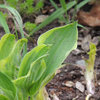
This is my Blue Cadet and it might not look like it in the pic, but the leaves are very mottled and have darker green bleeding between the veins. At first I tought it was just the way the leaves got their blue coloring, but now I don't think so.
Looks scary to me but I'm not sure if this could be an effect of the cold...though it looks like HVX. Send a leaf to Chris at Hallson Gardens, he will check it out for you.
i thought it doesnt become apparent until later i the season ....
frankly a lot of them come up mottled looking in spring... could be cold damage .... or lack of sun .. or something with the pot .... bring it into a LITTLE more light and see if it solids up ...
i wouldnt worry about it .... but i would still email chris and link to your picture in the post ...
I have 2 Blue Cadet that have unfurled - just went and looked at them and mine don't look like this. Is yours up far enough to see, ken? Doesn't mean it IS HVX, just an observation that mine look pretty normal, despite weather issues.
Blue Cadet is right up there on the "most likely to be infected" list, so I would suspect that yes, it is infected. I believe several plants do show HVX as mottling between the veins, but I would consult with Chris at Hallson's for a definite verdict.
It really rots to have to chuck a plant, but it is so much better to toss it in the garbage than take a chance on spreading the infection.
I did post this over on Hallsons site as well and it seems to be certain HVX.
This plant was bought last year at a retail store as a tiny one eye plant. It didn't grow a single new leaf all last season. I thought it was because I had planted it too close to the maple tree. So late last summer I dug it up and potted it. I was happy to see it come up with 6 eyes this year, but soon noticed the odd coloration beginning to appear.
It was a bargain plant, so not out nothing more than time, but gained some experience and a lesson on bargain hostas.
I was @ my local HD up here In Richmond, BC, and saw a batch of 'Blue Cadet' that struck me as having an HVX issue. That was BEFORE I saw this picture. Now I'm sure they ARE HVX infected.
You may ask, WHY do I bother with HD? Well, first of all we all need hose connectors periodically AND when I'm anywhere they sell plants I cannot resist the temptation to look at the perennials. Never really expect to find anything special @ the big box stores, but, I HAVE to look...don't you?
Hosta Virus X is flooding our markets!!! Not only the big box stores but, nurseries right along with them. So far this year I have seen it at Lowes, Walmart and two nurseries all in one day. I draw it to the attention of the people working there and all i get is the run around! Last year I was asking for the managers and getting the same B.S. I thought stuff being sent here from foreign countries had to be inspected and approved to be disease free. What is going on??? From what I have gathered, these are or have been tissue cultured plants coming from Holland. I think the American Hosta Society should be raising a ruckus about what has been taking place. John Q public don't seem to be getting anywhere. Money money money is all these lousey merchants seem to care about. I SAY BUY FROM REPUTABLE MAIL ORDER SOURCES...WE DO HAVE THEM. I would rather spend a few more dollars and get my moneys worth.
Is there no cure for this disease? No sprays etc? That is sad to have to destroy them but I guess if thats the only way then thats the way it goes. Now I will be watching for this too. I just saw two hostas at HD where I live.
Well, piffle-tots. This post got me to reading all the info about HVX, and the three hosta types I bought last year at Wal-Mart just happen to be Gold Standard, Francee, and So Sweet. I worked a few hours today preparing a bed for them in more shade as last year they seemed to suffer burning where they were, and I had also planned to add some Frances Williams I'm growing from seed that I received from a generous member, and maybe another large thick-leaved hosta as well if I can get it.
So now I hear about HVX (I know, y'all have been talking about it for a while, I just have that teenage mindset that "it won't happen to me" so I didn't study). But every so often I grow up a little and think ahead. And my three varieties are listed as being in the group that is easily infected but won't show symptoms for a long time.
Granted, they don't look great right now but that has more to do with mushy frozen leaves, not bleeding colors. In fact I was impressed with Gold Standard because it was the one that had seemed burned worst of all last summer and I figured it wouldn't bother to come back. But it has, and I'd like to try to keep it if it isn't diseased (and if I can keep the slugs off of it).
So my thought is to pot them up for a couple of years until I can determine whether they have HVX or not. So what size pot do I need (depth and diameter, please), and is sturdy plastic okay?
And where the hosta were, I had planned to plant other (more sun-tolerant) stuff. To be on the safe side, I would plan this bed with the assumption that the hosta are HVX-positive, so are there things I cannot plant there?
Terri, if you are planting non-hosta plants, you should be fine. To my knowledge, this is hosta-specific (I could be wrong).
As for the size of the pot that you need for your current hostas, I'm not sure since I don't know how large they are. Plus, I don't pot anything and am a complete idiot when it comes to spatially estimating anything. LOL
Good luck!
By the way, you will not get Frances Williams hosta from those seeds...you'll get a random, no-name hosta...probably green. Hosta are hybridized and you don't get FW hostas from FW seeds.
My apologies for wording it incorrectly; I know I will get surprises from the seeds, and I look forward to them. :-)
I did a search for "pot size" in this forum and found a thread where ken adrian and highjack both gave great information about that subject, which I have clipped and will utilize.
I will continue to seek a definitive answer regarding the hosta specificity of HVX (I ask because, per the Hallson forum, tomato virus is transmissible to hosta).
Welllllll, I pulled up all five of the the So Sweet as they were looking extremely bad (freezer burn/slugs/HVX I don't know, they just looked terribly chewed up - but no streaking/bleeding - and I wasn't in the mood to nurture much this afternoon when I was looking at them). They are bagged and in the trash.
I moved one Gold Standard that had nibbles in it but no obvious HVX signs to me, but was very small compared to its same-aged bed brothers which I presume is because it took the most sun and hits from slugs last year... I did relocate it before I pulled out the SS so there is little chance of contamination of GS if SS was in fact infected and GS was not. So I am down to two Francee and three Gold Standard.
I plan to shade these hosta with some taller plants to help protect them from the sun, and give them some time to show me whether they have HVX or not.
In the meantime, I will continue growing from seed as that is really kind of fun! I had forgotten about some seed from OP Sieboldiana elegans I wintersowed back in January, and there are a few very puckered dark little seedlings in there (compared to very smooth bright green leaves on the seedlings of my unknown [to me] hosta from church) so I'm excited to see what other attributes they all end up with.
Those from seed will get the shady spot that I think is probably my best environment of all for hosta. Hopefully the GS and Francee will turn out all right and they can move into the "cooler" digs some day as well.
Is there always color mottleing with this virus. I have some hosta that the leaves are partialy "waffeled" looking , but no color variation. How do you send a leaf to Chris at Hallison or contact him by email Thanks
Terri, I am far from an expert on this, but I don't think a waffeled look is anything to worry about. Lots of hostas have leaves that are corrugated. I am pretty sure the classic sign of HVX is color bleeding between the veins. Perhaps someone else will give input on this as well.
Hallson's website link is below. There you will find Chris' email and links to the forums there. Maybe you could post a picture of your questionable hosta there and Chris will surely help you out.



ademink
ken_adrian Adrian MI cold Z5
Related Professionals
Decatur Landscape Architects & Landscape Designers · Newport News Landscape Architects & Landscape Designers · North Adams Landscape Architects & Landscape Designers · Honolulu Landscape Architects & Landscape Designers · Miami Landscape Contractors · Richmond Landscape Contractors · Elgin Landscape Contractors · Oneonta Landscape Contractors · Kansas City Home Additions · Elk City Home Additions · Augusta Home Additions · Kirksville Home Additions · Sioux Falls Home Additions · Garden City Home Additions · Montréal Home Additionsken_adrian Adrian MI cold Z5
ademink
ken_adrian Adrian MI cold Z5
ademink
caliloo
maryann_____chgo
ademink
i_dig_itOriginal Author
Pieter zone 7/8 B.C.
ken_adrian Adrian MI cold Z5
sassafrass_2006
cindee11461
lisasmall
roflol
ademink
roflol
roflol
terri_ks
i_dig_itOriginal Author