Software
Houzz Logo Print
storey3

Nikko blue soil

20 years ago

I am moving a Nikko blue hydrangea this morning. It was in a very exposed, very sunny location and has done nothing this year. I will be moving it to the back of my house that gets morning sun and is sheltered better. I will also be able to protect it better in winter.

I want to start off with good soil. Right now it's going in an area that has very sparse grass. I will remove it. Soil has never been ammended but is somewhat sandy. I have dehydrated cow manure, composted cow manure, top soil, peat moss all on hand. I also have some aluminum phosphate and Hollytone and a small stache of coffee grounds. I did do a search on soil for Nikkos and know the Alum. Phos. is needed to make them blue. Do I add it now? Will any of the other ammendments fight against it? I'm thinking I should stay away from the manure?

I'm sorry if you have heard this question a hundred times but I couldn't find the answer on how to start off with good soil.

Thanks in advance!

Chris

Comments (5)

  • 20 years ago

    All of the above ammendments are great for hydrangeas and they will in fact work together to help promote blue blooms. If the soil is already somewhat acidic, then the Alum Sulf might not be necessary, especially with all the other ammendments added. AGED Cow Manure is wonderful for hydrangeas. I top dress with it every Spring. Sounds like you have a good handle on it....yg

  • 20 years ago

    I just saw this and wanted to add something I was told many years ago by someone who is a gardening fanatic. I was planting my very first window boxes and she suggested potting soil, some COMPOSTED cow manure, some bone meal, and a few other things. She recommended against dehydrated cow manure because it hadn't necessarily been composted before being dessicated, had the potential to smell (and not the way you want windowboxes to smell!), and could prove "too hot" for the roots. Perhaps that advice was directed more to container plants, but I've always read that fresh manure is not the ideal amendment... you want the composted, rotted stuff!

    Definitely "bulk up" your new site's soil with lots of rich amendments... I have several Hydrangeas and they thrive in rich soil. It is only, however, this year that I will really experience any success with the varieties other than PeeGee, "Annabelle", and the Oak Leafs. I now know winter protection is key for me. But now I'm hooked. :)

  • 20 years ago

    Thanks for the great advice. i just came back from Lowes with 6 bags of top soil and 6 of composted manure along with a Blue Wave Hydrangea (need to look that one up), a Blue muffin viburnium and a couple other perrenials and annuals. Luckily I had only used the one bag of dehydrated in the whole bed. We don't need a stinky bed. LOL I have plenty of peat already.

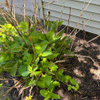
    I went to check out my Nikko and noticed it had blooms forming! Many of them. I am shocked as it was NOT protected well this winter. Also, I am incredibly confused about blooming on 'old wood'. I left what I thought was 'old' wood and it just stuck around like sticks. I finally cut them off today when I realized that they really were doing nothing. Here is a shot.

    I'm such a novice here and I hate it. I like to know what I'm doing and am a hands on learner. I read and read and never quite feel confident. so am I wrong about old wood or is this really NOt a Nikko but instead something that blooms on new wood?

  • 20 years ago

    Hi Storey3 -

    It's probably a Nikko, and the blooms that are forming are on stems that grew from buds that were way down toward the ground on some old growth. If your plant wasn't well protected over the winter, the tops of last year's stems likely died (the old wood "sticks" that you left and which are shown in the picture), but the lower parts of those stems must have been chock full of live buds, each of which is putting out a branch terminating in a flower. Those branches with terminal flowers from this year will form a bud at each leaf which, if it survives the winter, will put out a new branch terminating in a flower next year, and so on. This is generally the way the "old wood" hydrangeas, like H. macrophlla, H. serrata and H. quercifolia work - they need for some of last year's growth with the flower buds already formed in the leaf axils to survive the winter if they are to bloom. The "new wood" types like H. paniculata and H. arborescens don't require this. They can die all the way back to the ground (or be cut back, which is often how they are treated in the garden), and will bloom on the ends of the new stems. It's really a question of timing of bud formation - the old wood types form their flower buds before the winter for the next spring and the new wood types form buds that develop all the way to blooming during one growing season.

    - Steve

  • 20 years ago

    I guess I have a similar question - not sure if there's a black and white answer. Novice gardener, moved into my house over 6 years ago. About 5 hydrangeas in one bed in the backyard, gets late afternoon sun, which causes foliage wilt, from which they recover nicely. Watering is inconsistent.

    They bloomed the first couple years, but not in the past 4 (maybe just a bloom or two). Not sure of the variety, and I've cut back in the fall and not cut back at all. Having left the old growth on for the past two seasons and not seeing blooms, I'm starting to think that I need to protect them in winter to avoid frozen buds on the old growth. I will give this a go in the fall. (I can't recall the weather conditions for the past several years, except for our first growing season in the house (2000), when we had a very mild winter. So I don't know if the rest of the time has been weather related bud kill.)

    The opposing opinion:
    My bf thinks that they were doing well during the first couple years in the house because he would dump the ash from our charcoal grill in the bed (and we had nicely colored blooms too). We stopped dumping the ash in the beds when we adopted a dog 3 years ago who would munch on the remnants of charcoal briquets that smelled like bbq steak, and now that we use a gas grill, spreading ash is not likely to happen.

    So, in addition to protecting in the fall/winter, I'd like to try soil amendment right now. I didn't catch this in the responses above - does composted manure smell? If so, I don't want to use that. Alternately - what should I use to fertilize my hydrangeas right now to perhaps get them to bloom this season??

    Sorry if the answers are elsewhere in the forum. I'll try to do a search on fertilization, feeding, amending?? Any key words you recommend?

    Thanks,
    Laura