Software
Houzz Logo Print
lisa2004

problems with oakleafs

19 years ago

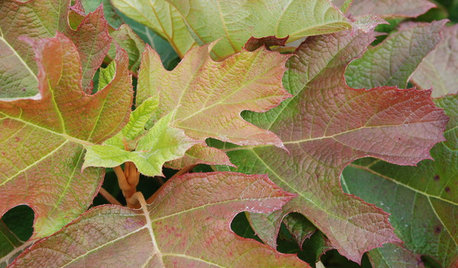
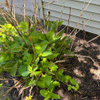
In the fall I planted 4 oakleaf hydranges. They were very healthy looking. One of them looks great, two of them have new growth from the bottom but the old wood looks dead. And the fourth has growth from the bottom and on the longest branch of old wood and the shape of it is terrible. Should I just leave them alone for a season to see what happens? Should I cut off the old wood that has no signs of life? I don't want to do anything drastic and find out later that I was wrong. Thanks!

Comments (4)

  • 19 years ago

    Hello, lisa2004. It is very difficult (or impossible) to determine when the dead wood stems are really 'dead'. Here in the south, I expect them to leaf out by mid-to-late May but you should wait until mid-to-late June. These are averages from what I have noticed in posts in prior years.

    An ever better approach is to prune (if you are curious). Prune off the top one or two inches and see if you see any green in the middle. If not, then prune off the next 1-2 inches. Continue this process until you find green or until you get to the bottom. Note: while one stem may be dead, some of the others may be alive so never generalize based on one or a few.

    Be aware that your plants need time to become established (about one year). And do not be concerned about bloomage on any plant's first year. Instead, concentrate on meeting their requirements so their root systems will develop nicely and the plants will thrive in future years.

    Basics on Sun: see how they react to the location you chose and to the amount of sun. Fertilizing: One application (1/4 to 1/2 cup) of manure or cottonseed meal in June will keep them happy. Watering/Moisture: Oakleafs withstand more periods of dry soil than mopheads but they hate being in standing water. Soil that drains well will prevent those problems. Maintain constant moisture using 3-4" of mulch. If you insert a finger to a depth of 3-4" and it feels wet, they are getting too much water. If it feels moist, leave them alone. If it feels dry or almost dry then water. Some wilting may occur during their first summer but most plants recover by bed time or next morning. A plant that looks extremely wilted should be watered immediately. A plant that looks wilted by the next morning should get more water on a regular basis (example: when summer starts). Pruning: Hydrangeas hardly need pruning. If you find that you have to, prune before fall since flower buds begin forming by then. Problems: too much water can cause root rot or fungal diseases in the foliage; alkaline soil will cause iron chlorosis and require annual application of iron chelates (liquid) products in spring. Other acidifying compounds such as soil Sulphur, iron sulfate, ammonium sulfate and aluminum sulfate can be used to control iron chlorosis. Warning: do not use aluminum sulfate near azaleas and rhododendrons.

    Good luck, lisa2004.
    Luis

    Here is a link that might be useful: Additional Hydrangea Info

  • 19 years ago

    PS - I left out an item in the Problems Section... deer just love oakleaf leaves.....

  • 19 years ago

    Thank you for your response. I've decided to leave them alone for one year just to see what happens. What foliage is there does look healthy. I've never had a deer problem before this year...they just ate some of my hosta! I've sprayed with liquid fence but then it rained about 6 hours later, so I guess I'll have to get out there again.

  • 19 years ago

    Your "pests" are deer? My worst ones are squirrels and rabbits. Both will drive my dogs completely nuts. Here are some ideas on how to combat deer. I collected it from various sources throughout the years. Be aware that where deer are just "casual visitors", any number of deer repellents will work. However, since the repellents only work for a while, it is best to rotate them. Some repellents recommended include the obvious and the weird. The weird ones repel by odor while the obvious ones will use either odor or taste. To wit: human hair (like from a barber shop; put 2 handfuls in an open mesh bag and hang 2-3' above the ground; place one bag every 3'), soap (cut any large soaps into sections and hang like human hair), feathermeal (an organic meal available in organic minded stores and/or in cattle feed stores), bloodmeal (ditto), mothballs, tankage (one-half to 1 cup of animal waste in a cloth bag and hang like with human hair) and obvious commercial chemical repellents (frequently switch them): Bobbex, Bonide Shot Gun Deer Repellent, Deer Scram,Deer Off, Liquid Fence, Not Tonight Deer and Tree Gard.

    Stressing the point again... the greatest amount of protection is obtained by using several different repellents a-n-d rotating their use. As you might guess, repellents should be applied before damage is likely to occur, i.e., before the deer become comfortable and accustomed to feeding on your plants.

    One last repellent, courtesy of Audubon Magazine: Half-cup of whole milk whisked together with one egg and combined with a tablespoon each of cooking oil and lemon-scented dish detergent, diluted in one gallon of water. For a more potent brew, spice it up with a couple of drops of rosemary oil and a dash or two of hot sauce. This mix should be applied to plant leaves with a spray bottle every 10 to 12 days, and in spring it can be combined with fish emulsion for fertilizer.

    Use any of these with whatever measures you already take to keep the deer away.

    Good luck, Lisa.
    Luis