Software
Houzz Logo Print
elkwc

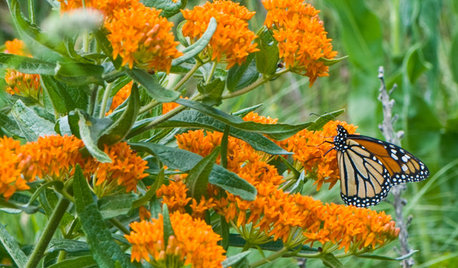
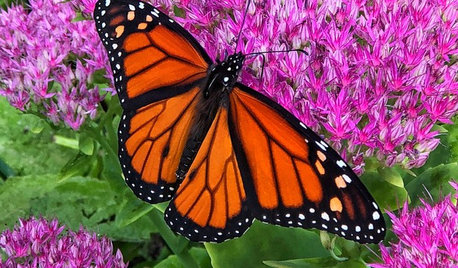
Monarch Butterflies

16 years ago

There was a thread earlier about their migration. Thought this article might be of interest to some here. Jay

Here is a link that might be useful: Monarch Migration

Comments (7)

  • 16 years ago

    Jay,

    Thanks for posting the link.

    This is such sad news about the numbers being reported this year. The fall 2009 migration went west of us last year and I really missed seeing them. Most years they fly right over our part of Love County.

    I'm hoping the migratory population rebounds and the migration continues. So many people garden for butterflies now and plant specifically for them, and I'd like to believe it is making a difference.

    Dawn

  • 16 years ago

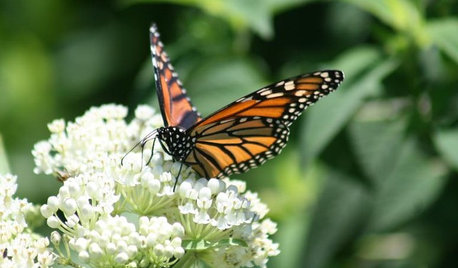
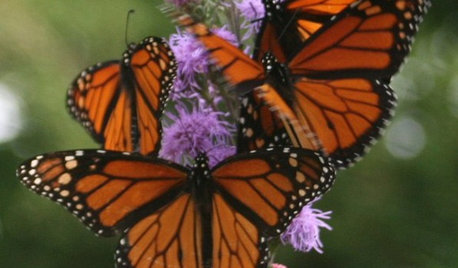
    Dawn I couldn't remember who it was that was tracking the migration but thought they might see the thread and comment. Yes I enjoy the ones we do get. I've never seen a group like in the picture. I may have to plant some milk weed and do my part. Jay

  • 16 years ago

    Okay, Dawn and Jay, you must really want me to get on my soapbox now, and you know I cannot miss the opportunity, right?

    This is nothing new, for one thing. Especially in Mexico, where a few years ago, the Mexican government imposed laws against illegal logging in the Monarch's overwintering habitat, in the Michoacan area of Mexico. However, the illegal logging continues and laws have not been enforced pursuant to the terms of the agreement with the US. It's obviously not a priority for the Mexican government. I have attached a link to maps that reflect the extraordinary decline and devastation of overwintering habitat between March 2004 and February 2008. The yellow dots indicate the locations of overwintering Monarchs, and the blue lines in the right photo indicate how much deforestation has occured in 4 years due to illegal logging. If you hover your cursor on maps you can enlarge them for a better view. It is amazing. I am afraid to see the map for 2009.

    Chip Taylor at KU Monarch Watch has certainly done a magnificant job in bringing the situation to light by instituting the Monarch Watch program, of which I have been a member for 5 years how. To qualify as a Monarch Waystation is so simple, just grow some milkweed for the Monarchs and some strong nectar plants for the (Helianthus, Verbesinas are excellent), complete an application and pay a one time membership fee of $25 to further research. A lot of people tag their Monarchs when they emerge from the chrysalids which helps to track them. In Mexico, the ones that die are collected on the forest floor by the local people there who are paid $5 per tagged butterfly. Note: I grow about three different species of milkweed and am adding more this spring.

    It is happening not just in Mexico, but in the US as well. As we expand our farming (BT Corn and such) and commercial development, destruction of wetlands, and so on and so forth, we are in the process of eliminating those very ecosystems that support native milkweeds and the nectar plants they thrive on. So, I try to do my part to provide some small part of land devoted to the Monarch butterfly, hand raising the caterpillars and releasing these beautiful butterflies for their journey North and South. Oklahoma is a MAJOR migrating thoroughfare for them, and yes, Dawn, they flew west of us this year, but folks in western Oklahoma were probably very surprised and pleased to see them.

    I still had significant 2009 numbers in my yard chowing down on the milkweed.

    Some might not know that the California Monarchs migrate only as far as very southern California on the eucalyptus trees for the winter. But these numbers are much smaller than the migrating Monarchs seen east of the Rockies and up into Canada. It is am amazing journey they make and I hope to continue to see them make it.

    Susan

    Here is a link that might be useful:...

  • 16 years ago

    Susan thanks for all the information. It wasn't my intent to get you on your soapbox but did learn a lot. Guess I'm guilty as charged. Just read the article in the Lawrence paper this morning. I guess I never even thought about their habitat being in danger. Like I said I may have to plant some milk weed. I always have a few around every summer. I have one plant they seem to hang around but not even sure what it is. Jay

  • 16 years ago

    Although it's true the bulk of the southern migration did go through the western part of our state I still counted more monarch here than years past. I think it had to do with the Maximilian Sunflower.

    There was a three day period (9/26-9/29) around lunchtime I was counting about 10 Monarchs a minute leaving the pasture and flying over our drive heading south.

    Amber and I have started over 300 native milkweeds around the property. As she gets older and busier it's cut into our monarch rearing. Think we only raised and released about 100 monarchs last spring.

    randy

  • 16 years ago

    Three day period (9/26-9/29)? Geez :-:

    Always stank at math. :-)

    randy

  • 16 years ago

    The monarchs are always happy here in rural Love County because we have tons of native milkweeds in many pastures here. The cow pasture adjacent to our fire station is only a dozen acres or so but it has thousands of milkweed plants in it every year, for example, and the reason for that, of course, is that those ranchers don't use broadleaf weedkillers in their pastures.

    We have native milkweeds on our property and I've planted milkweed plants in our flower beds.

    Last year was a really great butterfly and moth year here, except for the fact that the main migration veered west before it reached us.

    Jay, during either our first our second year here, we had thousands of migrating monarchs roost overnight on a dead elm on the edge of our woodland. It was a spectacular sight. The tree could be viewed from one of our upstairs windows, and I 'watched' the tree until it was too dark to see, and then the next morning, I watched it all morning until the butterflies took flight. Even though we left that dead tree standing until it began falling down one limb at a time, we haven't had them roost here since but I always hope that it will happen every year since there's no shortage of dead trees standing in our overgrow woodland.

    The monarchs are the reason I stopped using Bt, and I fully believe Bt-corn is hurting the entire butterfly population.

    Dawn