Software
Houzz Logo Print
susanlynne48

Inviting Bees Into the Garden

15 years ago

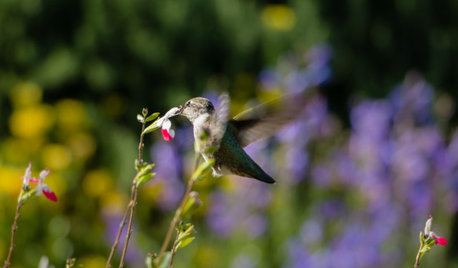
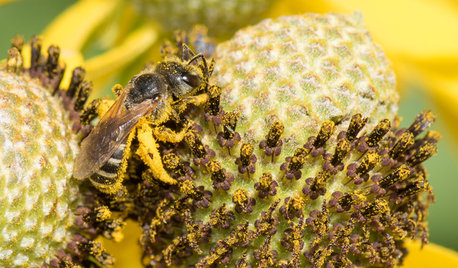
For several years, you guys know I've been an avid butterfly and moth gardener. Naturally, a lot of the plants I grow for them, are attractive to bees and bumblebees (and hummingbirds and all sorts of other flying critters). There are some, however, that are more heavily used by bees than others. The "others" may cause them to pause and taste for a short time, but they then move on to their favorites.

I am trying each year to grow more and more for these busy little pollinators, and last year, I had the most bees I've ever seen. I want to maintain my bee activity by planting more pollen plants, especially now that I am growing more vegetables. So, you could say I've moved beyond the "accidental" stage of planting for the bees and now want to direct my focus on actually providing them with some favorite pollen sources.

Another reason is the declining bee community across the world. The bumblebees can be added to the growing list of bees in decline as well, now.

The plants that I am currently growing that are the most appealing to the bees, or having the most available pollen for them include:

Senna (f/k/a Cassia) hebecarpa (native Wild Senna; legume so it also enriches the soil as well)

Senna bicapsularis (non-native as Christmas Cassia)

Lantana species/cultivars (some, not all, but particularly for me, 'Miss Huff', hardy to z7)

Garlic Chives (blooms for a short time period late summer)

Basil (if left to bloom)

Cosmos sulphureus ('Cosmis Orange')

Zinnias (especially the single blooms, which also appeal the most to butterflies, too)

Asters (perennial, late blooming; I have Aster tartaricus 'Jindai' a non-native and A. oblongifolius, a native)

Coniclinum coelistinum (f/k/a Eupatorium coelistinum - most Eupatoriums except for the Joe Pye Weeds have been reclassified as Coniclinum)

Datura wrightii (yes, they love it and I find them by the dozen in the huge trumpet blooms in early morning-honeybees)

Monarda didyma (native)

Asclepias curassavica (Tropical Milkweed; loved by the Monarch butterflies as well)

Fennel

Zizias aptera (Heartleaf Alexander)

Liatris spicata

Cleomes

Campanula 'Elizabeth' (these have the drooping bell flowers and the bumblebees love them)

Butterfly Bushes

Tithonia rotundifolia - Mexican Sunflower

The plants that get the heaviest activity, though, are the Sennas, Mexican Sunflowers, and Cosmos.

Among the new bee plants I am seeding this year, is one that has been reknowned for its bee attracting quality, and it is Phacelia tanacetifolia, or Fiddleneck, or Purple Tansy. In fact, I read that one bee keeper grew it in his greenhouse during winter for his resident honeybees! I have seen this plant many times, but had never considered growing it. The cool thing is that it can be used also as green manure/cover crops.

Others I plan to grow include:

Cleome (more)

'Cosmic Red' Cosmos

'Dwarf Pink' Cosmos

Drummond Phlox

Zinnias - lots

Borage

Chives

Coriander

Tithonia (3) (original, Yellow Torch, and Fiesta Del Sol)

Thyme

Swan River Daisy

Trifolium incarnatum (Red Clover)

I am devoting a port of the yard to these plants this year. Do you have any to add to the list? I'm interested in your observations of plants in your gardens that are heavily pollinated by bees.

Susan

Comments (14)

  • 15 years ago
    last modified: 11 years ago

    How about keeping bee hives in garden to increase pollination? I observed bees also love to feed flowers of all cucurbits, such as GOURDS (snake, ridge, sponge, calabash, wax) MELONS (sweet, water, musk, winter), cucumbers, zucchinis...

    Bees also overtake humming bird feeders; they keep every hole occupied...
    {{gwi:1079306}}
    {{gwi:1079308}}

  • 15 years ago
    last modified: 11 years ago

    Cool picture Chandra.

  • 15 years ago
    last modified: 11 years ago

    Susan,

    I don't plant specifically for the bees. I just plant a general mix of flowers, herbs, veggies, shrubs, trees and vines so that we have something in bloom as much of the time as possible and count on that wide variety of plantings to attract all kinds of pollinators, not just bees. Of course, we have tons of native plants (including many that are "weeds" to most people) both on our property and on all the property that surrounds ours, so we'd likely have bees all over creation even if I didn't plant a single thing.

    If there is a plant that flowers and that produces pollen, the bees will show up.

    About the only thing I avoid is the modern day flowers bred to have no or low pollen, like the cutting sunflowers or parthenocarpic vegetables. With some plants that are naturally single but which have been doubled through breeding, I still see bees visit them, though not necessarily as much as visit the the singles.

    Some of the biggest bee attractors are any blooming tree and also any blooming weed no matter how tiny and low to the ground it is. Every herb that I have that I allow to bloom also attracts bees.

    Last year when the plum trees were in bloom, each tree had hundreds of bees at any given time. The noise they made was very loud! Neighbors stopped and parked in the driveway to watch the vast multitudes of bees working the flowers on the stone fruit trees. Really though, it doesn't matter what is in bloom, they'll show up to visit the blossoms. The hardest part is to have flowers in bloom for them in Dec., Jan., and Feb. and that can require some planning and some luck. Most of what I have blooming for them in the cold months are either the brugs, daturas and Laura Bush petunias (developed from a native Texas petunia) I have in pots, or a few native winter-blooming weeds,wildflowers/trees. I've learned the bees love the brugs so much that they will continue to visit the flowers long after they've wilted. They'll even visit the flowers after the flowers fall off the plant and land on the ground. I let those flowers lie there until the bees stop visiting them because winter bloomers can be in short supply.

    Some years, chives and larkspur are blooming in March and that seems to really please the bees. Other years they don't bloom until April.

    I keep a hummingbird feeder out for the bees to supplement their diet when it is very cold/icy/snowy and blossoms are rare or just can't be found because they are under the snow. I won't necessarily see bees out when there is snow on the ground, but as soon as it warms up a bit and the sun is out, I'll see them again.

    Just plant what you like and aim to have plants in bloom for as many of the months of the year as ayou can, and the bees will come.

    I've never once had an issue with there not being sufficient pollinators around.

    I typed an extensive list on last year's 'planting for the bees thread' so rather than retyping it, I'm going to find it and link it below.

    Dawn

    Here is a link that might be useful: Last Year's Thread on Planting For The Bees

  • 15 years ago
    last modified: 11 years ago

    All very good points everyone and thank you for your contributions to the thread!

    You know once upon a time in the not too distant past, I was petrified of bees (still am nervous around wasps). I mean, so severely frightened that I would run in the opposite direction and I didn't care who was in the pathway because I'd run OVER them to get away from the bees. As the garden grew, though, there was just no way the bee community was not going to increase, so I just made a decision that I wasn't going to be scared anymore, and that decision followed the realization that the bees really were more interested in the pollen and not me.

    Yes, I have large numbers of bees now, but I am trying to increase the pollen factor for them, and there are certain plants that are heavily visited by the bees as opposed to those that attract lower numbers. Not all of the plants are just covered in bees like the Cosmos where on any given day you can find 2 or 3 bees to each flower! Like butterflies, they have their favorites, too.

    Herbs and native wildflowers can usually be counted on to attract large numbers of bees, while cultivated ornamentals may attract a few, but are not nearly as popular. I have very few cultivated hybrids in the yard anymore because the more a plant's pollen is diluted by hybridization, the fewer, if any at all, bees are persuaded to stop and collect.

    I just came across an interesting note, that Borage flowers produce fresh pollen every 3 minutes! That's amazing to me. This may be true of other popular bee plants, too.

    I think it's good to revive some of these topics yearly because we get so many new people on the forum that they may not have come across some of the older threads. Also, newer threads may offer fresh ideas from them that they found worked for them, too.

    By attracting more and more bees, including species not seen before in one's garden, as well as frequently observed species that arrive from other locations, there is more opportunity for biodiversity among them. There is a school of thought that not enough biodiversity is causing some of the problems with bee survival today and I'm not sure I disagree with that.

    I really enjoy seeing new suggestions from others that often either enhance my perspective or give me new insight on all aspects of gardening. I think that by coming thru the backdoor when I originally began gardening for the insects, I am going to realize the benefits of a successful vegetable garden, rather than had I done it the other way around. At least that's MY theory, and I hope that it paves the way (cross my fingers) for a successful harvest.

    Susan

  • 15 years ago
    last modified: 11 years ago

    Susan, I have a tall aster that the bees seem to love. It blooms in late fall. They will grow in partial shade. I'll be happy to share some with you, but I should warn you, it can be a thug. It spreads by running roots.

    Lisa

  • 15 years ago
    last modified: 11 years ago

    Oh, Lisa, that is so kind of you to offer. But, I have 2 Aster Thugs that bloom in the fall - Aster oblongofolius and Aster tartaricus 'Jindai'. I am going to have to dispense with a portion of them both this year because they are really taking over.

    If you see anything that I have listed that you are interested in, let me know. I also have a lot of seed of the Phacelia tanacetifolia if you would like some. A very nice person on the butterfly gardening forum - what a group of nice people over there - sent me seeds of Polanisia dodecandra, or Red Whisker Clammyweed, another good bee plant, that is a cousin to Cleome (good bee plants in both genera). Both in the Caper (Capparaceae) family. Clammyweed is a very pretty plant that self sows, but not invasively, similar to Cleome which is not invasive either. If you would also like to try this native wildflower, I can give you some seeds of that, too. Also have plenty of Tropical Milkweed if you need those as well.

    Susan

    Here is a link that might be useful: Polanisia dodecandra/Red Whisker Clammyweed

  • 15 years ago
    last modified: 11 years ago

    I have a lot of bees on my clover, and lots of bumblebees on my chaste tree and my rose of sharons. Going to put out some more clover seed next month. Last year for whatever reason we had more clover than ever and it really did make a difference in how thick the grass was in the lawn. I have a couple of spots that have thin grass and during the dry times when I mow I am just in a cloud of dust and dirt. We also put out crimson clover in the fall and I am anxious to see that.
    Mo

  • 15 years ago
    last modified: 11 years ago

    Mo, I got some seed of Crimson Clover that I need to get outside and scatter around.

    The bees do adore clover, don't they? I forgot about that one. They also love the dandelions, too, and I let mine grow because not only the bees love them, but the spring migrating Monarchs use them as a nectar plant, too. The bees seem to enjoy the henbit as well, so yes, I have a weedy lot on purpose. We have taken so much away from our little beneficials that I feel like I can give back and sacrifice some lawn weeds for them. These "weeds" bloom before my other plants in early spring so I rely on them for nectar and pollen, and so do the bees and butterflies.

    I'll be interested in seeing how your Crimson Clover does for you. Please chime in and let us know when it comes up. A median strip over by one of the schools here was devoted to Crimson Clover, and it's always so pretty when it blooms. I hope yours, and mine, do too!

    I wish I had room for a Chaste Tree, but I don't. I have 3 Rose of Sharons in the back yard, but I never notice the bees on them as much.

    I can't wait til spring!

    Susan

  • 15 years ago
    last modified: 11 years ago

    I am a beekeeper & am so gald to see fellow gardener's concerned about the plight of our bee's & polinator's. I am glad to see that you are putting plants in your garden with them in mind.
    Here is a list plants you might be interested in, these are beneficial plants for bees.

    Borage, Bugloss, Goldenrod (important for fall honey for overwintering) Melissa or Lemon Balm, & Phacelia. These are the top 5 beneficial plants for a nectar or pollen source as far as nutrition for honeybees.
    Rosamary & Lavendar are also great because the oils from these plants help the bees rid themselves of Varroa mites, which has been a big problem for several years now. Mints are also very helpful to bees, they provide antiseptic qualities for the bee digestive & immune system.

  • 15 years ago
    last modified: 11 years ago

    Ann and beekeeper,
    Do you shed some light on where to buy bees and bee hive? I would like keep one or two bee hives in the garden beds. -Chandra

  • 15 years ago
    last modified: 11 years ago

    I grow a ton of wildflowers and herbs because I love them and the bees do too.

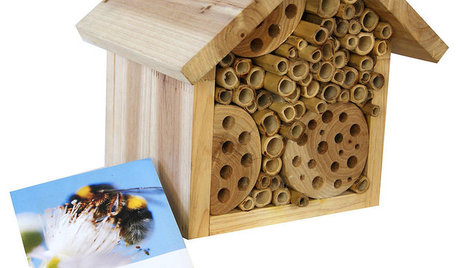
    I hung two mason bee homes up last year hoping to attract some of them to, but so far they seem unoccupied.

    I love bees!

    Jo

  • 15 years ago
    last modified: 11 years ago

    I don't have a clue where all my Mason Bees come from, but I grow a native plant called Senna hebecarpa, or Wild Senna, and they literally flock to it when it's in bloom. Following that bloom, I have other plants, including another Senna called S. bicapsularis, or Christmas Cassia, thst they love as well. These members of the legume family are loaded with pollen and nectar.

    Susan

  • 15 years ago
    last modified: 11 years ago

    I'm not sure if they are popular with the bees, but i'm planting a lot of native plants this spring; trees, shrubs, and perennials. I kind of went crazy buying seed from prairie moon this year but forgot that most of them need stratification, so i'm patiently waiting while my seeds chill out in the fridge. Some of the plants are:

    Perennials/Annuals:
    Aquilegia canadensis
    Callirhoe involucrata
    Campanula americana
    Delphinium carolinianum
    Delphinium virescens
    Eupatorium purpureum
    Liatris aspera
    Monarda fistulosa
    Oenothera macrocarpa
    Penstemmon cobaea
    Penstemon tubaeflorus
    Penstemon digitalis
    Rudbeckia fulgida
    Salvia azureus
    Baptisia australis
    Coreopsis lanceolata

    Shrubs:
    Physocarpus opulifolius 'Dart's Gold'
    Physocarpus opulifolius 'Diabolo'
    Amorpha canascens
    Sambucus nigra 'Black Beauty'

    Grasses:
    Little Bluestem 'The Blues'
    Feather Reed Grass 'Karl Foerster'
    Switchgrass "Dallas Blues'

    Trees:
    Amelanchier 'Autumn Brilliance'
    Cercis canadensis 'Forest Pansy'
    Rhus typhina 'Tiger Eyes'

    Think that about does it...wow, looks like a lot when i write it al out like that.

    -Matt

  • 15 years ago
    last modified: 11 years ago

    Usually I hardly ever see bees around our property. It's a new lot, and most of what I've planted so far is still too young to produce a lot of blooms. This year is different, though. My chinese holly shrubs and american holly are just covered in bees right now. I think there's probably some truth to what you said about bees being attracted to anything that blooms, because I wasn't aware hollies were popular for them.

    I just put eight new flowing shrubs in the ground this spring and my lilacs from last year are about to bloom for the first time, so I'm sure I'll see many more pollinators in the future!

Sponsored
Peabody Landscape Group
Average rating: 3.5 out of 5 stars8 Reviews
Franklin County's Reliable Landscape Design & Contracting