Software
Houzz Logo Print
sammy_gw

containers for salad greens

17 years ago

I want to make one or two containers for salad greens, and put them in front of my patio. I saw a Victory Garden show once where the owner of a hotel grew salad greens on the roof of the hotel. He would go up there to make his cuts as he prepared his fresh salads.

I am not sure how to create the box because I would like to be able to cover it with wood of it gets cold, and cover it with hardware cloth if the weather is fine.

Do you know what kind of wood I would need and an approximate size? Do any of you use something like this?

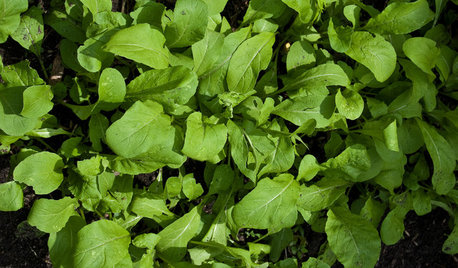
Also what kinds of lettuce and other greens could be snipped and would keep on growing?

what kind of mistakes am I likely to make?

Since I grow roses, and have contaminated the earth, I need to grow everything in containers. We have large ones for tomatoes and other vegetables, but I just love a salad, and would like to grow my own greens. I think the herbs would be easy enough, but I would like other greens - lettuce and spinach???

Sammy

Comments (11)

  • 17 years ago
    last modified: 11 years ago

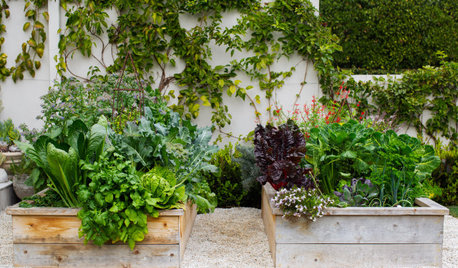
    You might consider building a raised bed and using pvc pipe to use for your cover. You could use any kind of heavy wood and make it any size you want. Then just bend the pvc from one side to the other making a semi-circle over the top of it. You would have to use several depending on the size of the raised bed. You could use sheets to cover it from the heat and plastic for cover when it gets cold. I just get several kinds of lettuce, mesclun and other varieties of greens, don't forget spinach! and sow them. I cut what I want for salads with a pair of scissors and they grow back. I plant mine in a shady area and they do fine until the summer heat and go to seed. I just leave them as they are with the seeds attached and about July I rub the seed heads and lightly work them in the ground right where they are. Keep watered good during the heat and by August-September you ought to have a fine crop of lettuce and greens.You don't need to go buy another round of seeds. I also plant parsley which stays year round here (NW OK) and this year I want to plant some Kale which I hear does good in cold weather. There are many specialty greens that you can grow that will make your salad interesting. Don't forget herbs such as mints, lemon balm, basil, tarragon, anise hyssop, the list is endless. Also don't forget green onions and chives, tuck a few radishes in with the greens, things like that. Hope this helps or gives you a few ideas. I really can't see using small containers to grow greens cause I eat alot of salad.

  • 17 years ago
    last modified: 11 years ago

    You plant the seed? Could you tell me when and what the lowest temperature is that they could stand? How long does it take from seed to food?

    I don't understand the PVC pipe. We have an arbor of it, and have used it for other things, but why not just a simple lid of wood?

    I read on one thread that the treated wood has arsenic in it? What kind of wood do you use?

    Thanks,
    Sammy

  • 17 years ago
    last modified: 11 years ago

    Hi Sammy,

    It sounds like what you are after is a modified cold-frame that doubles as a raised bed...? I've had great luck with using old wooden windows as the top, attached with hinges so that you can open them for airflow when the weather is fine, but they also draw in the warmth of the sun when closed in the cold weather. Moreover, old windows, especially if the paint is in good shape, are very attractive (I'd probably paint them since most old paint has lead in it). You can also fix them so they are easy to remove; if I remember my last window cold-frame, I just laid them on top of the frame, which was simple in construction...just a box with sloped sides, but you probably don't want the slope for this project

    As for treated lumber, it is either treated with arsenic or copper (arsenic-treated lumber is usually green in color, while copper is usually reddish-brown). If you grow organic, you definitely want to stay away from both...I've heard of organic farmers loosing certification by using it, so it can't be good for you, LOL! We usually use regular pine or fir 2X's (in this case, maybe 2x8's?), mainly because they are the least inexpensive and untreated. You could use cedar, but there is some kind of bio-chemical it releases as well, so I wouldn't recommend it either. I know that regular pine or fir won't last indefinitely, but it's a safe solution, and you should be able to get 3-5 years out of it before it needs replaced. If you decide you would rather cover it with wood, you could either make a lid out of 1x4's held together in some sort of frame, or you could use a piece of exterior plywood, but it's also treated so you'd need to paint it lest it leach toxins. My favorite is the old window method!

    As for the salad greens, I'll keep an eye out and hope someone with more veggie experience answers, because I'd like to know myself! (I've just started veggie gardening, but have been growing herbs, perennials, annuals, and roses since I was a kid).

    Just some thoughts! Hope it helps. :-)

    Ada

  • 17 years ago
    last modified: 11 years ago

    You can google how to grow lettuce and it's requirements pretty easy. I was just on a site reading and it said you can plant it when the soil is 35 degrees. I just rough up the soil a bit and broadcast the seeds and go over it with the backside of a rake and smooth it down. It should take 30-50 days for them to mature but you can start using them as soon as they get a few leaves. I have sent you a site to show you what I am talking about using pvc. It's called a hoophouse. I wish I could have one like this but I really don't think it would stand up to 30-40 mph winds. Does anyone else use them or have any luck with them?

    Here is a link that might be useful: pvc hoophouse

  • 17 years ago
    last modified: 11 years ago

    River, thank you for the pictures. I thought you were a little bit crazy to just try to line a bunch of pvc pipes on top of the container. It would just roll off or crush the plants.

    We could also use rebar for that and for anything that we plant early. As a matter of fact we are taking down our rose arbor made of pvc pipe, and that would give us plenty of pipes - including the connectors. (If you ever think of building a rose arbor out of pvc pipes, you might want to rethink it.)

    Thank you so much.

    Ada, the window are a terrific idea, but that isn't exactly what I was thinking about. Thanks for the lumber suggestions.

    SAmmy

  • 17 years ago
    last modified: 11 years ago

    Sammy,

    Most greens can be harvested by the "cut and come again" method as it is called. You have many kinds to choose from, including the following: arugula (aka Roquette or Rocket), cabbage (the miniature ones would work best in a cold frame, container or low tunnel-type hoop house), chicory, radicchio, endive (escarole), lettuce [cos, romaine, looseleaf, bibb or butterhead, or crisphead (batavia) types], swiss chard, orach, kale, spinach (the regular types and the summer substitutes like New Zealand Spinach or Red Malabar Spinach or Strawberry Spinach), Mizuna, Mesclun Mixes (some are labeled as Mild or Spicy blends of various greens), and Lettuce Mixes. Grow what you like to eat and don't be afraid to experiment. As River suggested, there are many herbs you can grow and add to salads or use to make your own dressings. I usually grow several kinds of basils, chives, garlic chives, cilantro, several kinds of parsley, sage, oregano, several kinds of mint, rosemary, thyme and lemon balm.

    If you like radishes, they are easy to interplant with lettuce and make a ready-to-eat crop in 25 to 35 days or so, or up to 70 days for the long carrot-shaped radishes. And, speaking of carrots, you can interplant them with lettuces too. Tender baby carrots are yummy sliced into salads.

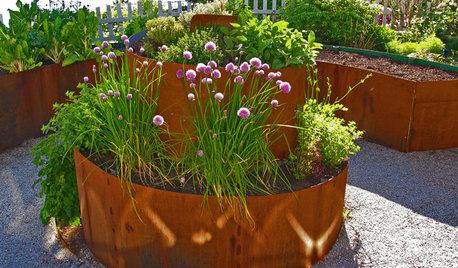
    For raised beds, I avoid all chemical-treated woods and use plain old pine most of the time. In my drier climate it lasts about 5 or 6 years before it rots enough that it has to be replaced. The Noble Foundation, based in Ardmore, has built some raised beds using corrugated metal attached to wood frames. The frames are on the outside of the metal so that the frames have little if any soil contact which makes them last longer.

    If you really want to grow in a container, you could plant greens in really large plastic Rubbermaid type storage totes with lots of drainage holes drilled in the bottom. If you choose to do that, remember that many small drainage holes are better than fewer large ones. The advantage to using the totes is that they are portable, so you can move them into a little more shade as the days heat up in mid- to late-May.

    Some people (and a couple of them used to post here) grow pretty respectable container gardens in children's plastic wading pools with drainage holes drilled in the bottom.

    Dawn

  • 17 years ago
    last modified: 11 years ago

    Quick question for those of you using 2x lumber for raised beds, how do you stake/secure/support the frames?

    Michelle

  • 17 years ago
    last modified: 11 years ago

    Michelle,

    We nail our bed frames together with really large nails that are unlikely to let the pieces of lumber pull apart. Since we garden on a slope, though, we then hammer wooden stakes into the ground on the outside of the beds to keep the timbers from slipping or sliding. We just use the cheap wooden stakes you buy in a bundle at large home center stores. After the stakes are hammered into the ground, we cut off the top of the stake flush with the lumber because if it sticks up above the bed, I'll run into it and whack my leg. For one bed on the worst part of the slope, we used pieces of rebar but I don't really think that is necessary unless you have a fairly steep slope or unless your raised beds are on really loose sandy loam or sandy soil and might have trouble staying in place.

    Our first year here, we had odds and ends of PVC pipe left over from building the house and we used that instead of wooden stakes. It didn't work out so well--Sand Love Grass and Crabgrass sprouted way down deep in the pipe at ground level and grew up out of the pipe. It wasn't easy to pull out the grass because by the time it was growing up out of the 6" to 8" of pipe, it was really well-rooted.

    Generally, once raised beds are filled with soil, the lumber isn't going to go anyplace unless it just topples over into the pathway OR if on a steep slope, sometimes the lumber on the downhill side might fall over into the pathway. Even when that happens though, the soil usually stays in place because it has become somewhat compacted via rainfall. Our wooden stakes normally last for a couple of years and, usually, by the time they are falling apart, the beds are firmly in place and I don't even replace them with new stakes.

    I also mulch my pathway with at least 2" of mulch, so the mulch helps keep the lumber in place by supporting the outer side of each piece of lumber.

    Hope this helps.

    Dawn

  • 17 years ago
    last modified: 11 years ago

    We use 1x12 untreated lumber, as well, for most of our beds. We fastened them together with screws, using a piece of 2x2 on the inside corners in which to fasten the screws. If you try to attach the corners together without something extra to fasten to, they will not stay together very long, and will damage the end of the panel they are fastened to. My beds are so long that they bow out at the halfway point and we have put down stakes against them at that point, but we find that when the soil is in they are impossible to move. Our raised beds are not on a slope, though. For the next bed, I'm thinking about using concrete block. The cost would be about the same, and they would last forever.

    For the tops, you can also use old glass or semi-transparent shower doors. Remember that if you just cover them with a sheet of wood, it won't let light in and they have to have light. I guess you're thinking of putting hardward cloth over them to keep away bugs and critters but if you have deer they may surprise you how destructive they can be if they're trying to get into something.

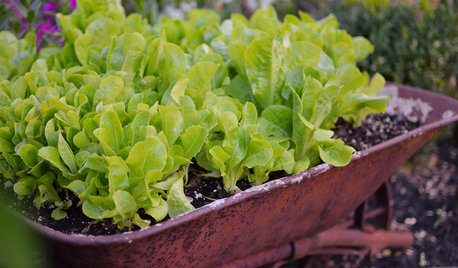
    We prefer the romaines and a lettuce called 'butter crunch'. Both can have leaves removed from the plant but I usually just pull the whole plant and then plant another seed to take its place. But yes, if you use leaf lettuce you could probably pick leaves off the same plant forever, at least until it gets too hot. It's just that the leaf lettuces tend not to be as crisp and crunchy as those that head up, and we like the crunch. When you pick off a leaf and you see milky "sap", that's an indication that the lettuce will be bitter. I cannot grow lettuce into the summer because of this. Although there are certain kinds that are said to be heat resistant that I might try. I had romaine up till about December 15 here in NE Oklahoma. I still have some cabbage. I just built up one end of one of my raised beds and put the shower doors across them. When we have a warm day, I open the area up.

    There are also some self-watering garden containers that you can buy or even make, we had a long conversation about those last summer on this forum. Some folks really swear by those. Don't know how they'd do in the winter though.

    I think this spring I'm going to get a jump on the lettuce by starting some plants inside under light. I make small newspaper pots (formed around a tomato paste can) to start my seedlings in so that when it's time to plant, all I do is dig a hole and pop the whole thing in the hole, making sure to cover the paper completely to prevent moisture wicking. I Might even experiment with whether I could get something to grow big enough to actually eat, under those lights. With groceries being as expensive as they are (prices haven't gone down even though the cost of gasoline did, and that was the reason given for the hike in grocery prices to begin with), it would probably even be cost-effective to build a greenhouse to grow things like that in, year round.

    Good luck to you! Keep us posted with your results. I'd love to see a pic of what you end up with. --Ilene

  • 17 years ago
    last modified: 11 years ago

    Ilene, I lost my winter greens just shortly after you did. We had extreme cold for several days and the morning we left for vacation (21st) it was eleven degrees. The greens had frozen out when I came back. I checked it today and it looks like a few mustard plants are still growing, but everything that was above ground had frozen. I removed all the dead leaves today to see if it would continue growing. I am going to plant some in the house and move it outside after it germinates.

    As I was cleaning my containers today, I pulled up zillions of rooted acorns. Those things had roots 6 to 8 inches long even if you couldn't see the sprout. I have learned that I need to either cover my containers in the fall or move them away from the source. The falling leaves were a problem as well. We sure had a lot of greens from that container though. At first I covered them on cold nights, but after awhile, I didn't even do that and they were OK. Some mornings they were stiff, but they would thaw and keep growing.

  • 17 years ago
    last modified: 11 years ago

    I do my lettuce in a container, that way, as Dawn suggested, as the days heat up, I can move it into deeper shade. I use the 56-65 gl sized ones. They're also great for starting new seed outside, whether winter sow or for fall crops that are transplantable. It's good that they were deep this year because my summer tomatoes finally woke up and started producing rather late and I was loathe to pull them to replace them with the fall tomatoes. So I enjoyed the summer tomatoes until they froze and still had my fall tomatoes as well, left in their containers.

    I've used all colors for the container itself, but prefer to get the clear lids so that I can create mini greenhouses out of them should the weather be too cold or we're expecting damaging winds or the-sky-is-falling-gully-washer rains. I drill vent holes into the lids too to allow for air and rain for watering and toss a tarp over them if we're expecting a frost. When the plants are too large for the lid, if they're still in their container, I can create a hoop house for it with a metal clothes hanger and some plastic and still tarp or blanket them if the weather is expected to frost or light freeze. These also make a great holding "bed" for transplants and rooting plants that friends share too. I prefer the ones with the snap-lock handles/lids to the snap-on types. They stand up to our winds much better. To make transporting them easier, there are several of the "long and low" types that have wheels on them. These make moving the containers to shade a lot easier.

    As far as types of lettuce, we prefer the buttercrunch types too. I'm also going to try a new one, for me at any rate, called Little Gem this year. I could have done it indoors under lights this winter, but wanted to wait and see how it does outside here in OK. And yes, I do lettuce year round, outside in the fairer months and inside in the winter(use to do it on a windowsill with my herbs, but am doing it under lights this year since this house doesn't have enough windows..UGGG!)

    Back to your question on wood, wish I could help there, but my raised beds aren't done with wood, I use either the black stripping border or concrete blocks to create raised beds. I really prefer the blocks because I can also plant in the holes and it's really attractive to have some type of trailing companion plant cascading down the wall front. It also provides a seat for me while working in the bed (I only plant about every 3rd-4th hole).

    Hope this helps!

    Kathy

Sponsored
Custom Home Works
Average rating: 4.6 out of 5 stars10 Reviews
Franklin County's Award-Winning Design, Build and Remodeling Expert