Software
Houzz Logo Print
jamesy50

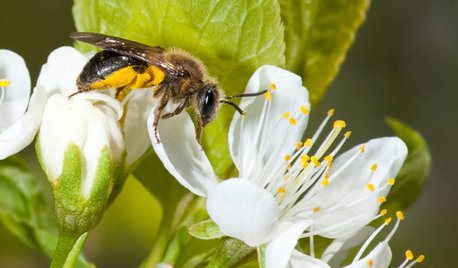
Plants that attract Bees

16 years ago

When deciding which kinds of flowers to grow, I always look for those that attract bees. These are mainstays that always work for me each year; Mexican Heather, Agathache and Lavender, In addition to these, I will be trying these flowers; Centaurea,dimorphotheca,Branchycombe, cuphea and coreopsis. I am always open to what other flowers attract bees. James

Comments (7)

  • 16 years ago
    last modified: 11 years ago

    I'm more of a vegetable grower than flowers. If you also grow a vegetable garden, consider growing lima beans. Bees love their flowers.

    George
    Tahlequah, OK

  • 16 years ago
    last modified: 11 years ago

    I see bees on all my flowers...I don't think you need anything special to attract them.

    Plant some fruit trees! I can stand under the trees and hear the bees buzzing. They simply swarm them when they are in bloom. I have cherry, peach, apple, pear (not much blooming here yet) and plum trees.

  • 16 years ago
    last modified: 11 years ago

    I have flowers and herbs in every bed of vegetables in my veggie garden and also in a cottage border on three sides of the veggie garden, causing my garden to resemble a crazy quilt of veggies, herbs and flowers, and not a neat and tidy farm-like garden of green rows of veggies. The fourth side is a woodland that has wildflowers growing on the edge of the woods in between the woods themselves and the garden fence. The flowers and also the nearby trees (including fruit trees), shrubs and berry brambles attract bees, butterflies, hummingbirds and beneficial insects like hoverflies, tachinid flies, green lacewings, ladybugs and parasitic mini-wasps (which are essential for control of certain pest caterpillars).

    In our garden, the bees seem to be especially attracted to the small flowers of many herbs, including many different kinds of basil, catmint, catnip, borage, lemon balm, lemon beebalm (Monarda citriodora), cilantro (but only if you leave it there long enough to flower), dill, chives (HUGE bee magnet), garlic chives, fennel, culinary sage, parsley, tansy, feverfew, rosemary, lavender, thyme and yarrow.

    As George noted, they like many of the vegetable flowers too and, of course, the bees are needed to pollinate many of those veggies.

    I plant a huge variety of flowers, shrubs and vines to attract bees, butterflies, hummingbirds and beneficial insects throughout the growing season. It is especially important to have flowers in bloom very early in the season to (a) help the bees survive and (b) help attract them to the garden so they'll get into the habit of visiting your garden every day. Here's a list, from memory, of what I have planted in, around and near the garden:

    Some of the earliest flowering plants I have include these:
    Flowering currant (Ribes odoratum) for flowers in late Feb. and March of most years
    Sweet alyssum
    Larkspur
    Poppies
    Pink evening primrose
    Veronica
    Dianthus
    native Yarrow (will bloom in April, and sometimes in March)
    hybrid yarrows like Summer Pastels and Summer Berries
    Holly shrubs: Both the native deciduous possumhaw holly and the evergreen Dwarf (and it really isn't a dwarf) Burford Holly shrubs have tiny flowers that are bee magnets.
    The chives bloom very early too, usually in March or, in a bitterly cold spring, not until early April.

    For later flowers I have these:
    Calendula
    Shasta daisies
    Irises
    Cannas
    Nasturtiums
    Nicotiana (several types)
    Angel's Trumpets (brugmansias and daturas)
    Bachelor's buttons
    Hollyhocks
    Malva sylvestris 'Zebrina'
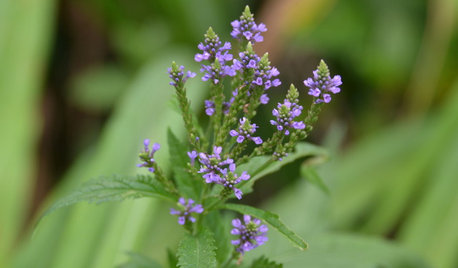
    Tall verbena (Verbena bonariensis)
    Black-eyed Susans
    Zinnias
    Cosmos
    Marigolds
    Cleome
    Mexican hat
    Clasping coneflower
    Hardy hibiscus
    Purple coneflowers (natives O-P type attracts more beneficial insects than the hybrid ones)
    Salvias
    Sedum
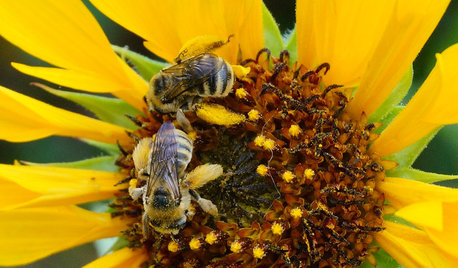
    sunflowers
    roses

    The vines I have growing on fences, porch posts and arbors include:
    PERENNIALS:
    Honeysuckle 'Pink Lemonade'
    Wisteria
    Trumpet Creeper Vine (both the orange and the yellow-flowered varieties)
    American Crossvine
    Sweet Autumn Clematis
    Virginia Creeper

    ANNUALS:
    Black-eyed Susan Vine
    Morning Glories (several colors)
    Mina lobata
    Cardinal climber
    Cypress vine
    Moonflower Vine (Ipomoea alba)
    Purple hyacinth bean
    Scarlet runner bean

    The trees in our yard that attract bees include the peach and plum trees, Southern Wax Myrtle (a very tall shrub or small tree grown in tall tree form near our house), desert willow, sumac (right outside my kitchen window) chaste tree, chinaberry. mimosa and the groundcover Purple Winter Creeper.

    We have almost 15 acres of land, and much of it is very heavily wooded with oodles of native plants that attract bees. Some of my favorite understory plants in the woods are the American Beautyberry bushes, indian currant, pokeberry, native blackberry brambles, persimmons, turk's cap lily, Mexican plum, redbud, viburnum and persimmons.

    In our open areas, we encourage a wild variety of wildflowers, including clovers, Texas bluebonnet, Indian paintbrush, Indian blanketflower, goldenrods, liatris, yarrows, greenthread daisy, crownbeard, toadflax, frogfruit, native ruellias (Mexican petunias), milkweeds, purple winecup, spring beauty, meadow pinks, partridge pea, pickerel weed (in the ponds), frostweed, beebalm, western ironweed, native asters, rain lilies, and others.

    I hope these lists give you some kind of ideas about what kinds of plants attract bees and other pollinators. I have found that the more variety of plants you have, the more bees and other pollinators you have. Although some (but not all) of the gardeners who live within a mile or two of our house talk to me every year about their issues with a lack of bees/pollination problems, I just don't have that problem here. It is comical.....I love having the bees and other insects around but some of my friends are afraid of bees and hate walking in my garden because every flower is buzzing with bees.

    Dawn

  • 16 years ago
    last modified: 11 years ago

    Yesterday was warm enough for bees to be out. They were working the crocus and hellebore which finally recovered from the freeze to bloom again.

  • 16 years ago
    last modified: 11 years ago

    In the early Spring, the bees also love the Maple trees and Crabapple tree I have. I have three cherry trees and have never seen any pollinators including bees. I have never had any cherries as well, even though the trees are covered with blooms. I suppose I don't have the correct type of tree for cross polination.

  • 16 years ago
    last modified: 11 years ago

    James,

    Look at the attached link--it has a pollination chart in the cherry tree section that shows which varieties pollinate one another.

    Dawn

    Here is a link that might be useful: Fruit Pollination

  • 16 years ago
    last modified: 11 years ago

    Well, I don't suppose I can add much to these posts, but I will mention a few that work well for me since I garden specifically and pretty much solely for wildlife.

    Lavendar gets a 5 star rating
    Cosmos
    Verbena bonariensis
    Sennas (hebecarpa, bicapsularis, Partridge Pea)*****
    Butterfly bush any color
    Zinnias - preferably singles not doubles
    Tropical Milkweed*****
    Clover**** (Trifolium repens)
    Dandelions*****
    Asters
    Mistflower

    The bumbles go crazy over the Sennas when in bloom!

    If you don't find a bee on anything else, you will always find them on clover and dandelions, much as many people consider them unwanted weeds. Mother Nature has a purpose and if you want lots of pollinators, its good to give up some space to the "weeds".

    Last year, I had honeybees all over the datura early in the morning while the blooms were still open. I couldn't believe it. There would be several in each huge trumpet competing for nectar. I didn't list it because that hasn't happened before. But if you want pollinators other than bees, it is a great plant. The hummingbird sphinx moths pollinate at night when the honeybees, bumblebees, and other pollinators are sleeping. Zzzzzzzzzzzz.

    Susan