Software
Houzz Logo Print
okiedawn1

More Vegetable Gardeners This Year

18 years ago

I read the other day that more people are planting vegetable gardens this year. The motivation for many is to "save money" as we see grocery costs rising so much. One person they quoted said their booth at a recent Home and Garden Show sold FOUR times as many vegetable seeds as usual.

From what I've seen locally, I believe the article is right. Some of the vegetable seed racks have been picked clean!

I love raising veggies and understand a person's desire to grow their own. However, having said that, I have my doubts that a huge cost saving will be realized, at least the first year.

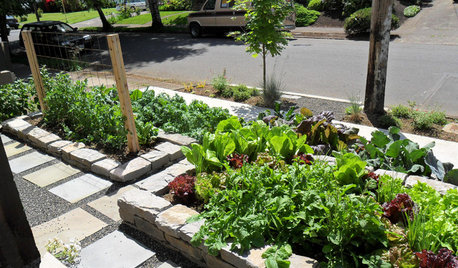
So much money goes into a new vegetable garden.....you have to remove the grass and weeds from a new garden plot, whether you rent or buy a tiller, or buy hand tools, or use a chemical weed killer. Then, if making raised beds, you buy whatever (if anything) will be used to hold those raised beds in place OR you buy mulch to put over the raised beds to cut down on erosion. You also spend money on various soil amendments, mulch, fertilizer, seeds, and water plus....you may have to buy water hoses, etc.

If you are going to put up a fence to keep the critters out, that is a major expense. Then, there's the cost of various products needed as you combat pests and diseases.

Eventually, after your soil is built, improved, fenced in, etc., you won't have as many expenses. However, with the "start-up" costs being as high as they are, I am afraid some new veggie gardeners won't realize the expected "cost savings" this year.

Of course, some people will just dig up, rototill or plow up a section of ground, plant some seeds and transplants, and that will be it. But, since minimal preparation usually gives lower crop yields, they may not harvest as many crops as expected. (sigh)

Personally, I hope the new veggie gardeners get great results and fall in love with gardening. I just think that, if a person adds up all the money spent to create a new garden, and then looks at all the harvested produce they got, and calculates what their produce cost them per pound (or per item), they may not feel like they saved a lot of money. Of course, I think gardening adds much to your life that cannot be measured in dollars and cents.

Comments (15)

  • 18 years ago
    last modified: 11 years ago

    More than a few new gardeners will find that the taste of home grown is worth the extra cost for the first year.For people with children it is a real learning opportunity. They learn things like forming a plan setting goals and being patient.

    Does anyone remember what it meant to spade the garden. That was my job when I was young. I was about 14 before we got a tiller. I kind of liked spading. Witch for a small garden is not as mutch work as it seems.

    I put in the Frugal Gardening link.

    For me that first tomato of the year. Is one of the best things in the world. It always makes me feel so good.

    Here is a link that might be useful: Frugal gardening.

  • 18 years ago
    last modified: 11 years ago

    I agree that the taste (and knowing exactly how it was produced) is priceless. Our son always helped with the vegetable garden and learned so much along the way. I liked the fact that he learned that fruit and veggies come from trees, bushes and plants...not just in sterile plastic bags from grocery stores. He also learned that raising your own food is a LOT of work, and that weather and pests can be serious threats.

    I do remember spading the garden by hand. I remember, too, the aching back....and the sunburn, because it took so long to spade it up by hand!

    I just worry that new veggie gardeners will think they can buy $10.00 worth of seed and grow $300 worth of produce, and we know it just isn't that easy (or cheap).

    The Frugal Gardening website is great and I haven't been to that forum in a long time. I especially like all the threads where people start plants from common grocery store items....like avocado plants from a pit, or buying fresh herbs, and rooting some as cuttings. I amuse myself with that kind of stuff indoors in the winter since I can't grow much outside.

    "For me the first tomato of the year. Is one of the best things in the world. It always makes me feel so good." I TOTALLY AGREE! Every year, when the "gourmet" grocery stores in Fort Worth (like Whole Foods or Central Market) advertise that "Farm-Raised, Heirloom Tomatoes" have arrived, and are selling for $3.99 to $6.99 per pound, I GLOAT (and I'm not ashamed to admit this) that I have all the heirlooms we could possibly eat, and not at those prices either!

    For that first month of ripe tomatoes, I eat all of them I can every single day. After that, I relax a little and start to can and dry some. Then, in the fall, for me the absolute worst day is the day of the first fall killing freeze because it brings a halt to the growing season.

  • 18 years ago
    last modified: 11 years ago

    Yes, I hate that first killing freeze in fall. For us in NE Oklahoma, it sometimes comes so early. Then Mother Nature taunts us with another month of beautiful weather. I especially hate when the weatherman says we're going to get a hard freeze, I run out and pick all my green tomatoes and small peppers, and then the freeze DOESN"T HAPPEN. ARRRGGGGHHHH!

    I checked out a book at the library called "Four Seasons Gardening". This guy lives in PA and grows stuff year round in cold frames and greenhouses. Not a new concept at all, but it got me thinking I could probably get a portable greenhouse or make one and erect it over part of one of my raised beds and maybe extend the life of several tomato plants in the fall that way.

  • 18 years ago
    last modified: 11 years ago

    Is that the Eliot Coleman book? If not, he has one just like it. His greenhouses can be pushed back and forth from one location to another.

    I think you could extend your season with a high tunnel, a hoop house or a mini tunnel. A high tunnel is essentially a greenhouse, but can be heated or not. A hoop house tends to be smaller and not as fancy. The Noble Foundation makes hoop houses using hog panels for the framework and 6mm plastic for the covering, I think. A mini-hoophouse or mini-tunnel is large enough, generally, to cover the bed of crops, but not large enough to walk into.

    I have used hastily constructed mini-tunnels both in spring and fall to keep frost off tomato plants and extend the growing season about a month earlier or later than usual.

    The only thing with a mini-tunnel is that, being very small, it can overheat easily, so you have to vent it or pull back the plastic during the day or your plants roast to death.

    Here is a link that might be useful: Mini tunnel

  • 18 years ago
    last modified: 11 years ago

    When I lived in Carter County I had a 10 x 13 foot hoophouse. I grew salad greens all winter.

    I chose my best tomatoes and rooted cuttings from them (in very damp earth in a raised bed) inside the hoophouse in late summer. I had to put a propane lantern for about 3 nights to cover a cold spell but we picked tomatoes until the week before Christmas. I only got to do that one winter before we moved. I am hoping to get one put together sometime this summer so I can try my luck and salad greens in my NE location.

  • 18 years ago
    last modified: 11 years ago

    I am quickly learning what you are talking about when you say that the first year of gardening is expensive. Wow! We have just finished building and filling our square foot garden and just materials for the boxes added up. Not to mention the soil mix that is suggested for it. The price of seeds and plants isn't that bad but everything else amounts to quite a bit when it is all said and done. However, DH and I still feel that this will be a great experience with and for our kids. We are just having some little sprouts from our peppers that we are starting indoors and the kids are really having fun watching them. Just wanted to add that so far, it seems worth the cost for a great experience with the kids and much more beneficial than a trip to an amusement park, IMHO.

  • 18 years ago
    last modified: 11 years ago

    I agree that there is little financial benefit for most gardeners. Even for me with 6 kids, it still doesn't pay except for maybe a few specific veggies. (The cost of the tiller alone takes years to recover!!!)

    But it certainly does pay off in terms of taste, health, time with kids, and personal enjoyment/sanity.

  • 18 years ago
    last modified: 11 years ago

    Not only are there more vegetable growers, but there are more people ordering baby chicks as I learned when I stopped at our local farm store to order mine six weeks ahead of when I want them delivered as I have done for years. I was told that it might be difficult to get them exactly when I want them as so many more people are ordering this year, mostly laying hens but also meat birds, which is what I raise. But I got them very close to when I want them.

    My husband and I were so financially strapped when we moved into this place 25 years ago that we were lucky to afford the garden spade. My husband and I took turns turning over the sod and our two older children 14 and 8 whacked at it with hoes and rakes and picked the sod out of it. It was a small garden that year, and the next, but eventually we acquired a tiller--for free, my dad passed an old one on to us--and eventually raised enough to feed a family of 6 very well indeed. I guess I had to be a frugal gardener of necessity, because we raised a lot of food with very little money input,(no fancy raised beds or fences or purchased soil amendments and mulches for us) but a great deal of hard labor. Only recently did we fence the garden--5 years ago--because one of our neighbors let his fences run down and his cattle kept coming into our field and our unfenced garden in the edge of it.

  • 18 years ago
    last modified: 11 years ago

    Carol,

    How neat that you had a hoophouse!

    Gardeningwannabe,

    Yes, it does add up, and of course it is worth it. I just feel sorry for people who don't realize there is a high start-up cost initially. I LOVE gardening and would never give it up.

    Since we moved here in 1999, we've hardly been away on vacation at all. To be honest, there's really nowhere else I'd rather be than at home in the garden.

    Not only have we had fun gardening with our son all these years (he's all grown up now), but with the children AND grandchildren of our friends and neighbors. We've introduced many a "city kid" to the joys of the garden, chickens, guineas, eggs, frogponds and lily pads and much more. It's the good life!

    Scott, I agree completely with everything you said. We have two tillers, so I guess we'll never recover the costs! We only use the big rear-tine tiller the first time we break up the clay and blend in amendments. However, I use my little mini-tiller (just a cultivator, really....about the size of a Mantis) ALL the time to add soil amendments to the raised beds.

    Dorothy, I think keeping chickens is becoming a big time thing again, which amazes me. When I was a kid in the 60s(I was born in '59), lots of our neighbors (in the middle of a big town, no less) had chicken coops and raised chickens AND had rooster, and some raised rabbits, and everyone had fruit trees and veggie gardens. Then, somehow, all that fell out of favor in town and the chichens and rabbits vanished, the coops fell apart and were torn down, the veggie plots reverted to grass, and the fruit trees were replaced by ornamental and shade trees.

    Now, all of a sudden, everything is going back to the way it used to be, and I just love it.

    When we moved here, I had to be very frugal too. We had bought our 15 acres outright, which drained the bank account. Then we built the house, so we had the house payment. I had to build beds and improve the soil slowly, bit by bit. I used a lot of home-made compost and leaves gathered from the acres and acres of trees to improve my soil. My first fences were made from cedar posts cut from trees on the property, and chicken wire.

    The hand-labor was hard, but it has paid off. I was looking at the soil in a raised bed this week thinking "Wow. This used to be old red clay and now it is loose, brown, sandy loam." Suddenly, all those billions of hours spent raking and gathering leaves and carrying them from the forest to the garden seemed worthwhile. Without the leaves and grass clippings to use for soil amendments and mulch, I still would have evil red clay.

    Now that DS is out of college and supporting himself, I have a little extra money to spend on gardening, but I am still pretty frugal. I guess, after a lifetime of being thrifty, I'm not going to change now!

    I love living in the country and everything associated with it, though, and could NEVER go back to the city life. One of the funniest things, though, is that DS (who was in his early teens when we moved here) hated leaving the city to move to the country. He couldn't wait to grow up and get out of here and get back to the city. That was then. Now? He wants to buy or build a house in the country and can't even imagine living in the city. Yippee! All those years we were raising animals and a garden, we were (apparently) transforming a city slicker into a country kid who is now a young man. DS is getting married next year and they are planning to make their home in the country even though he works down in Dallas. I love it!

    Dawn

  • 18 years ago
    last modified: 11 years ago

    This is a great discussion! One of those things I could talk about all day!
    I wanted to add, perhaps part of the desire for people to garden more and own chickens comes from people wanting to know where our food comes from. There is so much in the news about our food and health risks. I am a mother of 3 boys and a senior in college and I have done many projects/presentations on organic food. There is so much interest from my classmates and audiences. I really believe that people are like me, they want to know what they are feeding their children and feel good about that.

    Dawn, I hope you're right about things turning back to the way they used to be. I have such fond memories of growing up on a farm/dairy. Not only are we losing the link to our food, we are also losing the link to our neighbors. So I hope you are right and we can have some old fashioned-ness in a comtemporary world.

    Ilene, is Eliot Coleman the author of your book you read? We have two of his books and they are great! He was the keynote speaker at the Tulsa Horticulture Show in January, wow, what a great speaker! His website is really great as well. He really got me thinking that if they can do it in New England than I can do it in Oklahoma!

    So . . for my birthday last month, my husband built me a hoophouse. We used PVC and built a wooden frame. It is 10x28, which is just right! We put gravel on the floor except on one side where we are going to add compost and do greens thoughout the winter. It was a surprisingly easy project and since it was a gift, we don't have to recoup the cost in veggies . . . right??? lol He says we spent about $400, so not too bad.

    Hope everyone is enjoying the weather (but not the wind!)

  • 18 years ago
    last modified: 11 years ago

    Brandy,

    You made an excellent point that people want to know where the food comes from and how it was raised, as well.

    How many times in the last year or two have we seen seemingly harmless produce like spinach or carrots recalled because they are contaminated with E coli. or salmonella (like the cantaloupes recalled this last week) or something else?

    I have read several excellent books the last 4 or 5 years about the issues that surround the food we eat. There are my favorites:

    "This Organic Life: Confessions of a Surburban Homesteader" by Joan Dye Gussow.

    "The Omnivore's Dilemma: A Natural History of Four Foods" by Michael Pollan.

    "In Defense of Eating: An Eater's Manifesto" by Michael Pollan

    "Can You Trust A Tomato In January?" The subtitle was something like "Everything You Wanted to Know [And A Few Things You Didn't] About the Food in the Grocery Store" by Vince Staten

    Each of these books explores the food we eat, where it comes from, what it takes to get it from where it is grown or raised to us, etc. In "Can You Trust A Tomato in January?", I learned how Chee-toes are made, among other things, and it is a very entertaining book....informative but also fun.

    The book that made me REALLY think about what we eat is Michael Pollan's latest, which I read in January, "In Defense of Food: An Eater's Manifesto". Mr. Pollan describes many of the manufactured foods we eat, and makes you realize we are eating ALL KINDS OF ADDED STUFF, including vitamins, mineral, presevatives, fiber, dyes, antioxidants, plant sterols, flavorings, etc., but very little actual food. How did that happen?

    I would love to see us get back to raising more food locally and spending less energy transporting food across the world so we can eat "out-of-season" items.

    Any growth in the home-gardening (or the homesteading) movement is great. It is a shame so many people have completely lost touch with where their food comes from.

    Dawn

  • 18 years ago
    last modified: 11 years ago

    Well I would definitely consider myself a rookie gardener this year.Last year we planted a few tomatoes with squash and zucchini but only like 3plants each. THe tomatoes came out wonderful and made it till Sep-Oct from what I remember. The squash and zucchini were planted in small containers and didn't make it long. BUt this year we are doing six large garden beds along with berry bushes and a couple of fruit trees. Does anybody know of any gardening clubs in OKC where I could go learn more.

  • 18 years ago
    last modified: 11 years ago

    Shawn,

    I don't know anything about the garden clubs in OKC as I am way down here in southern Oklahoma, but I found a list and will link it for you.

    The OSU extension website has tons of information for home gardeners. You can find it by googling.

    Also, there is a Tulsa master gardener's website that is full of helpful info as well.

    Another way to learn about gardening is to go to the various garden shows, plant sales, herb society festivals, etc.

    Finally, all the forums here at Garden Web are great. My favorite one, of course, is the Oklahoma forum because everyone here gardens in similar weather conditions and fairly similar soil. There are many other forums, and some of the best for vegetable gardeners are the Vegetable Forum, Pepper Forum, Tomato Forum, Organic Forum, etc.

    Dawn

    Here is a link that might be useful: Oklahoma Garden Clubs

  • 18 years ago
    last modified: 11 years ago

    Right Dawn, that's what built our garden, oak leaves, grass clippings, woodashes, rotted sawdust from a local mill and chicken poop from the coop. I certainly hope that you are right about a growing movement back to gardening, country living, etc. as I have been very disappointed to watch the trend away from it the last few years. I came to the country during the late 60's just in time for the first "back to the land" movement fueled by The Mother Earth News and other magazines of the type. I dearly dearly hope that another movement is begining. Dorothy

  • 18 years ago
    last modified: 11 years ago

    Thanks Dawn.