Software
Houzz Logo Print
avman63

Raised bed cover

15 years ago

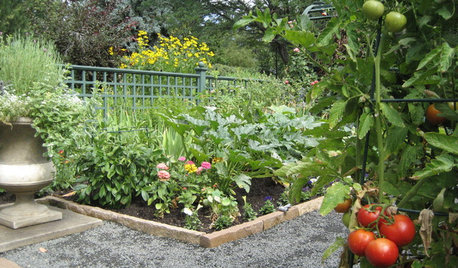
I am new to this forum and have found alot of useful information here I haven't had a garden for at least 8 years. I built a 4'x8'x14" raised bed to grow some tomatoes. I was wondering if I could use some commercial grade 6 mil plastic or is it better to use greenhouse film for a pvc cold frame? I am trying to do this as cheaply as possible.

Comments (4)

  • 15 years ago
    last modified: 11 years ago

    Maybe someone will get on here and help you more than I can. I think most will say greenhouse film will be the best, but you can make other things work.

    Do you know anyone that works where they stretch wrap there product before shipping? You can make frame and wrap it with stretch wrap. Where I worked they just threw the defective rolls away.

    I have used trash can liners to cover a tomato cage. The last 32 Gal. liners I bought were about $23.00 for 250 count.

    I use to drive an 18 wheeler and the places I delivered to would slit the stretch wrap on the pallet and throw it away.
    Anyone could have it just for hauling it off.

    If I were in your place I might just use the pvc frame and cover it with construction plastic. If you have not gardened for 8 years you may decide you still dont like it.

    I almost never cover my plants any more because the added risk plant disease. If you only have a 4'x8' bed you can do about anything to it without a lot of cost.

    Larry

  • 15 years ago
    last modified: 11 years ago

    If you are mainly wanting to keep frost and wind off the tomato plants during their first couple of weeks in the ground, then I think 6mm plastic would work just fine, and it doesn't have to be the more transparent and more expensive greenhouse plastic. I've done this before with the cheaper, somewhat less transparent but still transluscent 6mm plastic bought on rolls at Lowe's, Home Depot and similar places. I don't use it routinely, but have used it to protect my full-sized plants from an early fall frost at the end of September, and have used plastic in this manner when a very cold, snowy-sleety-rainy spell occurred in April after my plants had been in the ground 2 or 3 weeks and were making good growth when a late cold spell threatened.

    While 6mm plastic will create something of a greenhouse effect and provide some warmth and frost protection, it won't prevent your plants from freezing on a very cold night. The 6 mm plastic isn't thick enough to keep the air inside that much warmer than the outside air so it only gives a couple of degrees of warmth when errected over a small bed. To help prevent freeze damage, you'll need to cover the plants with something else...maybe 5-gallon buckets turned upside down and placed over each plant and then with an old blanket, sleeping bag or comforter thrown over all the buckets. Or, you could use an Agribon-type floating row cover that is rated for anywhere from 2-4 degrees of protection for the more lightweight covers to 8 degees of protection for the frost blanket type covers.

    I don't cover up tomatoes during the daytime unless we're going to be below freezing. They need air movement to keep them from getting foliar and root diseases, as Larry noted above, and they need air movement to help them develop thick, sturdy stalks. Plants that are raised in plastic wrapped cages for their first couple of months in the ground are taller than those that are raised in the open air but the open-air plants are sturdier, stockier and in better shape to carry a heavy load of fruit. Plants raised in plastic wrapped cages for a prolonged period also are more prone to have diseases early in their life that can impact their ability to produce and ripen fruit.

    If you were using a cold frame only to harden off seedlings for a couple of weeks the way Jay does it, I think it would be fine, but still think that 6 mm plastic might be too thin for cold nights. A blanket thrown over the 6mm plastic on cold nights might be enough to keep the plants inside warm, but there's no guarantee.

    I like to plant tomato plants as early as possible, but would rather not cover them up at all after they are in the ground. So, even though I am in zone 7b and could have plants in the ground right now if I were willing to cover them up at night, I'd rather wait for the cold nights to pass and then put them in the ground. Since tomato plants are so prone to foliar diseases of all types and since good air flow around the plants is essential to help prevent the foliar diseaes, sometimes you're better off putting your plants in the ground a little later and leaving them uncovered.

    During the last couple of years, I've switched from using 6mm clear construction plastic to using both lightweight floating row covers and the more heavyweight frost blankets because they allow for good air flow. That way, if I do have to cover up anything, I'm not restricting its air flow.

    So far this year, I've only covered up my plants once, and it was cool-season plants (snap peas, onions, potatoes and lettuce) that I covered with a frost blanket on a night when we were expected to go down into the mid-20s. I wasn't even worried about the mid-20s. I was worrried that if we went into the low-20s the plants might be damaged, and our house is in a low-lying frost pocket that often goes a couple of degrees colder at night than forecast. I used an 8-degree-rated frost blanket and we only went to 26 degrees, so my plants likely would have been just fine without it, but I probably would have worried about them and wouldn't have slept well....so you could say the frost blanket was more for me than for them.

    Growing in low tunnels made from some kind of tubing structure (you can use heavy-gauge wire, PVC pipe or electrical conduit) covered with greenhouse plastic is becoming very popular in some parts of the country. However, in the areas where it is most heavily used (for the obvious reason that is stays cold there until May or June), the weather during the daytime tends to be much colder than what we see here and they often have lots of clouds and much less sunlight. I think it would be harder to growth healthy plants in low tunnels here in our climate because our days can get so very hot while nights are still very cold. The high heat causes a big heat build-up in low tunnels during the day and can keep the plants too hot. If it stays too hot inside the 6mm plastic-covered structure, the plants can become diseased or can cook to death. In our climate, I think high tunnels work better because they allow better air flow, and since they are tall, you can even put a fan inside them. If I were going to put a cover of some sort over a bed of tomatoes, I'd use the 8-degree frost blanket type of floating row cover instead of 6 mm greenhouse plastic. Then, if a very cold night threatened and I thought the 8-degree frost blanket would not provide enough protection, I'd throw a sheet of 6mm plastic over the floating row cover vor additional protection from the cold. However, I'd remove that plastic in the morning so my plants wouldn't roast once the sun was up high in the sky.

    The best way to figure out how well it will work for you is to just try it and see. Every one of us has different conditions in terms of temperatures, sun exposure, wind, etc. so what works for one person in one location may or may not work for someone else in another location. However, I'd try to leave the ends or tops where they can be opened and closed easily to allow good air flow as needed. Another issue with a low tunnel built over a fairly compact bed is that it is too small to put a heater inside whereas in greenhouses covered with 6 mm plastic, greenhouse heaters can be used to provide extra warmth at night.

  • 15 years ago
    last modified: 11 years ago

    Thank you Larry and Dawn for your very informational answers. Are the frost blankets inexpensive and do you know of any places around the Tulsa area that I could acquire one? I am going to get a load of garden soil from Gem Dirt this weekend and fill my bed and plant my toms. Hopefully it will stay warmer than it has been lately.

  • 15 years ago
    last modified: 11 years ago

    avman

    Lowes has frost blankets Im sure Homedepot and the other non big box nurseries do also.

Sponsored
The Creative Kitchen Company
Average rating: 5 out of 5 stars52 Reviews
Columbus Area Kitchen Remodeling and Refacing Professional