Software
Houzz Logo Print
chickencoupe1

Cabbage Worms, Etc.

15 years ago

I wasn't going to concern myself too greatly about pesticide. The little plants I've had so far are doing well despite temperature, weather, normal bugs, drought and my inexperience. Technically, they should not be alive. With that I've loosened up a little bit in my pursuit of perfectionist gardening.

There were eggs in my worm bin. I wondered what they were. For some time I've viewed maggots attaching themselves to my worms attempting to eat them alive. I know fly maggots can be pretty disgusting but this aggressive behavior was quite puzzling. Whilst studying about organic pest control for gardening I noticed that egg belongs to a cabbage fly maggot. I know I've seen a great many cabbage flies in the house and everywhere as well as:

Variety of leaf hoppers

Typical Aphids

Tiny grass hopper-like bugs (a lot). Are they just baby grasshoppers? They were in the process of destroying my mint plants; of all things.

My butt was planted directly in the dirt of my garden while scooping up nice soil for my carrot bed and adding some bagged manure. There it was. The horror of all horrors - a root maggot in my bed already! Certainly it was quite upset that my husband's tilling disrupted it's all you can eat buffet but that wasn't sufficient for me. I had to kill it.

As I sat digging I watched the bugs that landed on my leg. I possessively raised my hand to kill it when I thought about all the pictures I reviewed this morning. Familiar. So were five other bugs that came around. Here I sit in a 42 foot by 35 foot pile of dirt and these bugs are landing on me. My god, how many are there? I am seriously have a big bug ecology. I'll be happy to trade them for Padilla's snakes and tarantulas!

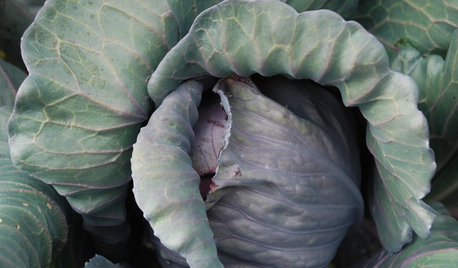
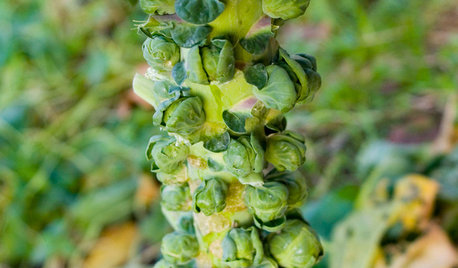
I looked into row cover material but it's just not something I can afford at the magnitude I need. I'm looking forward to approximately eight to ten cabbage plants. 4 to six Brussels and approximately 20 broccoli.

So, any and all suggests and experience are certainly welcome. I think I'll be needing it all. lol

*hugs*

bon

Comments (4)

  • 15 years ago
    last modified: 11 years ago

    If you're seeing cabbage root fly maggots now, I am really surprised because they are cool-season pests, and Oklahoma is hot, hot, hot right now. I've gardened in Texas (80 miles south of where I garden now in Oklahoma) and Oklahoma all my life and never seen a cabbage root fly either in the maggot form or the fly form.

    Leaf hoppers are everywhere every year. I just ignore them.

    Aphids are most abundant on plants fed heavily with nitrogen or in new beds heavily enriched with nitrogen. I believe the reason is that extra fertilizer creates extra carbs and the insects find the extra carbs to be especially attractive. Some years the aphids are worse than others. People here tell me it is a bad aphid year, but other than seeing a few on my cabbage and broccoli a month or two ago, I'm not seeing them. Just use a sharp spray of water from the hose to wash them off the back of the leaves. Do this once or twice a day and they'll get tired of it and leave. If they are driving you nuts, you can try spraying the backs of the leaves with either a commercial (not home-made) insecticidal soap or neem oil. I don't do either unless they are incredibly heavy and the water spray doesn't dislodge them.

    Tiny hoppers. Yes, they most likely are just the younger instars of the grasshoppers. In my garden, the tiny ones show up in March and April and occasionally are still hatching out in May. I put out Semaspore weekly while the hoppers are small and after that I generally do nothing unless the infestation is extremely high, which it is this year. Semaspore and other products with the same active ingredient generally are not effective on the larger instars and it is expensive, so using it after they've gotten bigger than 1/4" to 1/2" would be a waste of money.

    I'm going to link a document about grasshopper control. The problem with any method of grasshopper control is that new hoppers migrate in every week....if not every day, so no matter what you do, more of them just keep coming.

    This year I bought EcoBran and am ready to use it. If I use it, it will be the first chemical pesticide I've used in well over a decade, but last year the hoppers destroyed certain crops, and I think they already are present in heavier numbers now than they were at this time last year. They're probably my biggest garden problem in the years when their population peaks. They're not a big problem every year.

    In our garden, the grasshoppers usually attack these plants in this specific order every year: lemon balm, catnip, catmint, potatoes, mint, basil, beans, peas. In the worst years they then move to to tomatoes and peppers. This year, they're already damaging the tomato and pepper plants, which they usually don't do until July or August here.

    I ignore root maggots. There's always one here and there, but they aren't present in large enough numbers to cause significant damage.

    In my garden, there are probably thousands of bugs present on any given day. I don't worry about 99.9% of them. Your garden, just like the world at large, is an ecosystem. You'll always have bugs. The alternative is to nuke your garden with such heavy dosages of chemical pesticides that everything in your garden becomes heavily contaminated with chemicals. I just won't do it. I'd give up my garden before I began spraying broad-spectrum pesticides.

    There are very few pests in your garden that will do enough damage to become a problem for home gardeners, so I mostly ignore them. With the pests that are troublesome, I prefer to hand-pick and destroy them and their eggs above all other methods because then I'm hurting only the pest insects and not the beneficial insects. The worst thing anyone can do is spray their garden with a broad-spectrum pesticide that wipes out the good bugs that help keep the bag bugs under control. Learn to tolerate a healthy bug population. Then, when your child or grandchild, a niece or nephew, or the child of a friend or neighbor is working on their Insect Collection for school, you'll be the most popular person in town. When our son and our friends' children were at the 'insect collection' age in school, my garden (and our screened-in back porch) were the most popular places in town. A kid could drop by, spend an hour or so, and pick up 25-50 different kinds of insects for their collection. After a while, I could pretty much identify them on sight for the kids and could refer them to the best websites for ID and proper scientific names and such. It can be amazingly difficult for a 'city kid' in an area with heavy pesticide use to find enough insects for their insect collection, but in our yard and garden they found tons.

    Floating row cover is a godsend. I have 5,000 square feet of it but don't use it for much in terms of excluding insects. It is great for excluding squash pests. Otherwise I mostly use it for freeze/frost protection where it saved my garden a couple of times this year from late freezes.

    For pests of the brassica family, buy and use Bt 'Kurstaki'. It works only on caterpillar type pests and is not toxic to others. Do be sure you avoid putting it on flowers to which butterflies and moths would be attracted because it has the potential to kill them. Generally for brassica family crops like cabbage loopers and imported cabbage worms, I just handpick them off the plants (wear disposable latex or nitrile gloves if you don't want to touch them) and drop them into a cup or bucket. Then I take them to the chicken coop and toss them in there for the poultry to devour. As an alternative you can drop them into a bowl of soapy water and drown them, or drop them on the ground and squish them with your foot. If you check the backs of the leaves for them and remove them (and their eggs) while they are small, you can eliminate them. However, you have to remain vigilant because there's always more of them coming. This year they haven't been nearly as bad as they were last year.

    Accept that your garden and yard are an ecosystem and you'll always have insects, both good and bad. Avoid panic when you see them. It is not often that pest populations are high enough to create a significant issue. For each pest that is a problem, use integrated pest management. Use narrow-spectrum solutions aimed at that specific pest. Try to avoid doing anything that will hurt your beneficial insects and they'll help keep the pest insects under control.

    Just about every year I have one pest or the other that is more of a problem in that specific year than it normally is. Last year it was grasshoppers and Colorado Potato Beetles. This year we had relatively few CPBs but hoppers are bad again this year. This is not unusual as grasshopper populations cycle up and down. Once they peak (last year was, I hope, their peak, although this year could be), their population slowly cycles back down after several years.

    I just do not get very excited about most insects. Our world is an ecosystem and they are a part of it. When they are doing damage, I do what I can to control them to the best of ability, and then I just don't get too wound up over them above and beyond that. They aren't worth getting upset over, spending vast sums of money to combat (you'll never get rid of them all, and if you did, more would move in) or fretting over.

    The pests I think worth spending time and money to combat (if their numbers warrant) is very small and would include these:

    cabbage loopers and cabbage worms
    Colorado potato beetles
    squash bugs and squash vine borers
    grasshoppers
    blister beetles and leaf-footed bugs

    I don't get too excited over tomato and tobacco hornworms because they seldom do much damage at all to my plants. I don't worry much about corn earworms or Eurpoean corn borers because they can be cut out of the ears of corn after it is harvested. I ignore leaf miners and flea beetles as they rarely do enough harm to any of my plants to actually hurt them. I let lady bugs take care of the bugs they like to eat. Other beneficial insects eat other pesty things. Birds, frogs, toads, and other reptiles and amphibians take care of lots of the insects. We have a young male kitten who has made it his mission in life to play with and kill every grasshopper he sees.

    Let's use Colorado Potato Beetles as an example of a pest that may or may not be a problem in a given year. A few showed up this year but not all that many. I handpicked maybe 30 or 40 over a 3-month period. As soon as the Assasin bugs showed up, I stopped handpicking them and let the Assasin bugs take care of them. However, last year they were a huge problem and we had hundreds and hundreds of them.

    We have 14.5 acres and every one of them is just crawling with bugs. On the approximate 12.5 acres that we don't even mow, are the insects doing significant harm to the plants? Nope. So, why knock myself out worrying about them on the 2 acres where we have our lawn, garden and other landscaping? I don't. I simply try to control the ones that I know from experience will damage a crop enough that I won't get a harvest from it. Most insects have a purpose in life and I try not to interfere with it. For example, I am not at all fond of blister beetles. However, they do eat grasshopper eggs. So, even though my initial inclination is to kill one when I see it eating a tomato plant, I try to just flick it off the plant and leave it alone, hoping it will get hungry for some grasshopper eggs and eat them instead.

    Dawn

    Here is a link that might be useful: Grasshopper Control Page from Planet Natural

  • 15 years ago
    last modified: 11 years ago

    This makes sense to me. My newbiness wants to panic but I think over time it'll be OK. I'm indefinite about the maggots. In time I'll know. I don't believe I've ever seen a fly maggot attack a living organism. My worm might already have been dying. It could be a lot of things. I've sat and watched and am just in the beginning stages. I just disrupted the ecological system in a major way. I'm laying it upon myself it may take a few seasons before things settle down. Until then I probably will have certain species populations growth and some lower? For instance. I had no idea there were doves in this area until I tilled the yard. Like you, I don't wish to destroy the eco system. I have hordes of beehives in the thicket nearby and must be careful of eliminating all their food sources but hope they'll use my plants. They thrive on the clover buds. I'm considering transplanting some of it to other areas to ensure survival. Then, there are cottontails who , for years, have been allowed to act as if they own the land. When I planted to my leafy plants and carrots i went ahead and nearly doubled the amount in the event they get some. Squirrels are the same. We actually had to exterminate a couple of families of squirrels as they were already a nuisance and turning pots over - not to mention living in the attic. But there's a ton more in nearby areas. Our pecan and walnut trees will see to it that they thrive.

    The hoppers were destroying my potted mint. No problem. I just moved it to a higher elevation. I placed walnut tree twigs in the other pots with the cabbage and otherwise as trap crops and decoys. Then I read to place a barrier at the base of the cabbage and root plants. I had some landscape fabric. So I did so.

    WE GOT RAIN!! YES! QUITE A BIT OF IT. Hopefully it will sustain until the next rainfall.

    bon

  • 15 years ago
    last modified: 11 years ago

    Doves are everywhere. We have huge numbers of them here. I feed them year-round and enjoy their company. They sit on the power line and on the fence and watch me work in the garden.

    In the early morning and the late afternoon I put out tiny little piles of cracked corn and sunflower seeds for the birds and bunnies. Sometimes I put out henscratch. There's always a dove or two on "sentry duty" watching for me to put out the food. As soon as I come out of the barn with the red plastic Folger's coffee can of hen scratch, cracked corn or sunflower seed in my hand, the sentry birds begin singing out the news and you hear the trees come alive with the bird chatter. Before I'm even through pouring the little piles on the ground, birds are gathering everywhere on the power line, fenceline, trees and a few bold ones are sitting on the ground just waiting for me to go away. It amazes me how we go from two birds to dozens of birds in about 30 seconds. And, the reason for the little piles is that if I leave big piles they don't eat it all and then we get other critters coming around that we don't want here. The birds do reward me by hanging out in my garden and eating bugs. The cardinals are especially vigilant about bug control and are in the garden most days from around 5 p.m. until sunset. Sometimes in the evening there will be 15 or 20 birds in the garden on the bug hunt. I think that's why I almost never see a tomato or tobacco hornworm even though I have about 100 tomato plants. I think the birds eat them before I even know they are around. With that many birds, I have to keep water in the birdbaths or they'll start pecking holes in the fruit to find water.

    I don't know what purpose the black walnut twigs are supposed to serve, but I'd keep all black walnut material away from the garden in order to avoid black walnut wilt. We've taken out all the walnut trees within 100' of the garden. I use landscape fabric as a method of weed control in some beds, most notably tomato beds, but it doesn't serve as a barrier to insects. They find their way up through the holes cut for the plants to grow through.

    I'm glad you got rain.

    It just doesn't rain here much at our house in summer. Our good rain months normally are April, May and June. Then we stay fairly dry until whenever the autumn rains start up again, which sometimes is in Sept. or Oct. but often not until Nov. In April we had maybe 1/4" of rain, then we had 6" in May which was great. Normally in June we get 3 or 4" but so far in June we have not had a single drop.

    Our ground is cracking. The cracks have progressed from being 1/4" wide last week to well over 1/2" wide this week. It is going to be a long, miserable summer if we don't get some rain.

  • 15 years ago
    last modified: 11 years ago

    If I could wish you some rain, I would. I had those 1/4" cracks and then we got some glorious rain. I already have stalkers. A robin and some other long-tailed bird hang very closely when they see me working in a bed ready to catch the worms I toss out and to move in when I'm gone to investigate whatever I've stirred up. This is some excellent advice. I'll need to get a watering hole established as the local pond is dry. I can't afford seed. I guess I'll use some old bread. I suppose they might eat the left-over rabbit pellet crumbs. Eventually, I'll be able to use sunflower seeds from those currently growing. Boy, they sure look great at about 2 foot tall now.

    I'm tired. It's hot and this gardening is killing my back but aside from my beautiful young ones I look forward to it all.

    You've been such a blessing. I cannot thank you enough, Dawn. :)

    bon

Sponsored
Peabody Landscape Group
Average rating: 3.5 out of 5 stars8 Reviews
Columbus' Reliable Landscape Design & Contracting