Software
Houzz Logo Print
ozlifter

Bloom Away

19 years ago
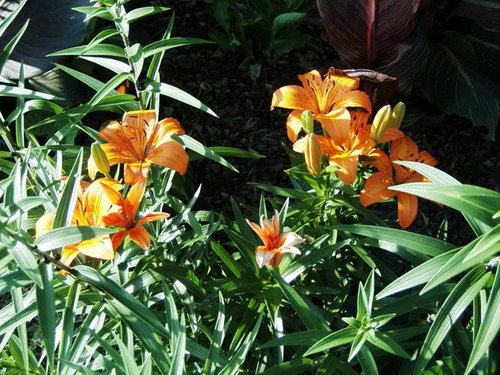
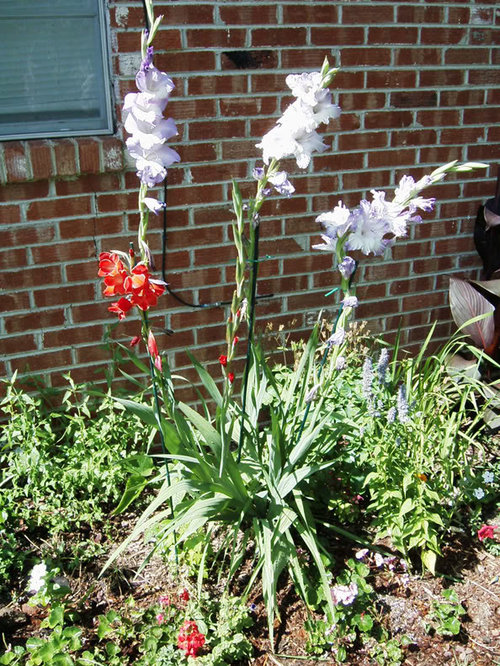
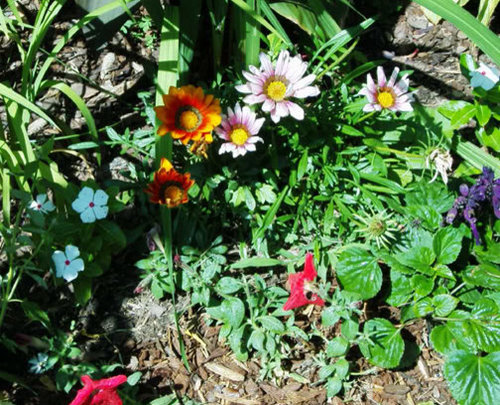
A lot of my flowers have started blooming this weekend, which is nice. It's always fun to see what plants will treat me with blooms this week.

Here are a few things currently in bloom in my beds:

- These were actually in bloom about 2 weeks ago, but I wanted to go ahead and share.

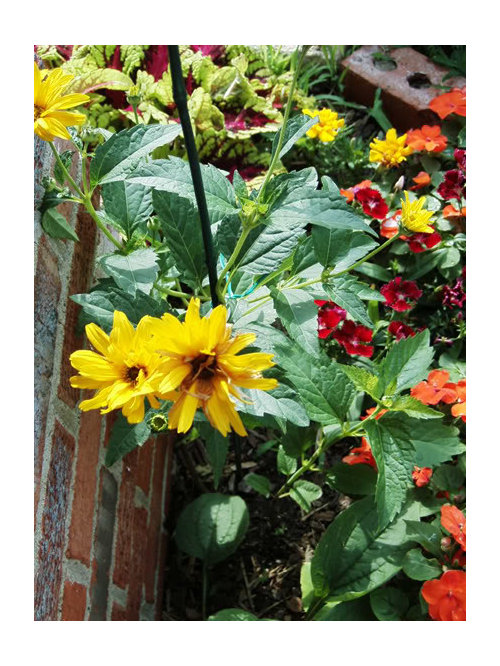
{{gwi:1109118}} - I have several of these throughout my beds.

{{gwi:1109119}} - This just bloomed this morning, and it looks a little deformed.

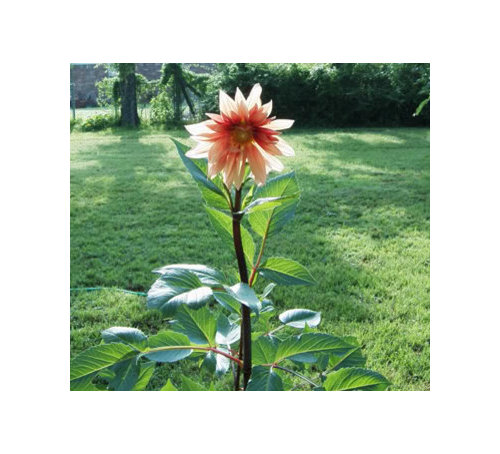
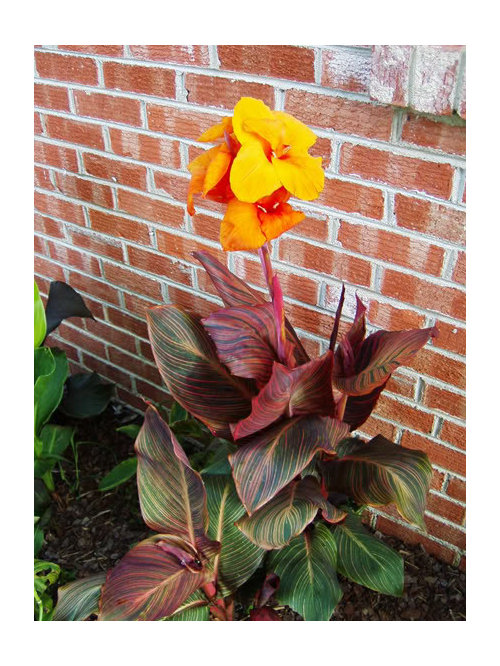
- I planted this from a tuber I bought at Wal Mart earlier this spring. Surprisingly, it's done quite well in a pot.

- I bought this from BlueStone Perennials. It's done quite well, especially since this is its first year.

- These always put on a good show.

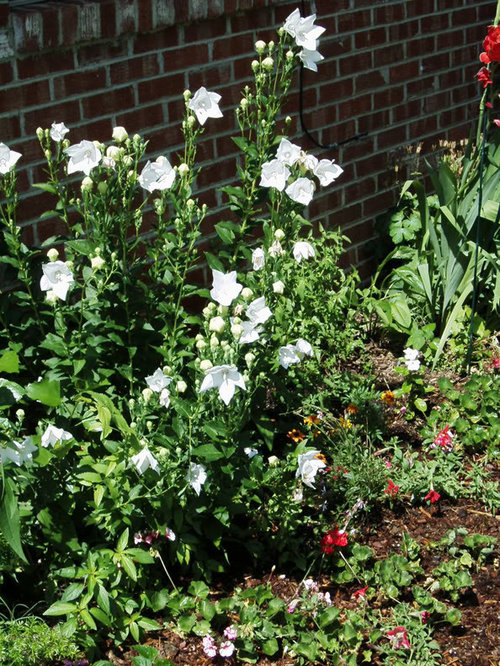
- I love these old-fashioned flowers.

- I got these for a really good price earlier this spring. They've been blooming for the past month.

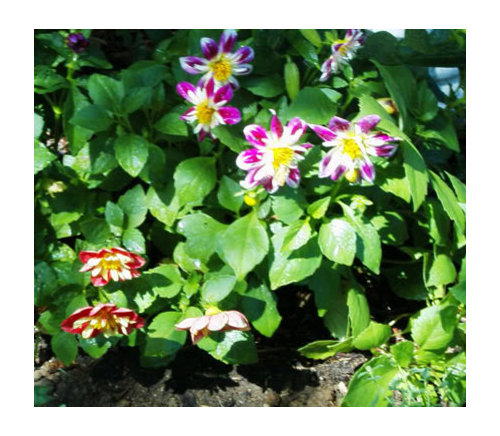
- These smaller dahlias look great at the front of the bed.

Comments (15)

  • 19 years ago

    Good for you.

    I've gotten a few more tomato blooms and even one of my mustard plants is sprouting tiny yellow flowers. Are they supposed to go to seed this soon? Is that what's happening here?

    Those mustard plants seem to have little brown everyday ants on them. I also found some bright green catapillars matching the foliage that I removed and squished. Are those green catapillars the result of those white butterflies?

    How much of the leaves of the mustard plants can be harvested to eat and still leave the plant producing? I figure I may as well eat some of the good looking leaves before the bugs get them. Of course I'll wash them good before eating, I don't need protein that bad.

    I think I asked before but didn't get an answer. I think I planted the mustard plants too close together and too close to one of my tomato plants. Can I dig up and replant some of the mustard plants to a different location?

    Hank

  • 19 years ago

    Hee hee, Hank. Don't think you'd get much protein from a caterpillar that's a strict vegan!

    Yes, they're probably the Cabbage White butterfly larvae. I love them in the garden, but one person's pest is another person's garden lovely.

    Your pictures are great! Love the Harlequin Dahlias!

    Dawn will have to respond to your mater and mustard question, but I doubt you could successfully transplant mustard because it is taprooted, and taprooted plants truly dislike being moved once they are reasonably mature. If they are small seedlings, they don't mind so much.

    Susan

  • 19 years ago

    Hi Hank,

    Mustard is a cool season crop, so yes, this is the time it goes to seed. It is the kind of crop you plant in winter for early to mid-spring harvest, and in the mid-fall for an early winter harvest.

    I'll write more later, tied up with volunteer fire department stuff for third day in a row.

    Bye!

    Dawn

  • 19 years ago

    Ozlifter, love the pics!

    I have another herb question, how do you tell when sweet basil is ready to be harvested?

    Another tomato question for you, Is there something that I can put on my tomatoes on a regular basis, not the necessarily the leaves, just the tomatoes. Something is eating small holes in my green zebra tomatoes. It looks like someone drilled several tiny holes in each of them. I sprayed a little bit of neem/pyrethrin mixture on them (just the tomatoes, not foilage), and then wondered if that is even safe, I couldn't find the instructions. Also I am getting yellow leaves at the bottom of alot of plants. Every morning I go out and find even more, and I have been taking them off. Looks like early blight, and maybe some bacterial spots. Should I prune those leaves and stems, or leave them? Will the disease take out the whole plant slowly? It continues to rain here, the moisture meter hasn't even had a chance to move off of the highest mark.

  • 19 years ago

    Oz,

    Wonderful photos of your beautiful flowers. You should be so proud of how well everything is doing and of how beautifully the plants are blooming! I loved seeing your photos! Thanks for sharing them with us.

    Hank and Sheri,

    I will answer your vegetable questions in a separate post, because we don't want to hijack Ozlifter's post and drag it way off-topic.

    When you have a question that doesn't actually relate to the original post, it is best to start a new post yourself with the subject in the box 'Subject of Posting' so other people with a similar problem can find your post. Someone doing a search for a mustard or tomato question, for example, is not likely to look for the answer in a post about blooms.

    Dawn

  • 19 years ago

    Thanks for the kind words. This is only the first or second year for most of my perennials, so my bed isn't at its full potential just yet.

    In another year or two it will hopefully look better.

  • 19 years ago

    Hank, you're doing much better than I did my first couple of years of gardening. I planted so many things that were unsuited for gardening in Oklahoma. The one thing I do remember planting that was successful was cleomes. I prefer not to recall my failures, thank you!

    Yes, perennials rule of thumb is first year they sleep, second year they creep, and third year they leap.

    Some plants take a bit longer than 3 years, depending on the their initial planting size. Some plants do well before the 3-year period is complete. Ya just nevah know with gardening. Every year is a surprise!

    You're doing just GREAT!

    Susan

  • 19 years ago

    Hello, Oklahoma Gardening friends,
    I've been eavesdropping for awhile but had to chime in and ask Susan (and others) to please share your failures so we can learn from them. I'll share mine:
    Fuschia comes to mind - and astilbe. I'm about to give up on poppies, too, although it seems some of you have success with them. I'll have to think about some others.

  • 19 years ago

    OKPrairie,

    Many times I will have 'failures' with a plant one year, but success another year, so I think so much of it is dependent on that year's weather.

    I can't grow hydrangeas at all, though. In my clay soil, they die in the winter time, and in the little bit of sandy soil that I have, they die in the summer. I've pretty much given up on them for now, although someday I hope to really enrich an area for them, and build the soil, so they have a chance.

    I also have trouble with the large-flowered dahlias. They do fine until the August heat hits. When we have a string of days where the high temps are in the 105 to 112 or 115 degree range, which is pretty common for us for at least a few days in August, they give up, brown out and die, no matter what I do.

    I have really, really tried to focus on tough plants, whether native or adapted, that can handle thick, slow-draining clay soil that gets very wet and drains slowly in times of high rainfall and often has standing water for days, and which also gets so dry it cracks in hot summer weather. The list of plants that can tolerate those conditions is not as long as I'd wish, but it is longer than you might think. Many of them, of course, are prairie plants, or plants of African origin.

    Fuschia and astilbe struggle so in our heat. I tried and failed with them in Texas many years ago. I also don't have much luck with azaleas....they need better soil and more water than I care to give them. Regular poppies are easy for me, but California poppies seem too short-lived to bother with. I love the way Gerbera daisies look in the nurseries, but they die the minute I put them in the ground here. They are OK in containers, as long as I make sure they have enough water and not too much sun or reflected heat.

    That's a few of my failures, but believe me, there have been many.

    Dawn

  • 19 years ago

    How do I fail thee, let me count the ways.....hee hee!

    Some I cannot grow are:

    Asclepias tuberosa (tried that a few times, and I always either over or underwater it)

    Ipomeae 'Heavenly Blue' (should be easy, but I can never get this to grow to where it will bloom before frost)

    Cimicifuga racemosa (bugbane)--too hot here

    Calycanthus (Virginia Sweetshrub)

    Lavendar, other than 'Provence' (I tried several species/cultivars before I found that Provence would grow for me)

    Cardiocrinum gigantea (have had a bulb for 6 years; moved it last year to a different location, with better drainage in a raised bed; still, the foliage died this spring)

    Lilies - some oriental lilies especially; asiatics do best, as well as a couple of tigrinums, formosanum, etc.

    Aruncus dioicus (Goatsbeard) (tried it 3 times with no luck)

    Heucheras (I have one that has been going for about 4 years now - 'Raspberry Ice'; I planted out one this year that I grew from seed and it is doing okay also, but most do not like me at all) This also goes for heucherella and tiarella.

    Rhododendrons (died immediatelly after planting even though I amended, amended, amended for them)

    Poppies - I plant seed and plant seed, and they sometimes come up, but die before blooming

    Larkspur - I grew some last year from seed and they bloomed. I had hoped they would reseed, but they did not.

    Roses - I am woefully inept and neglectful of their needs. I don't like to spray, so I had to give them up, except for the one (@#(%@#_)($%#%- rose that persists in growing despite my neglect, and believe me it is the epitomy of U-G-L-Y

    Nicotiana - unless I buy actual plants of this, I cannot grow it from seed.

    I'm sure I'll think of some more down the road. Some of the easiest things to grow - so say the experts - are the ones that seem to have a high difficulty factor for me---go figure!

    So far, I am having trouble with boehmeria cylindrica (false nettle) which is a native plant. It great fine last year, but didn't come back this year. Now, we're talking about a plant that is hardy to zone 'Antarctica'!

    The best astilbe I have found for Oklahoma is the Rheinland series. I've had mine for 8 years now. I have killed other varieties.

    There is a girl who posts here - I think it's Lisa - who has great success with poppies. I think I need to find out how she gets hers to grow. My neighbor grows them, but they just don't do well for me.

    The one thing I do really well is crabgrass! LOL!

    Susan

  • 19 years ago

    I seem to be doing really well with dallis grass myself - and dandelions. The bermuda grows in the flower beds and the dallis grass grows in the lawn.

    That is discouraging to hear about the hydrangeas, Dawn, since I also have heavy clay soil and just bought a couple more oakleaf hydrangeas (on clearance at Lowe's. Yippee!) The hydrangeas I have planted are alive but have not bloomed in all the time I've had them. They die back in the winter but then come back in spring, so I assumed they just weren't mature enough. Maybe they will have to count as one of my failures, too. My clay does drain. You are one tough gardener in conditions like those.

    Susan, I really want to grow heuchera, too, but have only had one survive which just this year is blooming its heart out under my pecan tree. It's still not very big, though, after three years.

    thanks. It helps to know 1) I'm not alone in failing, and 2) what it's best to steer clear of in our climate.

  • 19 years ago

    OKPrairie,

    Perhaps you and I should have a 'Best Dallis Grass' competition, and see who wins....although, I have to confess the grass grows all by itself with no help from me. In fact, the more I try to discourage it, the better it seems to grow! Maybe we can find a way to market Dallis Grass as an exotic new ornamental grass.

    Alas, my bermuda grass grows everywhere it wants to.....including in the veggie garden and its surrounding flower border, in my roses, and into the gravel driveway. By the end of the summer, the driveway is more bermuda grass than gravel. Little by little I am getting it out of the beds, but it is a constant struggle, and you can't turn your back on it for one minute.

    Hydrangeas baffle me. I swear that all I have to do is look at one and it begins planning its' own funeral. Maybe it is me and not the soil. I just don't know.

    We all have our successes and failures. If I had kept a list of every plant I have killed since I started gardening on my own, away from my parents' home, in the early 1980s, it would be scarey!!!

    One day we'll have to do a thread on 'what I wish I'd never planted' and maybe a second one on 'tough plants for Oklahoma's climate'. They both could be interesting.

    Dawn

  • 19 years ago

    Okay, here's a little peek at what's happening at my house this morning:

    Zinnias: A lot of people don't like them, but I find this California Giant variety looks really nice alongside my storage shed in back.

    Tiger Lilies: I have lots of these funky lilies planted. They're all in bloom right now.

    Rose of Sharon hibiscus: This was almost a twig when I planted it last year, but it has grown to about 18 inches high. The bloom doesn't look like other Rose of Sharon blooms that I've seen, though. Maybe this is something else???

    Lobelia Cardenalis: This is new to my garden this year. It has lovely red flowers, but requires staking, at least in my garden.

    Elephant Ears: I'm sure we're all familiar with these.


    Caladiums and Impatients: I think these look nice together.

    Liatris (Blazing Stars): I really like these little purple spikes.

    Carpet Roses: I've been lazy and the bermuda is starting to take these over. I need to get out there and pull some grass today. These are planted out back next to a storage shed.

    Caladiums and Coleus: I forgot where I had my caladium bulbs planted when I put the coleus in here earlier this spring. Soon after the coleus went in, the caladium started peeking through. Actually, in person the color contrast looks nice with the white caladium and deep red coleus. However, I'm sure this isn't healthy for the caladium.

  • 19 years ago

    Ooops, forgot to put this last one in that post. This was the caladium/coleus mistake I made.

  • 19 years ago

    Your photos are lovely as always and so is your yard!

    I think that your hardy hibiscus is indeed a Rose of Sharon, but it is one of the double-flowered ones, which is why it looks different. Some people refer to them as triple-flowered ones because they produce double flowers in clusters of several flowers each. Regardless, it is quite beautiful!

    Dawn

Sponsored
Peabody Landscape Group
Average rating: 3.5 out of 5 stars8 Reviews
Franklin County's Reliable Landscape Design & Contracting