Software
Houzz Logo Print
novaplantguy_z7b_8a

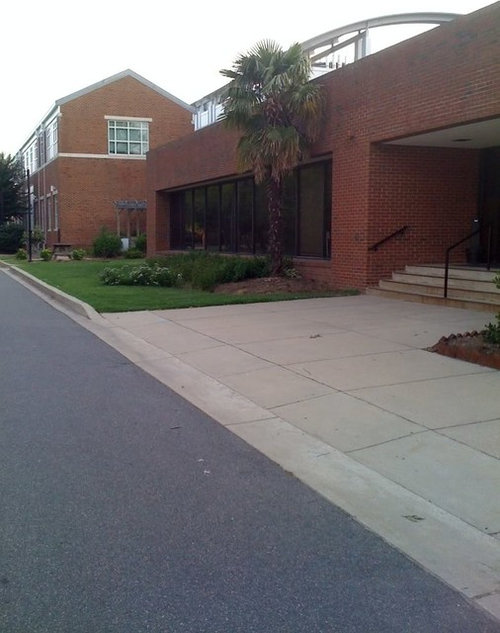
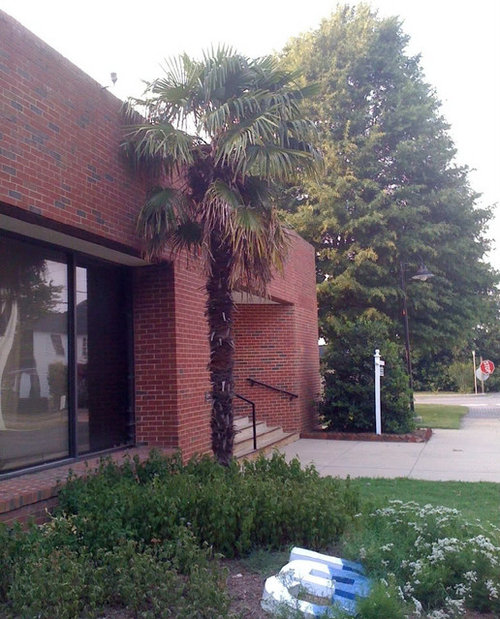
Mature Windmill Palm, Solomons Island, MD

Either myself, or someone else posted about this palm years and years ago. I honestly cant remember if it was me or someone else. Anyway....

I have been going to Solomons Island, MD for just about all of my adult life. It is a neat little Island community where the Patuxent River empties into the Chesapeake Bay. Very quaint, but fairly popular place to go with a good number of mom and pop shops, restaurants and bars on the water...etc. I first noticed this palm tree sometime around 2000. It is off the beaten path, out towards the end of the Island, somewhat away from where many people go, but not secluded at all. When I first visited it, the very tip tops of the leaves were barely at the top of the window. It was so short, that the short trunk it did have back then was covered by the lower leaves hanging down to the ground so it looked more like a very large palm shrub. It is planted at on the south side of the Chesapeake Biological Lab building. I have seen it in both summer, and winter, and I have never seen any protection on it in winter months. My guess is that since this is surrounded by water that this climate is most likely an 8a, or extremely warm 7b.

To me this really isn't that surprising, as there are quite a few mature Windmills around the DC metro area, even in far colder suburbs that have thrived. Most of them are in private yards / gardens. I know of two large ones in Down Town DC that have been there for many years, that are readily visible to the public eye. Sabal Minor and Needle Palms really arent anything out of the ordinary anymore around here. Anyway...

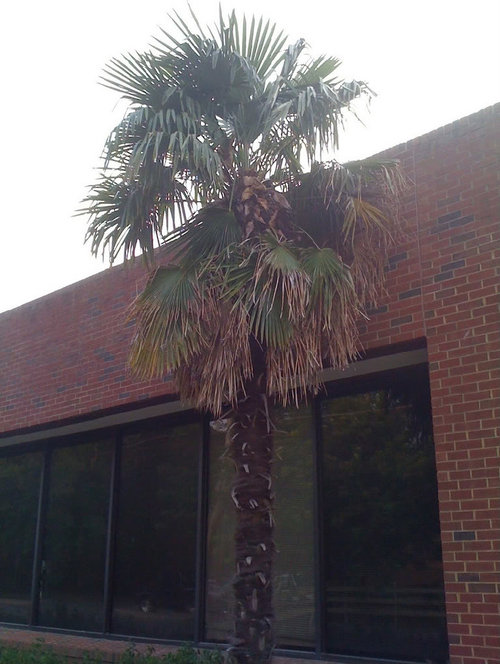
On a whim I decided to take a day trip over to Calvert County, MD, and while there we visited Solomons Island and had dinner, and of course I had to go check on the palm. I figured it was still there, and there are now a couple more smaller ones on the Island as well, so it seems that the idea of palms on this Island has somewhat caught on. Well, suffice it to say, my first comment was WOW! Not only has it survived, but it appears to be thriving. Not only is it now taller than the building, but it appears to have bloomed numerous times over the years. The only things I know about this palm are what I have stated, and that this one was a replacement for one that was there previously that was apparently neglected, and did not survive. I'm not sure exactly how old this palm is, but I am going to guess its about 20 years old? I know for a fact it has been there for at least 10 years.


Approximate Lat/Lon:

Latitude:N 38 19' 5.6112"

Longitude:W 76° 27' 15.1227"

Anyway, here are a few photos of it.


For those who do not know where Solomons Island, MD is, click the link below for the map location.

Comments (6)

  • 16 years ago
    last modified: 11 years ago

    I love Palms, and didn't realize that they would grow that far North on the east coast. I live on Canada's west coast which is quite mild in the winter but Palms still have a tough time here. They usually get wrapped in winter. I grew up in the East Africa so my favourite is still the good old Coconut Palm. Our holidays on the coast there were out of this world. When I first read your post I thought you were talking about the Solomon Is. in the Pacific. Duh!!! Silly me I missed the MD bit at first.
    Regards
    Seba

  • 16 years ago
    last modified: 11 years ago

    The palm looks really large! Great photo! They can grow that far north and even a little farther on the east coast but they usually arent that old or nice looking. The west coast has a much milder climate for palms because the winds constantly blow off the coastline.You can grow lots of palms in british columbia but unforunately the beautiful coconut palm even struggles as an indoor plant. They need constant heat!
    Not sure how well mule palms do on the west coast but they are cold tolerant to at least 20F and they do look pretty similar to the coconut palm (warning, it is expensive so you might want to protect it a little during the winter). Its a cross between a queen palm and a pindo palm. Pindo palms are another great choice and slightly more cold tolerant than mule palms (about 15F and as low as 10F when older and when really established it can handle brief temperature drops into the single digits Fahrenheit!)

    Good luck and thanks for sharing!!
    -Alex

  • 16 years ago
    last modified: 11 years ago

    I hit Solomons every now and then and "discovered" that palm about 4 years ago. At the time, I boasted to Mrs Lord that mine would someday be that tall. Looks like its been doing well and is taller.

    It does not surprise me that it thrives there. As Nova said, its surrounded by water and is an hour south of here.

    Thanks for the update. Little Jack has kept us from our favorite place for crabcakes but maybe its time.

  • 16 years ago
    last modified: 11 years ago

    Looks great and doesn't seem to be any worse
    for ware,growing out of it's little micro-climate/
    protected area of bricks there.


  • 12 years ago
    last modified: 11 years ago

    Some background on the palm:

    Palm gracing Solomons conjures a tropical breeze
    Professor at Chesapeake lab tends exotic visitor
    Wednesday, Oct. 25, 2006

    By Erica Mitrano

    Staff Writer
    Solomons isnât a deserted island, but it does sport a lone palm tree.

    The tropical windmill palm tree has been nurtured on the grounds of the Chesapeake Biological Laboratory by Dr. Robert Ulanowicz, a professor there.

    Ulanowicz has a passion for palms. In fact, it was his fascination with the trees that led him to work at the laboratory in the first place.

    ââIâm working here at CBL mainly because in â68 or â69 I came to go fishing off the Solomons pierâ and saw a palm tree growing. The tree attracted him to the lab, where he now works as a theoretical ecologist. He studies trophic interactions, which he explains as ââwho eats whom and how much [in food webs]. Boxes and arrows. You can mathematically analyze the interactions,â he said.

    After the original palm tree at the laboratory died of neglect, Ulanowicz decided to replace it with one of his own.

    Solomons Island is suited to raising palms because it is surrounded by water and sheltered from winds.

    Even so, the tree needs special care. Ulanowicz fertilizes it heavily every spring and does what he can to protect it from frosts in winter, including wrapping the trunk of the tree in colder weather.

    Surprisingly, Ulanowicz also uses snow to protect his tree from the cold.

    ââSnow is an insulator. ... You pile the snow around it and it will come out fine,â he said. The snow keeps the area at about the 5 degrees Fahrenheit required for the tree to survive.

    While he is not a plant breeder, Ulanowicz hopes to create a cold-resistant variety of windmill palm better adapted to Maryland conditions.

    ââI put a number of them out and select the hardiest. ... Iâm not that serious about it. Iâm just playing around with it,â Ulanowicz said.

    Despite recent concerns about the ecological effects of non-native plant species in Maryland, Ulanowicz is not worried, saying these trees are too poorly adapted to escape into the wild.

    ââI just donât see it surviving in the wild given its slow rate of growth. Itâll be out-competed by other things,â Ulanowicz said.

    Ulanowiczâs fascination with the exotic extends beyond palms. His backyard is also packed with exotic flora like pomegranate trees, purple passion flowers, red spider lilies and Japanese apricot trees, among others.

    ââIâve always liked warm weather,â is Ulanowiczâs simple answer to the question of why he goes to the trouble of raising them here. He has fond memories of time spent in Georgia as a boy and makes frequent trips to Florida.

    As for why he decided to raise a palm tree, his answer is even simpler.

    ââBecause it will grow here,â Ulanowicz said.

    E-mail Erica Mitrano at emitrano@somdnews.com.

  • 7 years ago

    I love to see it. The gentile old folks of maryland near where I live on the water near Baltimore tend to say, “it’s so uncalled for.”

    These trees were catalogled as living in Maryland in the 1600s when it was first surveyed as well as vast amounts of live oak and Spanish moss. many old dwellings utilize the wood and moss for timber and stucco bonding. where I live is about the coldest part of “regular” Maryland, meaning not including the panhandle, and people still find so much amusement in cultivating palms as a hobby, it’s mild enough to keep them outside with little water protection.

    The true palm country of Maryland is certainly the eastern shore. people have them everywhere there trying to emulate a more tropic look than the native ‘southern’ flora. Mixed in with the loblolly pines and long leaf too you are sure to find specklings of palmetto and sabal palms. These, unlike the ones where I live and the ones mentioned above in dc, are actually not being contrived to live there. The semi rich semi clay and semi loamy soil on the eastern shore mixed with the atlantic coastal plain status allows them to become true specimens that can withstand the sometimes cold winter.

    a misconception is that because Maryland isn’t comparable to the weather of Louisiana or other Deep South states it is artic, in actuality Maryland has a relatively warm climate with winter temps usually onot dropping below freezing for 3 weeks (added up) of the year.

Sponsored
Buckeye Restoration & Remodeling Inc.
Average rating: 5 out of 5 stars7 Reviews
Central Ohio's Premier Home Remodelers Since 1996