Software
Houzz Logo Print
zone_denial

bareroot not a bargain

20 years ago
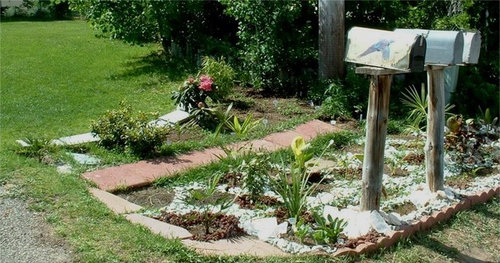
I bought three palms this year from a grower in LA who shipped bareroot plants - I got a killer deal for 1 ft. trunked palms, so I took the chance. When they said bareroot they meant it - completely bare shoved in a shopping bag and dry as a bone when they arrived.

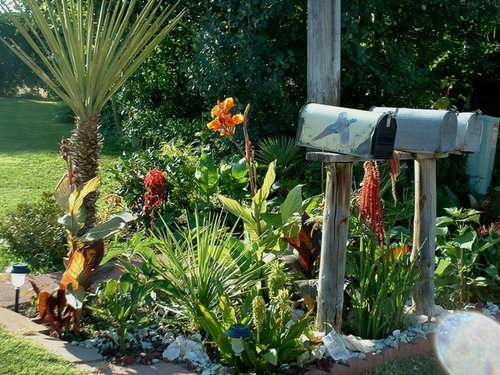
After two months in the ground:

the Washingtonia filifera is gonzo - a complete waiste of money, time and effort. A very touchy palm, I would never chance bareroot.

One T. fotunei has started to come out of it, the second has dried up fronds but the spear is healthy - still a chance.

While fortunei are infinitely more tough than filifera I would never purchase bareroot again - pay the difference in shipping!!! If the seller won't protect the roots go somewhere else - it's not worth it.

A little lesson in infertility from a newbie...

May 2006

July 2006

Comments (24)

  • 20 years ago

    Where did the palms go? I dont see them in the second pic. :-) no roots I guess

  • 20 years ago

    Sorry to hear about the filifera zone denial, but I don't think it's because filifera are touchy. I would say that filifera are as robust as trachycarpus, if not more so. Filiferas can take high heat and are more drought tolerant. Truth is, I don't know of any palms that would survive the shipping conditions you described. I have brought many palms bare-rooted and all have been well-wrapped with moist sphagnum moss. I only lost one bare-root shipped palm (Fiji Island fan). If your palms were shipped with exposed/dry roots, I would demand my money back, that't ridiculous!

  • 20 years ago

    oops, I forgot to mention that the two larger trachys are not in the May picture, and are nearly completely hidden by cannas in the second. You can see the fronds of one in the top-center part of the second picture.

    Here's the healthy fortunei.

    The dried plant - I've since removed all but two fronds.

  • 20 years ago

    There they are. I see them now.

    I would agree, I would demand my money back.

  • 20 years ago

    I made even a more newbie mistake of buying bareroot palms from TyTy before I knew any better. All but two have survived, however they looked terrible since I planted them in the ground right out of the package. This year they look much better, but getting a rootballed one with soil is far better. The ones that died last year were the sabal minor and the senora reopens (sp). It is true that you can get good bareroot palms if the roots are there and kept moist with some kind of medium.

  • 20 years ago

    Thanks for the great imput!

    I plan on trying my hand at filifera next year. We're a very soft 6b and I hope with some winter protection I can pull it off.

    This winter I'll have one needle, one minor, a bunch of trachys, four waggies(from three different areas, California,Texas & Florida)to protect. I should have a good idea by next spring just how tough they all are. I've seen a pic of a 25 yo fortunei in SLC(about 40 miles north) so I know it can/has been done here.
    Even my musas and yuccas blow my neighbors minds, so if I can pull the palms off, I'll be the envy of the neighborhood. Not to mention that perhaps they'll stop pointing crosses at me as they pass by(most think I'm nuts)

  • 20 years ago

    So the seller literally put the palms, minus any dirt, moss, etc. whatsoever into a bag and shipped them?

    Wow.

  • 20 years ago

    cfkingfish, I kid you not!!

    I thought by bareroot I'd receive a plant that had at the very least some wet papar towels to hydrate it, but no, the roots were shoved in a bag and boxed. Worse yet, they were not sent priority but usps ground. A couple of my waggies came bareroot but were protected and properly prepared and they arrived just fine.

    I took a chance that wasn't worth it.

    I would suggest to everyone to make damn sure you know what their shipping intentions are. I certainly would have coughed up more shipping money if I hadn't been so naive, just to get a healthy plant.

  • 20 years ago

    Tell us the company so we wont buy from them.

  • 20 years ago

    I bought them from a seller on ebay, kimberlyproductions, and I must say that she has some great looking product; tons of aroids, yuccas, etc. but I will never buy anything from her again without the express understanding that they are packed differently.

    Just a note: 90% of what I've gotten off ebay has been outstanding, and sometimes nicer than at the local greenhouses, and usually not even available at the big box outlets. A local greenhouse trachy would set me back about 2-3 hundred bucks - there's only one seller in northern Utah(that I know of) so they have no competition. They do have some sweet yucca rostratas, though; talk about hardy palms being slow!!!

  • 20 years ago

    I have ordered 100's of plants bareroot and not had a problem. Just my opinion but it looks as though some of those are planted a bit deep. I've heard people that have had their palms lost in the mail for 24 days and it still survived. As long as you're not going for a very large specimen, my opinion is bareroot is fine. At the size most folks are buying on ebay 6-12", it shouldn't matter much when transplanting from bareroot. I also find that solutions for the reduction of transplant shock work quite well.

  • 20 years ago

    The size of the palm matter sometimes also. I would not buy a palm that big bare root. Seedlings are ok but when they get that size they are more prone to die. Anybody that would send a palm the way they sent yours was just trying to make a buck and had no sense at all or didnt care.Also the solutions that are for transplanting work well for me too.

  • 20 years ago

    What type of solutions are we talking about. I have some root hormone, would that work for palm trees?

  • 20 years ago

    When I ship to customers, I use (as do many others in any plant business) sphagnum moss carefully packed around the roots, which is then packed around aluminum foil, and taped. Sphagnum has a quality to it that allows for moisture to stay in its fibers while keeping the roots aerated and is fairly lightweight at the same time. I also don't ship anything bareroot over 3 gallons, depending on the plant, even that is pushing it. the optimal palm size to be shipped is somewhere around one gallon, depending on the species of palm.

  • 20 years ago

    Orchiddude I will try to get the name for you later today. I answered you post in the exchanges if your interested ill send you a pm.Just let me know

  • 20 years ago

    Yes David, thanks.

  • 20 years ago

    I simply use Miracle Grow starter and transplant solution. All the good ebay sellers use spagnum moss and foil. I have always gotten really great quality plants from Paradise Palms & Coconut Climber

  • 20 years ago

    I agree with David. I have shipped many palms bare-root, but kept moist with as much original soil as possible. Wrapped, of course. No problems so far.

    David, do you shake the soil off and then pack with moss? This would save weight, for sure!

    Here is a link that might be useful: Charlie's Palms

  • 20 years ago

    Dear Zone Denial,
    Which yucca species is that in your garden? It looks rather exotic.

  • 20 years ago

    Hi palmfan

    I found the yucca at Home Depot, and couldn't believe my eyes when I spotted it there. The label simply stated "Spanish Dagger". The source was from Kactus Koral(k is not a typo) out of Texas. I'm quite sure it's a faxoniana, but slightly possible that it's carnerosana(not likely).

    They say it is good to around 0f - I plan to wrap it with burlap and mulch the base this winter. We're a very soft 6b here so I think it will be fine, but I'm going to protect it the first few years just to get it adapted.

    I agree that it has an exotic quality about it, almost like a palm with an attitude - believe me, it does, I nearly punctured my forehead when I leaned down without paying attention.

    I have several other yuccas and agave on the other side of the driveway. When everything's in place I'm looking for the effect of looking to the right and seeing tropical plants and then turn to the left for desert flora.

  • 20 years ago

    I have bought at least 20 bareroot palms from 'Coconut Climber" on Ebay and had very good success with them. I've only lost one plant so far, a Parajubaea, and it was because I broke one of the main roots while potting it.. (The spear pulled, but it is starting to come back now... so we'll see what happens).

    Some other sellers, not so much. I bought some stuff from one guy and it was poorly packed and had scale all over it. Several of the plants have died.

  • 20 years ago

    I bought some very rare palms and some unusual but not so rare palms from 4 separate vendors in Hawaii. I am talking about a volume of about 30-35 plants. Some were seedlings, some were larger, one and 3 gallon size. ALmost all were sent bareroot except for the Joey Palms I bought (they were sent in those palm cones), and without exception, all have made it except for one small seedling of a Gronophyllum. They have all been planted out in the greenhouse now for several months and are all doing extremely well. The bareroot ones were sent wrapped in moist sphagnum. I would deal with any of these companies again, they know what they are doing definitely

  • 20 years ago

    Dear Zone Denial,
    That is a nice Yucca faxonian/carnerosana! Note that my research on this yucca strongly indicated that these species are one and the same! Large plants of the Mexican form [has large leaf filifers] have been growing in Cape May County, New Jersey for many years. These huge yuccas with trunk diameters up to about 15 inches, have endured winters with temps sometimes a little below zero. They have never shown winter damage. Happy growing! This species can attain heights of 20 to 40 feet in Mexico, but are extremely slow growing! I have never observed flowers on the Cape May County plants.

  • 20 years ago

    Hi palmfan

    I'm really glad to hear they are thriving in a more moist, northerly area - one of my biggest concerns is that although many of the yuccas thrive in cold desert temps, here, in northern Utah, we have too much moisture. We get several large snowstorms throughout the winter, but fortunately it melts away relatively fast. The spot I have the palms and faxoniana in receive full winter sun from am to pm, I'm hoping the daytime warmth will push the zone over the top on the borderline plants - I guess I'll know in about 5 months!!! I plan to start a water reduction program the first of September to get the yuccas and palms ready for the cold - according to 2LAZY2P in Colorado Springs it can raise the hardiness by 5-10f.

    THANK YOU to everyone who has contributed to the bareroot question!!! I totally agree that PROPER bareroot plants can be just fine. I reived a Waggie from a north Texas seller that had moist, moss protected roots. It's only been in the ground for 2 weeks and is already showing new growth.

Sponsored