Hi All!
I meant to post a "Happy Autumn" message on Monday, but I've been too busy, so "Happy Autumn!" We survived another summer.
The drought continues here in Love County, but we're only down by about 6" or 7" below normal, so I keep thinking that a really rainy autumn could help get us back up to "average" rainfall for the year before 2008 ends.
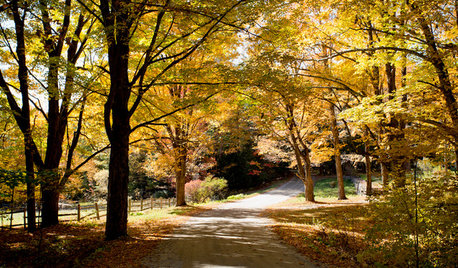
The tree foliage has lost that lovely deep, dark green color of summer and now have that green-transitioning-to-brown color that we see in the fall. Some of the native trees that turn earliest are already showing their fall color, including elms and persimmons. The elm leaves turn a bright yellow and fall and this is already beginning to happen. The persimmon turn yellowish-gold and then a deeper golden-orange before their leaves fall in October, and the leaves are already turning the yellowish-gold. The oaks, though, are still a deep dark green.
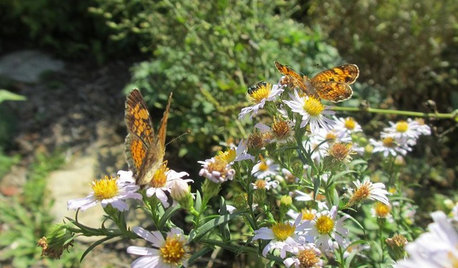
We're having a terrific fall wildflower season here, which makes up for a sorry June-August when the drought kept many wildflowers from growing and blooming well. Currently in bloom we have the fall-blooming asters, autumn sage and goldenrod in great profusion, as well as summer wildflowers like greenthread daisy,snow-on-the-prairie, native mistflower, native cassia and liatris (gayfeather) which didn't do much this summer, but which are making up for it now.
The shrubs are beginning to show off their berry crops. The gorgeous native American beautyberry shrubs have their lovely clusters of violet berries and the possomhaw holly berries are just turning from green to orangey-red although they won't have their deepest color until late November. The purple wintercreeper berries are still green but they are among the last to show color here.
We have an amazingly good pecan crop and the squirrels are going wild collecting nuts. Early on, they were nibbling on and dropping a alot of pecans on the ground half-eaten, but that has stopped and they now seem to be gathering nuts for fall in earnest. The red oaks (on the edge of our woodland) have a huge crop of acorns so I think the deer and other wildlife will be OK, but I haven't ventured
deeper into the woods to check on the post oaks and other oak trees.
The purple martins have left on their journey south but we still have waves of hummingbirds coming through.
After having the lowest numbers of butterflies and moths that I've seen in a decade here, we are finally seeing some swallowtails, sulphurs and others, although not many monarchs yet.
Unfortunately, the venomous snakes are up, out and about as the daytime heat has diminished and they begin searching for their overwintering locations. I've encountered more venomous snakes in the last week than in the entire previous 2 years combines, so my nerves have taken a beating lately.
The garden continues to produce lots of peppers and a few tomatoes despite the severe lack of moisture. The herbs and flowers just keep on keepin' on, and it is amazing how well they have done on almost no rainfall and no irrigation.
In bloom at our house are the zinnias, Laura Bush pink and purple petunias, four o'clocks, morning glories, moonflower vines, purple hyacinth beans, daturas and brugmansias, cannas, ornamental peppers, hummingbird sage, hybrid salvias, marigolds and a few others I can't think of right now. As the weather cools and we have cooler, sometimes overcast or foggy mornings, the nightblooming flowers stay open significantly later in the day and that is really nice.
After encountering several venomous snakes recently, I'm barely stepping foot in the jungle of a garden, but I MUST get outside and mow and weedeat today. I also need to harvest gourds and pumpkins and pile them up in the wheelbarrow by the barn for our annual autumn display.
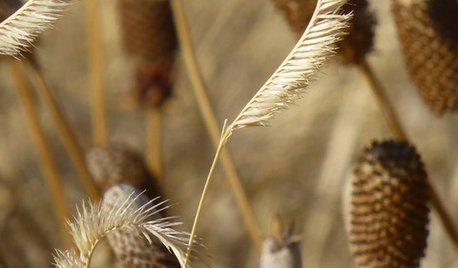
The native grasses that greened up delightfully after the August rains are now browning, but mostly because they have set their seeds and are taking on their fall hues. Unfortunately, hayfield fires are starting up again as everything dried out, and that is unfortunate--it really hurts a rancher to lose the hay that was meant to be winter feed for his cows or horses.
Among the wildlife, we are seeing more cottontail rabbits again after their population took a nosedive in mid- to late-summer, and the coyote population has not yet shown the expected surge here yet. Usually I am seeing and hearing a LOT of coyotes at this time of year, but not many yet and certainly fewer than this time last year. (Last year there was a downswing in their population, so there ought to be a upswing this fall/winter.) There are plenty of squirrels, raccoons and armadillos, though, and a few possums and skunks. The bobcat and fox population seems lighter than usual.
I hope fall is bringing delightful colors and changes to your yards, gardens and landscapes as well. In my bones, I feel a gold winter coming, but that's really just based on a "hunch" or "intuition" and I can't really say there's any logical basis for it. LOL
Dawn







plantermunn
Okiedawn OK Zone 7Original Author
Related Professionals
Waterbury Landscape Architects & Landscape Designers · Milwaukee Landscape Architects & Landscape Designers · Mission Viejo Landscape Architects & Landscape Designers · Toronto Landscape Architects & Landscape Designers · Cowansville Landscape Architects & Landscape Designers · Manhattan Landscape Contractors · Philadelphia Landscape Contractors · Lawrenceburg Landscape Contractors · Wichita Falls Landscape Contractors · Williamsburg Landscape Contractors · Superior Landscape Contractors · Cape Coral Accessory Dwelling Units · Athens Accessory Dwelling Units · Harrisonburg Accessory Dwelling Units · Greenfield Accessory Dwelling Unitssusanlynne48
Okiedawn OK Zone 7Original Author