Software
Houzz Logo Print
oklavenderlady

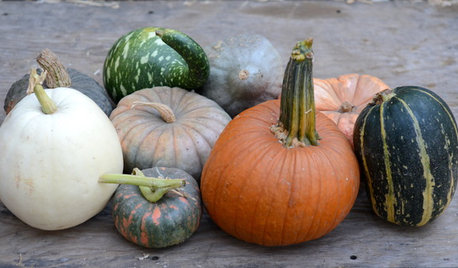
Yellow Squash Varieties

15 years ago

Does anyone have a preference between crookneck and straight neck squash? I've always planted straight neck from habit, but does one have a edge in flavor or productivity over the other, in your opinion?

Loretta

Comments (17)

  • 15 years ago

    The Yellow Straight Neck variety is sweeter, has smoother skin, but they tend to 'go bad' quickly in my opinion . The Yellow Crookneck has a tougher skin (sometimes warty and very cool), tend to keep longer in the fridge and have more of a buttery flavor. I thought they both produced about the same but I have never grown them side by side, it has always been one or the other in a year. Or straight neck in the spring and crook in the fall (for storage qualities) but thats just what I have done. I would like to know if anyone has had a different experience with them. Hope that helped.

    - Danni Girl

  • 15 years ago

    personally, I like the straight neck. A simple twist is all needed to harvest. I usually end up breaking the crook necks......My favoite summer squash for flavor in order are
    1) scallop or patty pan
    2) Yellow straight neck
    3) Zucchinni (which I think are way overrated)

  • 15 years ago

    Personally I prefer straight neck and that probably has a lot to do with it being a favorite of my mothers and so grew up around it. When I was small she grew both. In later years she just grew straight neck. Most all squash are what I call prolific producers in most years for me. Mother always grew the white scalloped squash also. Jay

  • 15 years ago

    I like yellow straight neck, both yellow and white scollop, but instead of regular zucchini I plant Zucchino Rampicante sometimes seen as zuchetto. It makes a huge vining plant and needs strong support, but I love the taste. The entire neck is seedless, and the bulb has seeds, but if picked young enough are barely noticable. By young enough, I mean in the 16-24 inch size. LOL

  • 15 years ago

    I grow both straightneck and crookneck and consider them both prolific producers. Like Gary, though, I often break the crookneck ones when harvesting them. I do think the straightnecks often produce squash of a usable size about 1 day earlier, but that's not much of a difference. I don't really notice much difference in the flavor, but usually when I'm cooking them, I have mixed together the straightnecks and crooknecks anyway.

    I think large zucchini are overrated---to me they are just too watery and I don't like them. I try to harvest zukes when they are 4 to 6" long and really like them at that stage. I usually grow Cocozelle or Costata Romanesco but sometimes plant Raven in dry years because it tolerates drought well and still produces heavily. A lot of my yellow squash gets sliced/frozen to be used in casseroles during the rest of the year, and I shred and freeze a lot of zucchini to used in zucchini bread or muffins, chocolate-zucchini cake and zucchini-chocolate chip cookies.

    I like the scalloped ones too and one of these day's I'm gong to plant Zucchino Rampicante. I have the seeds but always run out of places to plant vining plants since I grow huge amounts of pole beans and peas, and also grow small melons and cukes vertically.

    The larger issue here is how to win the non-stop battles with squash bugs, squash vine borers and cucumber beetles. Some years it takes a lot of bug battles to get any squash at all.

    Dawn

  • 15 years ago

    Dawn, I normally get a few squash bugs but this year was the first year I had vine borers. They killed every squash in my garden except the unknown winter squash that produced four large squash. My DH doesn't like winter squash anyway, except spaghetti and pumpkin, so I don't know if I will continue to grow much.

    I normally plant summer squash in containers (big containers) and I am going back to that and hope I get better production. The only other way I know would be to keep it under cover and either hand pollinate, or uncover only when it starts to bloom. I was surprised when I had vine borers last year, for the first time, but the plants were all in the ground and mulched with straw. I think I invited trouble.

    I think we all need a screen house and a glass house, don't you. Carol

  • 15 years ago

    Carol,

    I absolutely agree and I tell Tim constantly that I "need" a greenhouse. I even tell him I'd settle for the first greenhouse being a hoop-house type thing with 6-mm plastic, although eventually I want a real greenhouse that is either glass or the twinwall polycarbonate stuff. Sadly, he and I have entirely different definitions of the word "need". (sigh)

    After last year's tornado that hit near the Love County-Carter County line in May, there were newspaper photos and video footage of a beautiful glass greenhouse (a hobby gardener's one, not a commercial one) from that part of Love County and it was just demolished by the baseball-sized hail. I told my DH that I wanted a greenhouse like that one (minus the damage, of course), and he pretty much just rolled his eyes because we were, after all, looking at a totally-destroyed greenhouse.

    I'm thinking of putting a low tunnel over the summer squash this year, using PVC pipe hoops and either a Reemay summerweight row cover or maybe just tulle. I'd have to lift the cover to hand-pollinate the squash, but I am so tired of fighting the borers here. Last year, I put nylon knee-high stocking with the toes cut out over each zucchini stem when the plant was small, and I had the stocking going about 1" under ground. At first the stocking was bunched up around the base of the very small plants....picture a cowl-neck turtleneck sweater. As time went on and the plants grew bigger, I pulled that stocking up to cover more and more of the stem. My squash plants survived well into July with that protection, so I may try it again this year. We usually have borers nonstop from July through about September. Some years they are a huge problem and other years they are more minor, but we rarely have a year without them.

    A 'corn cage' is on our 'To Do' list for this winter so we'll be able to grow corn the raccoons cannot harvest for themselves. Think how wonderful it will be to have corn they can't destroy! I wish I could have a huge screen house over the whole garden, but that's not going to happen.

    We have a new pest in the yard here lately....gophers. They keep popping up here and there and after a few days the cats seem to wipe them out. Then, a couple of weeks later, more show up. In the old days when we first moved here, I let the cats stays stay out at night and they kept the gophers and moles under control. In more recent years, I've made all the cats come inside before dark and then I don't let them out until well after sunrise. That means the gophers and moles don't have cats hunting for them all night long and that may make it harder to control them. I can't leave the cats out at night any more because there's just too many predator animals that would kill them.

    Seminole is the one winter squash I grow that's never had borer issues, although most years the borers don't bother the butternuts or green-striped cushaws either.

    Dawn

  • 15 years ago

    I grew butternut in the ground year before last, and they did OK although I planted a little too late. My DH doesn't like the taste, but I think they are good. I haven't tried Seminole so I guess I need to try that one.

  • 15 years ago

    Another vote here for straightneck, if only for the breaking when harvesting issue.

    I love yellow squash so much but never did get a harvest the last two years due to squash bugs. I finally broke down and bought zuchetta rampicante seeds late last summer for planting this year, in hopes it will not suffer the squash bug problem as much. Of course, now that we've moved, I'll probably plant some regular squash again just to see how the squash bugs do up here.

    (I need to have hubby build me a greenhouse again up here!!)

    Diane

  • 15 years ago

    Carol, what about planting squash in containers prevents the SVB and SB issues? I'll be growing mine in containers, too, but last year the SVB got my baby watermelon that volunteered in the ground.

    I love all the vegetable squashes, yellow, zucchini, spaghetti (can't grow it, tho). I am not fond of winter squash at all. The only veggie squash-like plant (I liken it to squash anyway) I haven't really cared for in the past is Eggplant. But, I am going to try a dwarf variety of that this year, too, just to see if I might like my own homegrown EP better.

    I like to use the yellow and zucchini squashes for kebobs, with onions, cherry tomatos, mushrooms, and chicken or shrimp. I broil them, no marinade, no sauces, nothin. Mmmmmm, slurp, good!

    You guys are making me hungry!!!!!!

    Susan

  • 15 years ago

    We've used containers for squash and cucumbers the last few years and have had a lot less insect damage and we keep them watered better. It's hard to say if the yield is less, but we get plenty for the two of us.

  • 15 years ago

    Susan, I don't know if the containers make the difference or not, but I know my experience so far has been different. One year I put foil around the lower stems, the next year I didn't do anything. I never had problems until last year when everything was in the ground and everything got borers. I got all the squash we could keep up with and put a little in the freezer before it died, so it wasn't a complete loss.

  • 15 years ago

    I was rereading the 2009 squash trial report from the Kerr Center this morning and they had what seems like a good idea for fighting borers. You put soil at intervals over the vines of squash or pumpkins so they will root. Then you won't loose your whole plant.
    Loretta

  • 15 years ago

    Susan,

    I have had squash vine borers (their mamas are clearwing moths) lay their eggs on plants in containers, so putting the plants into containers is not an automatic guarantee that you won't have squash vine borers. Moths will tend to lay their eggs wherever they find the plants. Squash bugs haven't been a problem on container grown plants at our house but squash bugs are a lot easier to manage than SVBs. Squash are very hard to grow organically in the south because of SVBs unless you grow everything under floating row covers that are carefully sealed to the ground to keep the moths from getting inside the covers. You also have to be sure to rotate these crops every year or some borer larvae or squash bugs can overwinter and come up under the floating row covers.

    I was lucky for several years and grew huge numbers of all kinds of pumpkins and squash with no squash vine borer issues. It is likely they just hadn't managed to find us. Once they found us, all I can grow without row covers is C. moschata which are the most SVB-resistant. I've pretty much given up on trying to grow C. maximas because the SVBs get them every time.

    Loretta, It helps if you bury the vines under soil every chance you get, but the SVBs just keep coming and while you may win the battle for a while, eventually they'll win the war. Sometimes, though, you can keep the plants alive for long enough that way that you're able to harvest some squash before the SVBs or disease get them.

    The problem in our part of the country is that the SVBs have more than one generation here, so it isn't a short-term problem, but a long-term one. Burying the vines as they run encourages them to root and helps prolong the life of the plant, but the SVBs just keep moving on along the vine and attacking new areas. I would love to live in one of those areas where there's only one generation of SVB and you just wait for that to pass and then plant, but we don't live in an area like that, and I'm not planning on moving.

    Dawn

  • 15 years ago

    I've never had a problem, yet, with borers, but from what you all say, it sounds like it's bound to happen. I think I'll cover each of the containers with lightweight row cover, at least until they start blooming. I'm not sure I'm willing to put all the work in that I imagine hand pollinating would be. Has anyone tried it? Also, the grasshoppers would eat holes in it, eventually. I have plenty of the light row cover, so that's not a problem, for a trial. I plant leafy stuff in a mini-hoop house in winter, so this year we bought a big roll to keep insects off, hoping the grasshoppers would be too listless at that time of year to eat through it. They must have been. No holes. But they eat holes in our window screens some summers when they are younger.

  • 15 years ago

    Loretta,

    After we had those first few good years with no squash vine borers, I was so excited and then they found us and all that excitement quickly faded.

    Grasshoppers normally don't eat holes in my floating row covers, but they will if we're in severe drought, particularly in late July which seems to be when the grasshopper feeding frenzy peaks.

    During the droughts of 2000-2001, 2003 and 2005 (hhmmmm, droughts in odd numbered years...that is sort of scarey), the grasshoppers ate our fiberglass window screens, the cotton rag rugs on the porch, every plant I had planted whether it was a veggie or flower, the bark off the young fruit trees, and even the unripened peaches on the trees (they ate the fruit early in June of 2003, which was the worst drought year we've had here). Normally the hoppers aren't active enough, or large enough in numbers yet, to damage the fruit on the trees but the population was huge the year before, the winter was mild, and the hoppers were out in huge numbers very early that year. I only grow peach and plum varieties that ripen early (June and early July) so we can get the fruit ripened and picked before the hopper population soars in mid-summer because of what I saw the hoppers do to my first fruit trees that year.

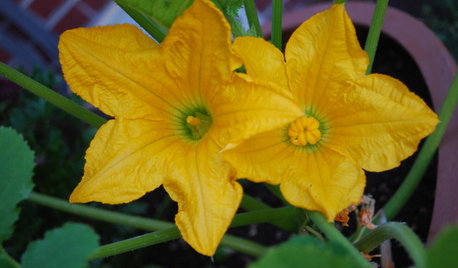
    Hand-pollinating squash is very easy and I've done it fairly often. It takes a lot longer to tell someone how to do it than it actually takes to do it. George has written terrific, very detailed instructions on how to do it (with photos!) and I'll try to find and link them. I don't mind hand-pollinating squash, melons or cucumbers, but I sure wouldn't want to hand-pollinate something with oodles of small flowers like peas or beans or cherry tomatoes!

    The biggest challenge when using insect netting or floating row covers is keeping them in place when winds are gusting in the 30s, 40s, or 50s.

    Dawn

    Here is a link that might be useful: How To Hand-Pollinate Squash