Software
Houzz Logo Print
emyers_gw

Straight compost as fill?

19 years ago

Getting ready to build some more raised beds. I currently have 3 12" deep x 4' by 8' beds that I pretty much followed mels original recipe for fill with vermiculite, peat and compost. After about two years now I'm starting to have some problems with the peat drying out and not being able to be rewetted easily. Also the vermiculite (wasn't a coarse grade when I purchased it apparently) has broken down. I've heard that this can be a problem with vermiculite in general.

Now, I'm planning on upscaling my operation significantly and have started shopping for bulk materials. To do what I'm looking at doing using the mels mix, I'm looking at a LOT of expense just for the dirt. This expense will be multiplied by as much as 10 times if what I'm trying to accomplish works.

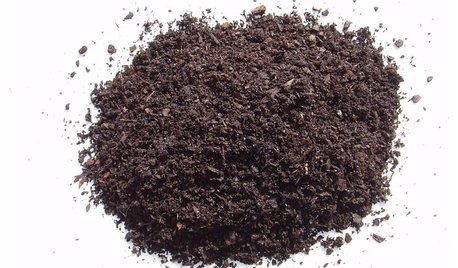
During my research, I came across the possibility of just using compost as a fill material in the beds. Found a County landfill source of compost that can be had for close to free. Initially I was concerned about the use of the landfill type stuff because of contaminants (pesticides and heavy metals) that may be in the compost. However, this particular landfill only composts leaves and small branches etc and screens it down reasonably small. Therefor the major potential source of contaminants (grass clippings)is eliminated. Additionally, in thinking about this, unless I'm going to do all of my composting myself (which may end up happening in the future), I can't imagine that ANY of the bagged Kow, chicken, top soil, etc could be any less likely to contain stuff that's not good for human consumption. For instance, Cows eat grass and grass is fertilized, cows and chickens are given drugs and grains grown somewhere else using who knows what, not to mention the living conditions. So, in a round about way, it's kind of reassuring to know that in all likelyhood, the only thing going into this compost is PROBABLY leaves.

So questions are as follows:

1. What are going to be my problems with just using straight leaf compost (leaf mold?) in my 12" deep beds assuming I add a nitrogen source such as blood meal or alfalfa meal etc?

2. Considering adding sharp sand to the mix. However turns out that the sand I want to use is also expensive, so if it's not necessary to get the mulch aerated, then I'm all for leaving it out too.

3. Is there any reason that I still need to use peat? I'd really like to eliminate it because as said before, once it dries out it's a pain to rewet and I've become pretty disenchanted with the stuff.

4. Most recipes that don't use peat, typically have a recipe of compost, sand & garden soil. Garden soil is not an option for me because of the high content of weed/bermuda grass seed I have here. Additionally, I don't care for ANY of the topsoils I've seen packaged which generally aren't really top soil anyway, but some sort of mix. So, what would my recipe be if I wanted to use sand and compost? 50 percent of each or what?

5. Anyone know of any good recipes revolving around compost as a primary ingredient? Not using peat but possibly using sand? It would be great if this same recipe could somehow be a good recipe for a potting soil also.

6. Water retention. I think I recognize that the leaf compost will not have the same water holding and aeration qualities as peat. How much of a difference is this going to make to me if I use drip irrigation?

7. What other fertilizer ammendments should I make to my new "mix". I currently use Blood meal, rock phosphate (looking for colloidial phosphate), and greensand. Considering using Alfalfa meal and some other organic options.

8. Anyone know if by using leaf mold from the landfill if the garden can be considered for organic certification by OMRI?

9. For what it's worth, I'm planning on growing primarily cut flowers in the new beds possibly rotating vegetables but not absolutely necessary. Any reason to think vegetables or flowers would be better suited to the compost?

10. Will I have problems with straight compost as far as the plants being able to stand up or will they tend to topple over too easily? Most plants will be around 3' tall but sunflowers etc could reach 5 or 6 feet.

Comments (17)

  • 19 years ago
    last modified: 11 years ago

    I can't answer all your questions, but in general pure compost does work for a raised bed.

    The problem with it is that compost is not stable and shrinks in volume over the season. For annuals not a big deal but for perennials it's more of an issue.

    Compost by itself is fine for nutrients, workability and water retention in a raised bed. Since vermiculite and peat both break down over time and Mel's mix calls for never replenishing anything other than the compost an old sq ft bed gravitates toward pure compost anyway.

  • 19 years ago
    last modified: 11 years ago

    Thanks Justaguy.
    I guess that was my biggest question anyway... "Is straight compost ok". You seem to think so.

    Interesting thought "an old sq ft bed gravitates toward pure compost anyway." Never thought of it that way.

  • 19 years ago
    last modified: 11 years ago

    My beds have always been mostly compost, purchased in bulk from a mushroom grower to refill beds and topped off with a sprinkling from my household compost pile (which contains the scrapings from my rabbits and chickens) to bump up the micro-nutrient variety in the beds. It does behave a bit better as far as percolating water to the seedling roots if I sprinkle a little sand on the top and mix it in lightly

  • 19 years ago
    last modified: 11 years ago

    Be careful with straight compost. I had soil tests done and the numbers were off the chart. I think it lead to BER in my paste tomatoes. I had 1/3 compost, 1/3 verm., and 1/3 peat. According to my soil tests, I don't need any fert and I won't be adding any this year. Just grass clippings.

  • 19 years ago
    last modified: 11 years ago

    iagarden-
    What is BER? Also, are you saying that your numbers were off the chart with the Peat, verm, peat blend? What do you mean by off the chart?
    I was always of the impression that with compost, even though excess nutrients may be present, the plants were able to be selective about their own needs and use only what was necessary for proper growth.

    rayscheel-
    So, you're saying that without the sand, the water wants to kind of sit on top of the compost? Just out of curiousity, do you *cough* eat your rabbits? I was seriously considering raising some rabbits but I couldn't convince my wife that she really needed to learn to like rabbit meat. I've heard it's really good. I don't really know why, but to me I think it would be a whole lot less bothersome trying to skin a rabbit than deal with plucking a chicken. Anyway, if she's not going to eat rabbit then I can justify having them around at this point. It would take a whole lot of pet rabbits to make enough manure for my purposes.

    Back to the compost... Is the compost that you're using the "black gold" type that looks basically like dirt? Or is it in some other stage of decay (more like leaves). If it is the black gold type of stuff, and you were to do it all over again, would you mix some sharp sand in with the straight compost at the start? Any idea as to a ratio that you think would make for appropriate drainage?

    I picked up some of the municipal leaf compost and it looks REALLY good although I certainly can't speak for the nutrative value. Anyway, I'm gonna do some experimentation with perculation of the compost and try to come up with a suitable blend.

    Thanks "guys".
    Eddie

  • 19 years ago
    last modified: 11 years ago

    BER = blossom end rot

  • 19 years ago
    last modified: 11 years ago

    Thanks for the clarification.

  • 19 years ago
    last modified: 11 years ago

    emyers: What I mean is that my NPK numbers were extremely high. I'm no expert on soil science. But in my case, there were high levels nutrients. Organically, the compost is being broken down by microorganisms to macro nutrients that the plants can use. So I don't see any real regulation being done just because the NPK is being held in compost. The plants can still be given too much nutrients even if they are all from organic substances (as opposed to non-organic substances).

    All in all, I don't thinking doing 100% compost is a huge problem, it just happened to be the case that susceptible crops (paste tomatoes) slightly suffered because of too rich a soil. There is alot of debate concerning blossom end rot. But one of the potential causes is lack of calcium uptake caused by excessive nitrogen. That seems to bear out in my garden.

    This year I'm using BER resistant tomatoes, and not adding any fertilizer until my soil tests show that I need to.

  • 19 years ago
    last modified: 11 years ago

    I can't fathom compost providing anything with excess nitrogen. N is the first thing to leech or gas out of organic material.

    Usually soil tests do not test for nitrogen unless a total nitrogen test is requested because the amount of N is so volatile by the time the test results come back they are obsolete.

    May I ask where your test(s) were done and what method was used? Usually soil tests show ground high in organic matter as being low in nutrients as they don't usually use methods capable of testing for anything other than soluble nutrients and the nutrients in compost aren't soluble until the OM is further broken down.

    In any event not adding fertilizer to a bed made largely or entirely of compost is a good idea unless the plants show some sign of deficiency. There is a lot of nutrient value in compost.

  • 19 years ago
    last modified: 11 years ago

    emyers:
    Yes, many of the rabbits eventually move into the freezer. And yes, cleaning a rabbit is *much* easier than plucking a chicken. (In fact, when i have extra roos, I skin them for boiling rather than trying to pluck.) And no, even with enough for eating rabbit several times a month they don't make nearly enough manure to keep just for the compostable by-products.

    The compost I get isn't quite "black gold" and never quite gets there. It is not that the water pools on top (though that is a transient issue in heavy rain when it is really dry and sunbaked) but that the top dries out too quickly and does not pull moisture back up well with all the airspace on the surface level. I really just put a *sprinkling* of sand on the very top to help fill the gaps when planting small seeds (like carrots, radishes) after I've adding a whole bunch of mushroom compost at once, and then only if not topping off with my homemade compost (as the homemade stuff has a lot of sand in it from what passed through the chickens or gets scraped up when cleaning under the rabbit cages). It doesn't need to be mixed any deeper than the surface if it needs any sand added at all, further down the moisture moves around just fine.

  • 19 years ago
    last modified: 11 years ago

    The tests were done at Iowa State University, Iowa State Extension. I don't see the N numbers, so they must of not been tested at all like you mention. Here they are:

    OM Not tested
    ppm P 275
    ppm K 525
    ppm Zn 18.4
    ph 6.9

    "The soil test levels of your samples are extremely High, and continued fertilizer additions may be detrimental to plant growth. Research has shown that excessive nutrient levels may cause a deficiency and/or toxicity of other essential nutrients. Apply no fertilizer to the areas this year. Retest soil in 3 to 4 years to check nutrient levels."

    It then gives ranges for P and K:
    Vegetable and flower gardens:
    ppm P
    low 49
    ppm K
    low 249

    FWIW.

  • 19 years ago
    last modified: 11 years ago

    Hello E

    Vermiculite never decomposes since it is derived from rock. I can't imagine working the soil so vigorously that the vermiculite would break up into fines so small that it's water retention capacity would be diminished.

    My soil contains about 1/3 vermiculite. The rest is compost, no soil, sand or dirt of any kind. I try to add course compost to the deeper layers of my (mostly compost) soil. This requires some extra effort since, I remove the finer top layer of my raised beds, add the courser compost to the bottom and then replace the finer stuff. This has given me much better air flow through the soil.

    I think the all-compost soil will offer all the support you need.

    I have never heard of all-compost numbers as high as those mentioned above. Since our friend indicated he will not be adding fertilizer THIS year, I'm assuming he added some in the past.

  • 19 years ago
    last modified: 11 years ago

    Hey everyone. Thanks for the additional information. Apologies for taking so long to get back.
    Finally got around to "screening" my municipal compost and became a little unenamored with the idea after doing so. Turns out that there are definitely some "items" in the compost that are NOT leaves (pieces of plastic etc). Anyway, I'm still thinking this thing through because of this and will search out other sources of municipal compost in the meantime since most tend to agree that straight compost should at least be "OK".

    Ray Scheel-
    Well, since my wife's not buying into the idea of eating rabbit and they don't appear to make a whole lot of compostable "matter", guess I won't be trying Rabbit for dinner any time soon. Thanks for the follow up and the additional info about your system.

    Bigoledude-
    My vermiculite is definitely breaking down. That being said, I didn't initially get the coarse grade so that could have something to do with it also. Mine leaves this silver coating on my hands when I work with it... like it's turned to dust or something.

    Iagarden/Justaguy
    Thanks for your interest and follow ups.

  • 19 years ago
    last modified: 11 years ago

    Anyone who has read the most recent edition of the SFG book which was issued in February of 2006 will know that Mel has several overseas programs where they teach the system to people in small villages and the only material they have is the compost they create from the vegetation surrounding them. They are planting in 100% compost. Yes, it will get used up and you will have to add to it regularly. Water should not sit on top. It should retain water and have good drainage at the same time.

    If the materials were composted properly, they should be releasing nutriets at the proper rate for the plants to intake. You do not run the risk of burning plants as with commercial fertilizers.

  • 19 years ago
    last modified: 11 years ago

    Vermiculite or pearlites are not globally available.
    I have seen many raised beds in my travels in India and East Africa filled with compost (rotted manure) and Soil. Plants are growing well.
    Last year I grew leafy greens in a separate bed with 6 different compost/humus, the cheaper Wal-Mart and Lowes stuff to which I added Steve SolomonÂs COF.
    That bed did as well as the rest of the authentic beds- at less than half the cost.
    The compost shrinks. But at $1-50 to 2-25 for a 40 pound bag I do not mind.

  • 19 years ago
    last modified: 11 years ago

    A little late, but I wanted to point out that soil tests on straight compost can be very misleading as they can't distinguish between nitrogen locked into the organic media and that which is "free" like the chemical fertilizers are. So you can end up with an off the chart nitrogen reading that doesn't even mean the same thing as that level of nitrogen in plain old dirt....

  • 19 years ago
    last modified: 11 years ago

    You can definately use 100% compost in a bed, garden, wherever.

    I know of a community allotment garden (on the order of a thousand beds) in Burnaby that uses city compost exclusively in the beds. It is very well composted and is what I would call "black gold". There is alot of organic matter in it, has wonderful water retention capabilities, but breaths good due to the different textures and materials. The produce there is of the finest grade i've ever seen. Don't let it "pack" and work it up before each growing season and i am sure you will have no problem.

Sponsored