Software
Houzz Logo Print
ahess6488_gw

Tea and soil mixing ratios

21 years ago

Hi All,

I'm a container gardener with a two-year old worm bin that just had it's second yearly harvest. Everything has dried out nicely and I'd like to ask a couple of quick questions about using the castings.

1. What is a decent mixing ratio for finished castings and potting soil? I'm growing some herbs (rosemary, oregano, basil, flat-leaf parsley) in 12" pots. In addition I've got a patio tomato growing in a larger 16" pot. I guess I'm wondering whether there's a danger in over-fertilizing using the castings, and because I've got a number of hot peppers as well as the tomato I don't want to run heavy on nitrogen and adversely impact the fruiting.

2. I did a forum search and saw references to the 2 tbsp/gallon mixing ratio for making a tea. There was an excellent post from Kelly S. supporting and refuting some of the claims around quantity and oxygenation/stirring once a day. Needless to say I know there's no conclusive answer but since I don't own an air pump would a 40/60 castings/water ratio be too strong for a monthly feeding?

Comments (3)

  • 21 years ago
    last modified: 11 years ago

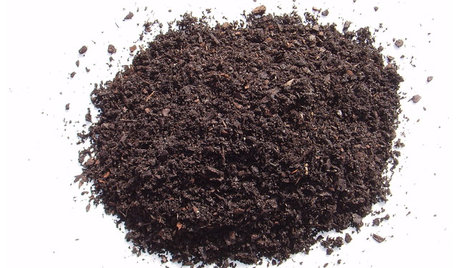
    Research demonstrates that it takes surprisingly little castings in a potting medium to demonstrate maximum long term benefit. Ideally castings should comprise between 5% and 20% of the total growth medium. Most horticulturists use 10%-15% castings in their mixes.

    If you've already potted your plants as opposed to just now mixing your potting soil, simply spread a layer of castings over the soil surface in the pot, then cover with a thin layer of compost. Water, gravity and soil life will gradually move the castings down into the potting medium.

    While you will often read that castings are a "rich source of nutrients" or "an excellent fertilizer", these terms can be somewhat misleading. Earthworm castings contain so little soluble nutrient that many do not consider them a fertilizer at all, and we like them to be this way. Soluble nutrients are, well, soluble. After plants are watered a considerable amount of the fertilizer added to that soil will be in the saucer beneath the pot, of no value to the plant at all! The nutrients in earthworm castings are locked inside the organic matter and in the bodies of the dense populations of microorganisms they support. When these microbes feed on the OM and on eachother, they release these stored nutrients at the rate at which they are needed by the plant, thus the nutrients are not lost to irrigation. For your purposes, there will not be so much N released by the castings as to unbalance the growth of your peppers, rather, the microbiology in the castings, which work symbiotically with plant roots, will aid in releasing the right nutrients in the right ratios to optimize plant growth. Overfertilizing is not a problem.

    Now, having said that, it is still possible to use too much worm castings. The castings themselves are very heavy and dense, thus when more than 20% of the growth medium is comprised of castings we often see plant decline (though not always) due to inhibition of O2 penetration. Further, castings tend to be surprisingly high in salts, thus, using them in small amounts is advised.

    You cannot make a castings tea that is "too strong". One of the nice things about teas is that, while many question their value, none dispute their truly benign nature. This is one time when you can trust your instincts. Because I don't know what characteristics your castings might have there is no way to suggest a "definitive" water to castings ratio, as you seem to understand, but if you don't mind me offering my personal way of doing things... I usually fill a bucket about 1/3 of the way with castings or castings/compost mix (75% compost, 25% castings. This is my personal favorite tea medium), then fill the rest of the way with water. I do not off-gas chlorine before use, and I do not worry about chloramine that might be in the water supply (and I have significant data that supports these positions), rather, I use the water just as it comes out of the hose. I stir the castings with a shovel to ensure water has penetrated througout, then let the bucket sit for about a week. At the end of the week I siphon off the liquid for foliar application. The castings are used for a variety of applications; sometimes spread around plants, sometimes put into the compost bin or re-added to the worm bin, sometimes used as nursery material for cocoons, etc. Use the castings remaining after making tea in whatever way feels right to you; just remember that they have lost little of their value, so do not toss them away as waste!

    Now, this is my way of using castings for tea making. Hopefully others will offer their methods. No one, regardless of how long they've gardened or worked with worms, has "the" right answer for making tea, so getting lots of ideas and choosing the one that, for whatever reason, even if that reason has nothing to do with logic but just "feels" right to you, is a great way to begin.

    Be sure to let us know what kind of results your efforts produce!

    Kelly S

  • 21 years ago
    last modified: 11 years ago

    When I make tea I mix the leachant with the castings.
    In a 5 gallon bucket I use 1 gallon of leachant and 3
    cups of castings, fill the bucket, stick a fish tank bubbler and leave it for a few days.
    Feed or spray on plants...I have friends that ask for it!

    Jim

  • 21 years ago
    last modified: 11 years ago

    Hinzy- Why do you have a gallon of leachate?! I have read and experienced that it is not prefereable to have goo actively draining out of a bin- do you have many bins? Just curious!

Sponsored
Peabody Landscape Group
Average rating: 3.5 out of 5 stars8 Reviews
Columbus' Reliable Landscape Design & Contracting