Software
Houzz Logo Print
organicadam

Pine Needles & worms

12 years ago
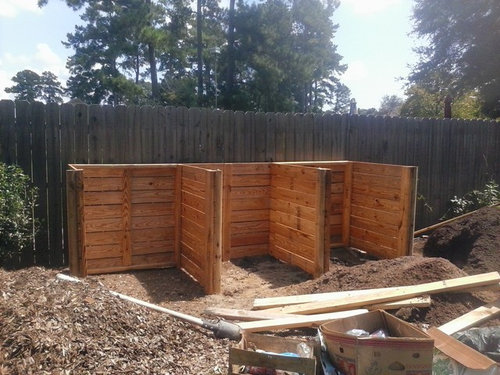
I keep finding info on the web saying not to feed worms pine needles my question is why? is this true?

Is this because it takes a long time for the needles to break down to a edible size for the worms?

I ask this question because I have built a three bin compost system(from reclaimed wood an wiped down with linseed oil), The two outer sides will be compost and the center will be worms and bedding. My idea is that the compost will slowly break down providing heat threw the winter to keep my red wigglers warm. They can travel amongst all the bins at their leisure. My compost is 30 percent pine needles and I mowed them and the leaves down to small particles to make the break own faster. Can the worms eat broken down pine needle? Please any info is greatly appreciated! Ps. there are doors for the compost bin an I will be adding a roof

Comments (10)

  • 12 years ago

    Nice setup, OrganicAdam!

    In fact, sadly, it will be difficult to get useful answers to your questions.

    First - Why not feed pine needles to worms in a vermiculture unit? Two primary reasons:
    1) Lots of "-enes" and "-anes", like terpenes and hexanes, in coniferous trees. Terpenes especially, are toxic except at very small concentrations. Worms seem particularly sensitive to short-chain (volatile) hydrocarbons.
    2) All dead tree "leaves", including 'needles' - are desiccated. A lot like meat jerky, and just like jerky, are a bit difficult to "chew".

    All of the cellulose in leaves and needles has to 'broken down' before worms can "eat" it. And dry cellulose is "tough stuff". MOLDY needles - pre-"digested" by mold - would be fine for worms (if the enes and anes have leached/volatilized out), but it is unlikely that your worm bin will be able to break down the cellulose in the pine needles in any satisfying length of time. Of course, "satisfying" is in the eye of the beholder.

    Birch leaves - much "nicer" than pine needles in terms of lacking short-chain hydrocarbons, have not broken down in my worm OR compost bins in over a year. Others here at the forum report similar results with leaves.

    Second - Is this true? Sadly, the answer you get probably depends on whom you ask.

    THAT SAID... the fact that you "shredded" them with your mower should mitigate, to some indeterminate degree, the difficulty in breaking them down, and accelerate the decomposition process "some". But then there are still the -enes and other "-anes" to deal with.

    By the way, because I imagine that I can see eucalyptus leaves in the last picture, they to contain "ols" - specifically cineole - that is also toxic to worms. If my "imagination" regarding the eucalyptus leaves is correct, you have an additional 'chemical' burden.

    Again, really nice setup. Looking forward to hearing about your operation. Especially if you can get your worms to "work on" your pine needles!

    Paul

  • 12 years ago

    I put small pine branches from pruning into my worm bins, and have a satisfactory result. They mostly go into large bins, and are left there for a year or so without much other activity. I'd guess that they make up 20-30% initially of the material of some large bins. Much of the rest of the bed is filled with green weeds and garden left overs. I find the pine needles completely disappear after a few months, and the worms don't seem to be impacted. Note that my biggest bin, where much of this material goes, is 16x4' and 2' tall, so there are lots of spots for the worms to be if something is not immediately to their liking. Also, this bin is really crawling with worms, so they tend to attack anything that they can pretty quickly. I do find that the small pine branches, minus their needles, are still noticable in the final compost product. I just leave them in there; they will further decay wherever I end up putting the compost. I would guess that in your large bins you will have a good shot at degrading the pine needles, especially since you broke them down so much; give it a go and see what happens. At the worst, you will have some needle mulch to use later.
    Renais

  • 12 years ago

    Thank you for your insight. You clearly have done your research and thanks for sharing. I cant help but get pine needles in my leaves my yard is mostly pine trees. On the other side of the bin ill try to get leaves from another location without pine needles. After the next rain im going to harvest worms from a local horse stable. I have harvested four lbs for my 18gal totes already . So I'll keep you posted as it progresses. Well here is a pic of the consistency of the mowed pine needles leaves and food scraps. I made my pile in layers of horse, duck, and rabbit manure and the mowed leaves an P.needles. I also added Bonide and Ringer ,"compost maker." As well as Azomite, bone n blood meal and dolomite lime so in only few hours after watering my pile was hot and active.

  • 12 years ago

    Thanks Ranais1, Im keeping my fingers crossed an hoping for the best. In the center bin I will put the worms in finished compost and after they vermicast that im hoping they migrate horizontally to the left and right bins. By that time the pile should be significantly broken down and hopefully manageable for the worms. The pile is cooking right now so lets hope for the best.

  • 12 years ago

    peeps pay big money.. on the east coast.. and ship pine needles in as MULCH ...

    you would be better off.. raking and recycling them as mulch..

    and avoid them as worm food altogether ...

    this forum is way outside my experience ... i am just offering an alternative use ...

    ken

  • 12 years ago

    My biggest prob with composting yard material is pine straw. Got lots of pine trees so I can't avoid them. My mulching mower mulches everything except pine straw.

    So I re-mulch sometimes 3 or 4 times. All it does is cut it into shorter "sticks".

    If I didn't really love the shade provided, I would get rid of the trees and constant threats of large parts of the trees snapping off in a storm and winding up in the bed with me thru a hole in the roof.

    Put it in a worm bin and it WILL stay there for a l-o-n-g time. Our objective is to speed things up, so pine straw is not too viable for what we want to do.

    Avoid it if at all possible. Rake it for mulch, or send it to the landfill.

    Chuckiebtoo

  • 12 years ago

    Thanks Chuckiebtoo, your yard sounds like mine I cant avoid the pine needles. I do have 6 18gal totes with a pound of red wigglers in each and they are in coco coir an just a little horse manure to keep them happy, . Those I feed my puree food waste and home made worm chow(corn an oatmeal/egg shells/used coffee grinds, all pureed). The bin is complete in 2-2.5 weeks(I avoid large chunks of food).I will keep these totes for making castings and get more worms for the compost bins. However I need to get rid of all these leaves an pine needles in the yard. They do compost faster after they are mowed, I just hope the worms eat the broken down matter. Also it contains more leaves and a good deal of horse manure. So if the wormies don't eat them there is other organic food sources, and the center bin will be horse manure an finished compost so they can stay in that bin if they don't like the others. Again thank you for your feed back

  • 12 years ago

    Welcome to the forum Adam,

    I really like your compost/worm bin. Looks like a nice build. It should be low-maintenance, just keep it damp.

    I have added aged Myrtle leaves and forest floor duff (mostly broken down cypress and pine needles) to my bins with no problems. There are so many variety of trees and what falls off each can be different. Sound like it is well mixed and should be fine. If it does not totally decompose in a wormbin, so what? It will be part of your vemicompost. Worms like leaves., just try not to make a mat.

    Great first post. Good luck and happy wormin'

  • 12 years ago

    I have limited personal experience with pine needles but I think you're taking the right approach in mulching them, pre-composting and mixing with other stuff, as well as starting them in a separate pile. When I have had pine needles (modest amounts) it's been chopped and mixed with other chopped leaves and in due course everything broke down.

    And in the end, what's the worst that can happen in your setup? It seems to me the most likely 'poor results' are that you get regular compost with some finely-chopped pine needles mixed in, and/or it takes longer to compost. If you're not in a rush, have the space, and are not trying to produce gourmet compost, no big deal. Best case, it happens quicker and produces a fine compost with a strong earthy bouquet - like most compost in the end.

  • 12 years ago

    Because I'm overwhelmed with pine needles, I segregate as much of it as possible, mulch, re-mulch, and use as a really great (and attractive) mulch for flowerbeds and under trees (pines, or course).

    Beautiful....if you wanna visualize it, remember how the course at the Masters Golf Tournament looks each year.

    A person in the pines would be fairly dumb to buy black mulches, or red, or tree mulches because they're gonna get covered with.....get ready for it.....PINE STRAW.

    Hell, my daughters' nursery center in the Austin area (no pine trees in South Central Texas) could sell all the mulched pine straw I could haul to them. Thinking about doing it. Whatcha think?

    Chuckiebtoo

    BTW....also very attractive is the pine bark the squirrels knock off the trees playing grabass with each other.

    Moderation, Patience, Diversity, Squirrel Barbeque

Sponsored
Custom Home Works
Average rating: 4.6 out of 5 stars10 Reviews
Franklin County's Award-Winning Design, Build and Remodeling Expert