Software
Houzz Logo Print
althea_gw

Bee Lines

20 years ago

I wonder why no one thought of this earlier? Taking advantage of existing power line easements to allow habitats for a variety of species, not just bees, sounds like a great idea. The only possible objection raised is initial cost.

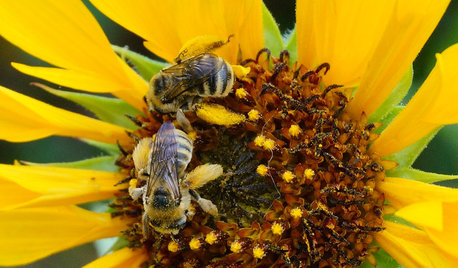
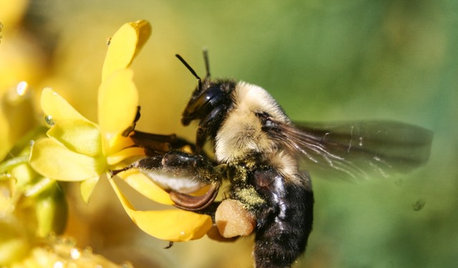
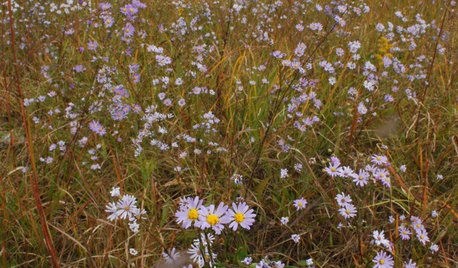
Left unmowed, power\-line land might suit bees By Sara Goudarzi : Contributor to The Christian Science Monitor The land around power lines are generating a lot of buzz among bee advocates. Power line easements, strips of land that utilities use to maintain power lines, cover more than 5 million acres across the United States. Electric companies often mow these areas to prevent vegetation from interfering with the lines. But a new study suggests that leaving easements unmowed and appropriately managed may help bee populations. But increased land development and certain agricultural practices, such as pesticide use, have hurt bee habitats. Mites and disease have also decimated bee populations. Areas around power lines could provide a suitable environment for bees if utility companies stop mowing them, ecologists say. The study compared the number and varieties of bees collected in unmowed power line corridors and in nearby mowed grassy fields at the Patuxent Wildlife Research Center in Maryland. The diversity and abundance of bees were greater in the power line easements than in the grassy fields. "The power lines themselves are essentially irrelevant," says Kimberly Russell, an ecologist at the American Museum of Natural History in New York and lead author of the study. "The land under power lines is already intensively managed in order to prevent vegetation from interfering with the lines. So why not make even better use of this land and the effort put forth to manage it?" Electric companies typically use herbicides and periodically mow all the vegetation underneath the power lines. Previous research showed that bee diversity is highest in the floral and nesting resources provided by stable, dense scrub habitats like that found in unmowed easements, abandoned fields, roadsides, railway lines, and similar habitats.

Here is a link that might be useful: csmonitor

Comments (7)

  • 20 years ago

    It should be possible to come up with native species that grow to 3 or 4 feet maximum and go no higher. Once these are established, all you have to do is manually cut back the trees that volunteer. Maybe its the "manual labor" part that is the hangup.

  • 20 years ago

    cool idea = )

    Tho I suspect it's not so much the manual labour thing, but the innovation thing - bureaucracy can be exceedingly slow to adapt/change sometimes.

  • 20 years ago

    In parts of SoCal, the right-of-ways are leased to wholesale nurseries, for example, while elsewhere I have seen flocks of sheep (and even goats) browsing along.

    Aside from bee habitat, there right-of-ways could also be set aside as part of a wild-life corridor system.

  • 20 years ago

    I am familiar with one strip of high-power lines in northern VA which partially adjoins a public park. There are bike/walking trails extending for miles; and small streams meander through although not easily seen due to being hidden by the assorted grasses, shrubs, and copses of small trees. Every May, those-in-the-know follow a path crossing from the park to a forested section on the other side of the powerlines, to view several acres of wild bluebells in bloom. Directly under the powerlines, a fairly sizeable portion (3+ acres?) has been apportioned into free garden plots -- although I wonder how much produce goes to the gardener because brousing deer are often seen.

    As Guardarzi says, the powerlines are irrelevant!

  • 20 years ago

    This could be compared to current roadside management. Not long ago roadsides and ditches were routinely sprayed with herbicides to eliminate unwanted plants. Nowadays, annual mowing and sometimes burning is all of the labor required to host a diverse habitat of plants. A cost comparison should show if the long term strategy is cost effective and if it could be applied to power line easements. The roadsides probably also serve as a refuge for bees and other insects/wildlife.

  • 20 years ago

    The high voltage lines in my area are farmed underneath except for the tower area itself. I don't quite picture in my mind what this is all about.

  • 20 years ago

    RE the local VA powerline area: for the past ten years, I have driven by that area daily, and due to being on an overpass, I can see a couple miles-length of powerlines. There is no mowing and no burning. And no sign of herbicidal usage. The management apparently consists of removing the occasional tall-grown tree, putting gravel on an access road to the garden plots, and possibly an annual (more like 18-monthly) re-mulching of the park's portion of the trails - the trails within the powerline boundary are plain dirt, with only the occasional wooden bridge over a streamlet to indicate an official nod to upkeep. I assume there must be some way for the power company to access the towers/poles, but numerous hikes [across as well as lengthwise] have not disclosed any sort of roadway or vehicle tracks.

    That's got to be low-cost management! :)

Sponsored
Bella Casa LLC
Average rating: 5 out of 5 stars17 Reviews
The Leading Interior Design Studio in Franklin County