

Ditra Set Question
18 years ago
Sort by:Oldest
Comments (7)
Related Stories
WORKING WITH PROS9 Questions to Ask a Home Remodeler Before You Meet
Save time and effort by ruling out deal breakers with your contractor before an in-person session
Full Story
SELLING YOUR HOUSE15 Questions to Ask When Interviewing a Real Estate Agent
Here’s what you should find out before selecting an agent to sell your home
Full Story
LIGHTING5 Questions to Ask for the Best Room Lighting
Get your overhead, task and accent lighting right for decorative beauty, less eyestrain and a focus exactly where you want
Full Story
REMODELING GUIDESConsidering a Fixer-Upper? 15 Questions to Ask First
Learn about the hidden costs and treasures of older homes to avoid budget surprises and accidentally tossing valuable features
Full Story
TASTEMAKERS5 Questions for Heath's Adam Silverman
A studio director brings out-of-the-ordinary dinnerware and home accessories to Heath Ceramics' showrooms. See where he goes for inspiration
Full Story
KITCHEN DESIGN9 Questions to Ask When Planning a Kitchen Pantry
Avoid blunders and get the storage space and layout you need by asking these questions before you begin
Full Story
WORKING WITH PROS12 Questions Your Interior Designer Should Ask You
The best decorators aren’t dictators — and they’re not mind readers either. To understand your tastes, they need this essential info
Full Story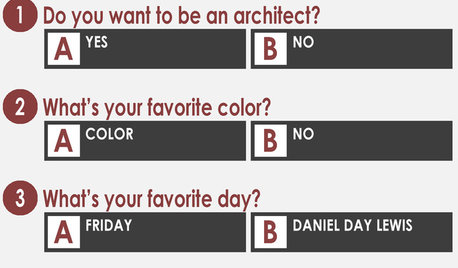
COFFEE WITH AN ARCHITECTA Quiz for Architects in Question
Should you trade in your T-square for a barista tray? Answer a few simple questions to find out
Full Story
REMODELING GUIDES13 Essential Questions to Ask Yourself Before Tackling a Renovation
No one knows you better than yourself, so to get the remodel you truly want, consider these questions first
Full Story
WORKING WITH PROS8 Questions to Ask Yourself Before Meeting With Your Designer
Thinking in advance about how you use your space will get your first design consultation off to its best start
Full Story

bill_vincent
Avanti Tile & Stone / Stonetech
Related Professionals
Middletown Kitchen & Bathroom Designers · Hagerstown Kitchen & Bathroom Designers · Sheridan Kitchen & Bathroom Designers · Annapolis Bathroom Remodelers · Kearney Bathroom Remodelers · Cleveland Bathroom Remodelers · Cumberland Tile and Stone Contractors · Rolla Tile and Stone Contractors · Raleigh Tile and Stone Contractors · Alexandria Tile and Stone Contractors · Manchester Tile and Stone Contractors · Elmira Tile and Stone Contractors · Kingman Tile and Stone Contractors · Phoenix Tile and Stone Contractors · Modesto Tile and Stone ContractorsedwenaOriginal Author
edwenaOriginal Author
MongoCT
edwenaOriginal Author
MongoCT