Software
Houzz Logo Print
mdrive

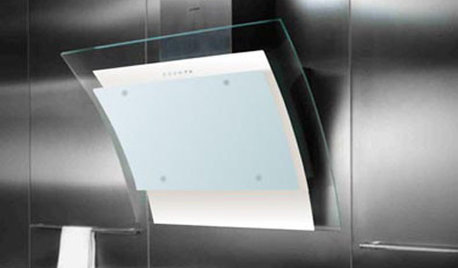
'Parametric' vent hood

15 years ago

I will be purchasing a vent hood for my kitchen remodel and I saw this new type of system by Kobe....

it looks completely counter intuitive (restricting the air vents) to force more air using less CFM....

I would love to hear if anyone has this type of vent hood and any opinion you could render, or even someone with a lot of experience with vent hoods in general...this link from Kobe gives a brief explanation of how the vent works

http://www.brilliastore.com/pages/Parametric-Panel.html

Comments (5)

  • 15 years ago

    CFM is CFM you can't pull 600 CFM by restricting the intake on a 400 CFM fan. Kobe does not claim that it increases CFM though. What they are doing is using the venturi effect to increase the velocity of the air movement. Interesting idea though restricting the capture area to the permiter of the hood, I think it has some merit, and Kobe does have a good reputation.

  • 15 years ago

    thank you....so basically this method moves the same amount of air but just does so 'faster'?

    i do like the look of this vent hood but i'm a little shy about installing one as i'm not seeing any actual user reviews anywhere...

  • 15 years ago

    I do like the concept of a curtain of rising air that could hold the plume of smoke etc. within a hood's catchment area.

    But I'm leery because this model seems underpowered (CFMs), and because nothing surrounding the cooktop at counter-top level is pumping air up towards the hood's perimeter.

    Might be new yet, but it would be nice to see reviews from some actual users...

  • 15 years ago

    A bowl of fresh cilantro won't pump air up toward the vent hood (fortunately), but hot cooking surfaces do indeed "pump" air upwards. The velocity varies with a bunch of things, but a meter per second is in the ballpark for most of them. But this is effluent, and not a fresh air curtain as chac_mool points out would be needed.

    The issues with the two functions of a vent hood -- capture and containment -- arise when the uprising cooking effluent reaches the hood. First, as it rises, the effluent spreads out in a conical expansion that can easily exceed the hood aperture, thereby allowing a portion to escape into the kitchen. This is capture failure.

    Second, the portion of this meter per second of moist, greasy air that is captured has momentum and will reflect from hood surfaces. With good hood design, the reflection continues upward until entrained by a vent air flow speed of at least the effluent velocity. This assures containment.

    In trying to make hoods aesthetically pleasing, hood designers have to make compromises that interfere with achieving the two essential hood functions.

    If the rising effluent hasn't expanded too much when it meets the air flow into the slot around this model of hood, then some of it may be successfully entrained into the flow (captured) and then contained. Effluent that hits the middle of the central aperture plate will reflect generally downward and might escape to the side at the cooking surface. I would think that if the blank panel were pyramidal it would cause the rising effluent in the middle area to end up sliding downward toward the slots and improve its capture. But this would require a deep, more conventionally shaped hood, defeating the aesthetics of this design.

    One should not expect high air velocity into a slot to have much influence down at the cook top or most of the way up toward the hood. After several slot widths the air velocity will be much lower than close to the slot.

    In any case, the explanation on the noted web site is not one I would find adequate. Improves the static air pressure?

    Also, this hood should be audited. High velocity air entering a slot may have the sound characteristic of a vacuum cleaner floor nozzle.

    Boiling water under it from a wide pan and observing steam transport and escape may visualize its performance without the need for Schlieren photography. One should keep in mind that most residential hoods are not perfect, and even commercial hoods can be overpowered by rising effluent unless the cfm is very high. So the usual dilemma of economy, aesthetics, and performance (pick only two) will apply.

    kas

  • 15 years ago

    Kaseki: Just wanted to thank you for your contributions to these threads. They've helped me understand how ventilation works.