Software
Houzz Logo Print
marisany

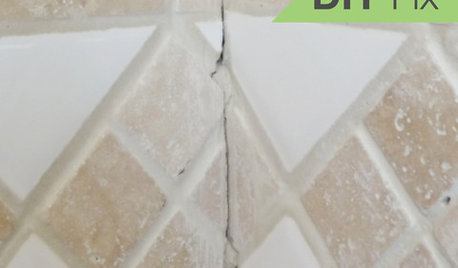
Exploding caulk at shower base from expanding glue

16 years ago

Has this ever happened to anyone else? We have a problem in the shower of the bath we renovated last year. According to my current contractor, the previous contractor used glue instead of thinset to attach the tiles. The glue is expanding from the steam, and forcing the caulk out. There is a bit of mold growing now on one section.

Our current bathroom renovation is finally finished, and we can use the other shower. So the current contractor is going to try to fix the problem. He has a call in to a tile store for advice, but he is thinking of cutting out all the bad stuff, cleaning it with bleach, and possibly putting some thinset in, then caulking. We are letting it dry well between each step. He is hoping not to have to re-set any tiles.

Any thoughts?

Comments (14)

  • 16 years ago
    last modified: 11 years ago

    If he used mastic, tear the whole thing out now or you'll have a moldy mess in no time. I've never heard of it actually forcing the caulk out of the seams though.

  • 16 years ago
    last modified: 11 years ago

    Nor have I.

  • 16 years ago
    last modified: 11 years ago

    Is mastic the same as glue? How can I tell?

    Tearing the entire shower would cost a fortune! Is this something I should go after the old contractor for? I wish now I'd taken photos. The new contractor scraped the exploding mess out today.

  • 16 years ago
    last modified: 11 years ago

    It sounds like mastic was used instead of thinset, and now it is re-emulsifying and oozing out. Mastic should never be used in wet areas.

  • 16 years ago
    last modified: 11 years ago

    Now that it seems that it has been used, is there any way to fix things other than tearing the whole shower out?

  • 16 years ago
    last modified: 11 years ago

    Nope. Unfortunately, you had a tile contractor that didn't know how to install a shower. It all needs to come out or it will continue to ooze until your tiles fall off and you will have to pay to replace it as well as mitigate mold contamination. Get it taken care of as soon as possible and certainly attempt to recover damages from the tile contractor (but I wouldn't hold my breath waiting for a check).

  • 16 years ago
    last modified: 11 years ago

    Oh, no! This is awful! If I have to have the shower redone, I will try to recover from the contractor, but unfortunately I did not take photos before the new contractor cleaned out the mess. It looked horrendous yesterday, now it doesn't. So I could have a hard time proving that the shower failed. The tiles seem to be securely attached at the moment.

  • 16 years ago
    last modified: 11 years ago

    Is mastic the same as glue? How can I tell?

    It'll have a yellowish tint to it. If it reimulsifies and starts coming out of the joints at the bottom of the wall, it'll be a creamy milky looking substance, and this could very well be what's happening. As for going after the installer, he's covered. Although mastic should NEVER be used in any wet areas, just about every pail of Type I mastic (which is about all that's sold any more) will say on the side of the pail that it's approved for shower walls (but not shower floors). Although that's meant to be a commercial spec, an installer could very easily claim ignorance and say they were going by the manufacturer's spec.

    That's the bad news. There IS another way around this, though, and it all depends on the company who made the mastic, and the rep you deal with. Many times, if you go to your installer and demand that if it's the fault of the manufacturer, to get the rep out to inspect the job, so long as your installer has followed standard installation procedures to the letter, the rep will cover the cost of redoing the shower, just as a PR move. I've seen this happen many times, both in person, as well as in the forums I go into. It'd be worth a shot.

    Get in touch with your installer, and explain the situation to him, and see how he reacts. If he's willing to work with you, explain to him that if he works with you he might end up redoing your shower, and actually get paid by the manufacturer for it.

  • 16 years ago
    last modified: 11 years ago

    That's exactly what it looks like, Bill. It's disappointing that the contractor is not responsible for this, but I like the idea of going after the manufacturer. Is there any way to determine who manufactured the stuff, if the contractor doesn't remember or won't tell me, a lab or something? Would the manufacturer actually cover the cost of re-doing the shower using thinset instead of their product, thereby admitting that their mastic should not be used according to package directions?

    The new contractor wants to try filling in the gap with thinset, caulking over it, and seeing whether that holds, before considering a more major repair.

    I hate the idea of having this contractor re-do the shower, if that has to be done. I don't trust him. The guy I am using now is great. He did a beautiful job in the bathroom we've just finished.

  • 16 years ago
    last modified: 11 years ago

    If I do have to have this shower re-done (and I am slowly coming to accept this), what can be done about the frameless shower enclosure? They measured after the tile was done, and one end is mounted on a tiled wall. At the least, it will have to be taken down and re-mounted, and it may not fit as well, especially since I will probably use Daltile if I redo it, instead of the more expensive tile that is up there. (I'm assuming that the tile can't be saved.)

  • 16 years ago
    last modified: 11 years ago

    That's exactly what it looks like, Bill. It's disappointing that the contractor is not responsible for this, but I like the idea of going after the manufacturer. Is there any way to determine who manufactured the stuff, if the contractor doesn't remember or won't tell me, a lab or something? Would the manufacturer actually cover the cost of re-doing the shower using thinset instead of their product, thereby admitting that their mastic should not be used according to package directions?

    Let me rephrase all that. The contractor is responsible to you. The manufacturer is responsible to HIM. So ultimately, it would be in HIS best interest to go to the manufacturer and get this straightened out, because one way or the other, your shower is failing. HE is responsible for that to YOU. The thing is, he has every right to chase down the manufacturer to make good on HIS expense to fix YOUR shower.

    Does that sound a little clearer?

    Would the manufacturer actually cover the cost of re-doing the shower using thinset instead of their product, thereby admitting that their mastic should not be used according to package directions?

    Back several years ago, I helped someone else in another forum who'd DIYed their shower and used mastic specifically because it said on the side of the pail that it was suitable for use in showers, and she had the very same thing happen, only she didn't catch it when it first started. By the time she realised what was happening, she'd lost some wall grout out of one of the bottom tiles, and when she went to refill the grout joint, she saw the whole wall move, so she stuck a screwdriver into the joint to pry and see how loose the tile was, and the entire wall came down, and both the tile AND the cement board were as clean as the day they first came out of the warehouse-- not a drop of mastic to be found. All that had been holding the wall together was the grout. Being they bought the mastic from Home Depot, I had her get in touch with her area's rep from Custom Building Products, who came out to the house, and immediately okayed a payment to her to cover the cost of demolition and hauling of debris, as well as the cost of all new tile, setting materials, cement board, and grout, and if she'd had it professionally done, they also would've covered the cost of labor for same. She asked the rep why they put that in the side of the mastic pails, if it's not really recommended. He said that spec is there mainly for doing things like hotels, apartment buildings, and office buildings- places that only require a 1 year warranty, and that typically remodel every few years, anyway. In addition, most of these places have full time maintenence staffs that can do small repairs, and as a result, there are very few claims, as compared to the amount of mastic they sell as a result of that spec. In order for them to stay competitive, they HAVE to claim it suitable because it DOES follow the letter of the ANSI spec, although I have a feeling that's going to change within the next few years-- too much trouble because of it.

    The new contractor wants to try filling in the gap with thinset, caulking over it, and seeing whether that holds, before considering a more major repair.

    That's like the little Dutch boy sticking his finger in the dyke. Don't let him do it. He's only getting rid of the symptom, not the problem.

    I hate the idea of having this contractor re-do the shower, if that has to be done. I don't trust him. The guy I am using now is great. He did a beautiful job in the bathroom we've just finished.

    You can do that, but you might lose any chance of getting it done at no charge to you. Like I said, the manufacturer's responsible to the installer, not the end user. (if it gets confusing, follow the money-- who pays who?)

    If I do have to have this shower re-done (and I am slowly coming to accept this), what can be done about the frameless shower enclosure? They measured after the tile was done, and one end is mounted on a tiled wall. At the least, it will have to be taken down and re-mounted, and it may not fit as well, especially since I will probably use Daltile if I redo it, instead of the more expensive tile that is up there.

    Unless you go from one extreme to the other (such as going from using 1/8" thick glass tile to something like 1/2" thick absolute black granite tile), the measurements for the glass shouldn't change hardly at all. Almost all tile, with thinset, comes out to about 3/8" thickness. The only time it goes much more or less, is if you're using specialty tiles, such as natural stone, large format porcelain, or glass.

    And you're right-- it's highly doubtful that you'll be able to reuse the old tile.

  • 16 years ago
    last modified: 11 years ago

    Thank you so much, Bill. That clarifies things. There may be another complication. It is not clear whether the contractor waterproofed the walls. When searching on the web for mastic/shower problems, I found a forum that seems to be used mostly by tile guys. I posted some photos, and they brought up the issue of waterproofing, and they seem to think that my shower was not waterproofed. I'll post a couple of the photos that made them think this.

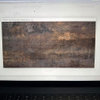
    The first photo is sideways. It looks like green waterproofing stuff was painted on the niche, but the end wall does not have it. It might have been done during the tiling, but the other photo, where the tiling was done but there were a few missing (I had to order a few more), seems to show waterproofing on the curb but not the wall.

    So, if he used a product that is supposed to be used for shower walls, according to the package, then he is in the clear for that, but the manufacturer might be willing to pay for my shower to be redone (if the old contractor does it). I understand this, but I am very reluctant to allow him to do any more work on my house, even if this means that I can't recover the cost of re-doing the shower.

    If he also did not waterproof, then the situation is probably worse than we think.

    If I decide to go after him, the options I have identified are to file a complaint with the state licensing board - I believe that they do mediation/arbitration - or go to small claims court. I can also file complaints with the state board, the BBB, etc., and tell the people in the neighborhood who recommended him what happened. I guess my chances of prevailing depend on whether what he did was clearly wrong, or only suboptimal.

    I am going to ask my new contractor to make a hole in the wall in the room adjacent to the long wall to see if any water damage is evident.

    I will have to wait for a couple of weeks to deal with this (Christmas/houseguest/work deadline). Thank you so much for all your help.

  • 16 years ago
    last modified: 11 years ago

    I was thinking that the woman you helped, Bill, was better off than I am, because if her tile was clean, she could have re-used it. (What happened to the mastic? Did it all make its way out the bottom?) But you said that she had to buy new tile? I'd love to re-use what I have, but it cost about 3 times as much as Daltile, and I do not have the budget to buy it again. And the decorative tiles took about 12 weeks to come. I want to get this taken care of fast if there is mold growing.

  • 16 years ago
    last modified: 11 years ago

    First off, I'm sure she could've reused SOME of it (any that didn't break), but it was immaterial-- the rep PAID for all new tile.

    As for what happened to the mastic, it not only reimulsified, but it actually liquified, and flowed out the bottom of the vertical grout joints, much in the same fashion as what you've described, which is why I asked you the questions I did up above. As for the mold growing, if there is any, that will stop as soon as the moisture source is cut off and things dry out. A little bleach, one time, while waiting for materials will take care of the problem.