Software
Houzz Logo Print
mtnlaw

Need help with blending different interior woods

17 years ago
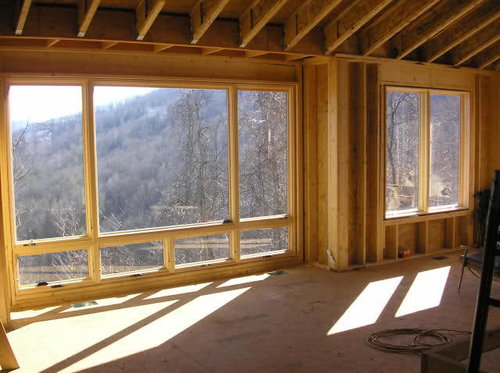
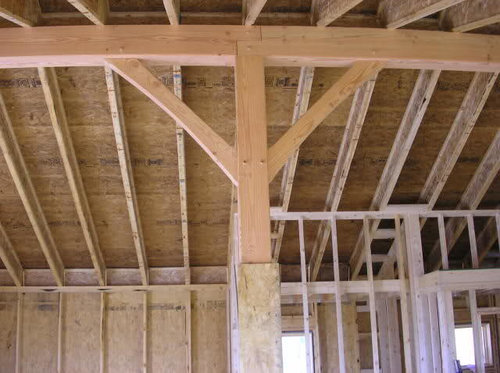
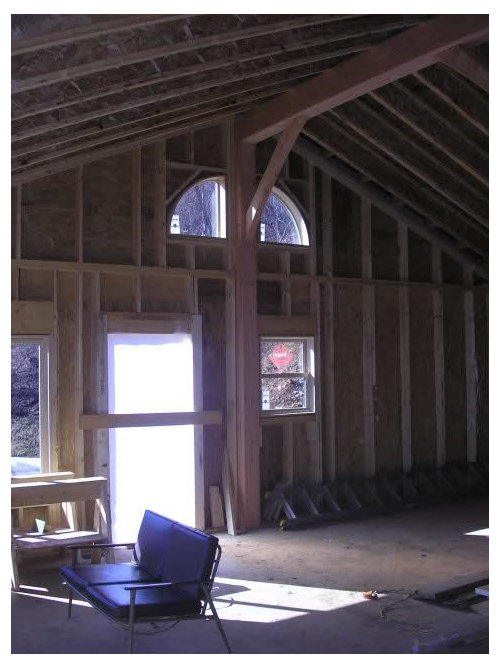
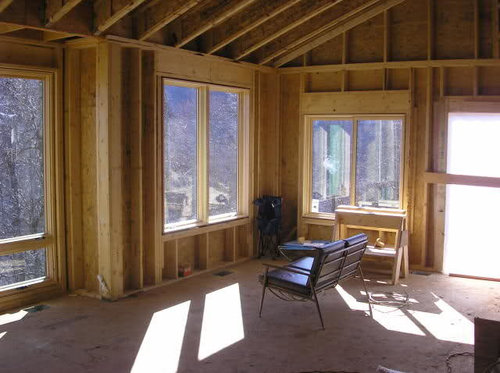
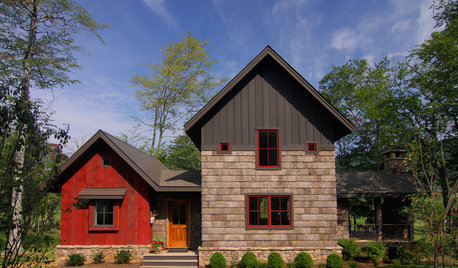
I wonder if anyone can give me some input on blending different interior wood species/stains. We are building on our property in the Blue Ridge Mountains in North Carolina. I have no clue what to call our "style" of house  but we are using Douglas fir for a partial timber frame of post and beam with a T&G ceiling and wood floors. So, weÂll have at least five different kinds of wood in the main living area: pine window trim, pine baseboards and doors, the wood floor (probably maple), the timbers, the cabinets (maple or hickory) and the ceiling (either pine or spruce).

We like the natural white pine in the windows that Marvin uses, but I question if we just poly it and keep it light like that, I donÂt think that would look right with the floor, which we want to do in a cinnamon-type color to blend with the Doug fir which has some reddish tone. And we also want to stain the doors a darker tint than natural white pine. Plus we have the ceiling. Plus the cabinets. Confusion reigns here!

Attached are a few pictures which admittedly donÂt show much since we are just finishing the framing stage. If anyone out there has faced this issue I would appreciate any input, with pictures if you can. Thanks.

Comments (8)

  • 17 years ago

    What beautiful views!

    I'm not sure if I'll have any great advice but I'm definitely on the same wavelength as you. I'm building a log home in the Shenandoah valley with some very nice views.

    My logs are cypress as well as my tongue & groove. I think I'm going to go with ash for the flooring except the the master bedroom where I want hickory.

    Since my floors and my walls are light, I'm going with darker kitchen cabinets. Cherry wood with a chestnut stain. Not a dark dark brown, but dark enough to provide contrast with the floors and walls.

    To be honest, I don't know about my base boards, I'll have to ask! We've discussed pine stairs to save money.

    I know I'm trying to stick to brown tones and not red/pink tones. Also, I'm trying to provide contrast so it doesn't all run together. I'm not into everything matching or being the same, but I do want them to work well together and provide contrast.

    One thing I did was take samples to the site. I was able to take a sample kitchen cabinet door and several floor samples and place them in the future kitchen in the actual lighting to see how they looked. I highly recommend this.

    It's been too long since I posted pics, I'd have to re-figure out how. Maybe later.

    Just my two cents.

  • 17 years ago

    We use maple floors and stair treads with stained pine trim and cherry cabinets.
    I agree with the previous poster. We have a box that's got all sorts of samples (bathroom tiles, paint swatches and even small jugs of paint, wood samples, etc... ) that we carry around both to the site and to other places to match.

  • 17 years ago

    We have cypress T&G ceilings, rough cedar beams, pecky cypress walls, pine floors, alder cabinets, cypress crown and base, sycamore stair railings, and the typical white pine windows and doors. Oh, and a mahogany front door. It all works.

    What I did was leave all the cypress and cedar natural with just a clear poly. The pine floors we stained to mimic an old pine floor, rather than the bright white/yellow of new pine. I also stained the doors and windows, as well as the cabinets, in a "pecan" stain, basically just so that they would harmonize with the warmer tones of the rest of the wood.

    I would really recommend that you avoid trying to make everything match perfectly. It won't work and will create frustration. I would pick one or two elements that you want to contrast - say, the beams and the cabinets or the cabinets and the floors - and go darker with them, while the remaining wood harmonizes in overall tone.

    Get samples of all your wood and a bunch of stains and try out combinations until you find what you're happy with.

    These are pics of our foyer, from inside and from outside looking in, and the living room ceiling. Mahogany, cypress, pecky cypress, sy pine, white pine, sycamore and cedar woodwork with cherry fan blades and an ebonized foyer desk.


  • 17 years ago

    Side note to ronnatalie - same here...for the last few months my backseat floor board has been home to wood samples, paint fandeck, house plans, tape measure...

  • 17 years ago

    Lovely home, lovely veiws! I'm sure I don't need to tell you to enjoy it.

    I feel you are overthinking this: Wood isn't super consistent, every board has variations within it, and differs slightly from other boards cut from the same tree. Think of them in terms of ranges of color [mostly browns, obviously] and let these natural variation tie the colors together.
    Trying to make it all match perfectly [especially with different species in play] will just make you crazy. Better to deliberately choose different finishes and make a virtue of necessity.

    Remember, anything site finished can be tweaked till it's just right.

    You do want to spend some time playing with stains and finishes, of course, and just to make your life a bit more complex, remember that you can blend colors from within the same product family to get the shades you're after-- I did dozens of test batches till I got what I wanted, using 4 different colors plus clear [to lighten things up].

    My philosophy is that if everything is super consistent, it looks too new. Since I wanted my house to have a 'turn of the last century' feel, I built up a pallet of complimentary browns and tans that forms a great backdrop for a few strong accent shades for punch and personality-- it looks great with red, my ultramarine blue range, hunter green morris chair, and amber mica lighting.

    I've done a wide range of woods in my sort of finished house. Areas with high ceilings got v-groove pine with a whitwash finish to countact pine's natural tendency to yellow over time. This backs a rather woody area [though the walls are painted] from being too warm-- I think mixing warm and cool shades brings out the best in both.

    Trim and window casings [pine and fir, respectively] got a custom mixed color similar to a chocolate cake [redder than cocoa] while [pine] doors are a lighter shade, similar to peanut britle.

    I did a bead board and beam ceiling in the kitchen and dining rooms. The beams match the trim, the bead board matches the doors.

    My scheme bucks conventional wisdom in that the high ceilings are quite pale, while the lower ones are darker than the wall color. But it works well: the kitchen and dining seem much more intimate than they would if they were pale, and the high areas seem to just float above you in an open, airy way.

    Floors on the main level are Berry floor laminate [couldn't afford the hickory I wanted] in a shade called Oxford Oak, not far off of what you'd get if you mixed the trim and door color. Upstairs, I used a cork with strong red tones that also works well.

    By choosing different wood shades that work well together, my other woods [cabinets, antiques etc.] all fit right in.

  • 17 years ago

    Thanks for the responses. This has helped me start to focus and yo make good points about not being overly concerned that everything blend or match just right. I'll just start trying stains and see how things work. THanks again.

  • 17 years ago

    oruboris: Your scheme sounds very interesting - do you have an pics you could post? thanks