Software
Houzz Logo Print
caroline94535

Painters; I have a primer question

14 years ago

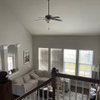
I'm finally painting the small livingroom. I used alcohol on a cotton ball to test the existing paint. It "melted" so I'm sure it's latex, right?

I've thoroughly cleaned the walls with Dirtex, followed by another cleaning with hot, clear water. It's been 10 days since I cleaned them so they are bone dry.

It's been at least 10 years since the walls were painted an off-white color. I want to prime them before putting the new color on. DH thinks priming is not necessary.

Would it improve the paint job to prime first?

Would it harm the paint finish to use primer on all ready painted walls?

I'm using satin finish latex in sage green for the new color.

Comments (13)

  • 14 years ago

    I'm no expert, but I can say with about 99.9% certainty that it most definitely will not harm the paint finish to use primer on already painted walls. This is exactly what I've done in several rooms of my own house and I've never had a problem.

    As for whether primer is neccessary....I'm guessing you'll get answers on both sides.

  • 14 years ago

    I would prime if I were you, I didn't prime the white bedroom walls that the previous owners hadn't painted in at least 10 years and the old paint sucked up the new paint like a sponge, took 3 coats to get decent coverage and then still had to touch up some areas.

  • 14 years ago

    I wouldn't think priming is necessary, particularly since the existing color is light. Most paints today are formulated to cover well in few coats (and if you haven't already decided on your paint, I highly recommend Benjamin Moore's Aura line). I personally think priming first is overkill.

  • 14 years ago

    I agree with Auntjen. I've painted all the walls of our house several times and the finishes are beautiful. The only times I've used a primer was in the beginning, on all walls that were raw drywall, or on walls where I was going from a dark color down to a much lighter color. Today's paints are well formulated, especially the quality brand ones like Benjamin Moore, Sherwin Williams, Farrow & Ball, etc. to cover well in fewer coats.

  • 14 years ago

    If the old paint is still in good shape (not peeling, etc) I don't think you need to prime.

    The only time I primed when painting over paint is when painting a room red over existing white walls (needed a gray primer to only use 2 coats of red).

  • 14 years ago

    I have to once again sing the praises of BM's Aura line. I've covered deep red, deep turquoise, and a hideous faux-treatment that was (dare I say it?) just about the color of doo-doo with light green Aura paints, and each time the coverage was beautiful - perfectly hiding the old paint in two coats. No priming needed. This stuff is great!

  • 14 years ago

    I agree -I'd use a good quality paint, but would not bother to prime.

  • 14 years ago

    You didn't mention sanding, but you should if there is any sheen in the paint at all. That will provide tooth for the new paint to grab.

    As far as the primer goes, I found a post in the paint forum that can help you with that.

    Here is a link that might be useful: another

  • 14 years ago

    I've done a lot of painting in my life and I'm stunned to hear the trouble you are going through for prep. Geez, it's enough work to begin with, if I had to do all that you are doing I'd give up.

    I have never washed a wall before painting, lol. I do not sand or prime semi-gloss before painting over it, unless it's in a bathroom where steam can cause peeling. I've painted right over a heavy layer of nicotine, wallpaper past, soot from a fireplace, and pretty much anything else that might be on a wall...without any problem. And I am a perfectionist about the outcome.

    I will note that I very rarely use anything other than Benjamin Moore paint and in the future I will NEVER use anything but BM again.

    If the walls you are painting only have "builder's paint" on them, it may be worth your while to prime. It certainly won't do any harm, just make sure you use the right primer for the job.

    Even using BM paint, I am never satisfied with one coat. It might be a mental thing, lol, but I feel better if I do a second coat. If you plan to try and do only one coat of the finish paint, you really ought to prime. But if you are using good BM paint and plan to do 2 coats no matter what, the priming is probably overkill.

  • 14 years ago

    Completely agree about the two coats -I know paint manufacturers are all touting one coat coverage, and probably it does. But I think it's the application. Few of us novice painters (myself included) are good enough to paint completely evenly. Two coats masks any imperfections in that regard.

    I don't agree about sanding any sheen off. Hire a professional painter and you'll find they don't even was the walls. Get your roller out and get going girl!

    Btw, I don't often find that paint tools are all they are advertised to be, but I did buy one of those rollers where the paint fills up in the handle, and it is a HUGE timesaver.

  • 14 years ago

    I love to paint, and I think it's great that you have washed and rinsed the walls! (But hey, I hang out in the paint forum.)

    If it's just a thin coat of builder's flat paint, I'd prime so you get better adhesion and coverage. If the walls are sealed well, heck, I'd still prime, but that's just me and maybe overkill.

    Aura is my favorite paint too, and I'll usually do 2 coats as long as my budget can stand it!

    LOL @ bestyears about the professional painters - many of them want to just slap a coat of paint on the wall and get paid. The GOOD painters know when to prime, to sand a gloss, to spot-prime your patches with your finish paint, etc. Just because they are professional, doesn't mean they are good.

    Sounds like you are off to a good start - make sure you post pictures when you are done!

  • 14 years ago

    Definitely prime for the best finish.

  • 14 years ago

    If you had to do any spackling, those patches will take the paint differently. If I do any repairs, I prime, or sometimes just spot prime. Also, if it's a deep sage green, you may want to use a tinted primer.