Software
Houzz Logo Print
kelvar

Slate Tiles for Beginners...some basic questions.

16 years ago

Are months of looking at tile for our backsplash we seem to be landing on slate subway tiles. I've never used slate tiles before and have some beginner, basic questions. I want our backsplash to have a stacked stone look and the "slate" subway tiles seem to do the trick.

- After doing some reading here on gardenweb, there may be a question as to whether the product is a true slate or a quartzite? How can you tell the difference? Which is a better product? And, does it matter what it really is?

- Are there different qualities of slate..i.e. better slate stones than others? How do I determine that?

- I like the look of the subways when they are wet - it brings out the coloring beautifully. So do you enhance first, then seal, then grout? Or do you just seal, then grout, without enhancing? What kind of sealer/enhancer do you use to give it a wet, but non-glossy, look?

- What else should I know about slate? I even read an article where they sealed the backside of the tile (the side that gets stuck to the wall). Really?? You have to do this with slate?

Any info you can give me is appreciated. Thank you to all of you for your patience!

Comments (9)

  • 16 years ago
    last modified: 11 years ago

    i have slate tile to put on my fireplace, and I was worried about grouting with the rough (relatively) texture of the tiles. There is a grout release product that you can put on it before grouting to alleviate any potential problems. Smear some grout on a tile and see how easy it is to wipe off.
    Lisa

  • 16 years ago
    last modified: 11 years ago

    I don't have all the answers, but maybe something will help. I put 'slate' tiles behind our rangetop. I have seen similar products called quartzite. I can't say I've ever looked into why the names are used the way they are.

    I wanted mine to stay light, so didn't want them enhanced. So instead of a sealer/enhancer, just used a sealer. I used it before grouting and after. I didn't seal the backs.

    I don't know if all 'slate' or 'quartzite' tiles are this way, but ours varied in thickness, often from one end of a tile to the other. It wasn't fun to grout. I love the way it looks now, and am glad I did it that once, but I'm not sure I do it again! :-)

  • 16 years ago
    last modified: 11 years ago

    We love the look of slate, but decided against it when redoing our foyer just because of the prep work and upkeep. Real slate is formed by several thin sheets of rock, and it is the chipping of these sheets that causes the uneven texture. We were told it is very porous, and each tile must be sealed (front and back) before installation. If it is not sealed, the water in the thinset will be absorbed by the back of the tile, so will not cure properly. When you are applying the grout to an unsealed tile, it must be wiped right away, or it will dry and you will be unable to remove it, as you do not have a slippery sealed surface. This is the information we were given. Too much work for us!

  • 16 years ago
    last modified: 11 years ago

    I want our backsplash to have a stacked stone look and the "slate" subway tiles seem to do the trick.

    If by stacked stone, you're talking about a tight joint no grout installation, in spite of the fact that I'm not a big fan, this would be the wrong material to try that with, unless you want to do alot of cutting prior to starting the installation. Slate pieces can vary in size as much as a strong 1/8" from one piece to the next, and trying to use a tight joint with a material like that would put you in the nut house in no time, if you don't cut each and every piece to size beforehand.

    After doing some reading here on gardenweb, there may be a question as to whether the product is a true slate or a quartzite? How can you tell the difference?

    It's tough to describe the difference, so instead, I'll show you:

    This is quartzite:

    These are a couple of different kinds of slate:

    Indian:

    Asian:

    Brazilian:

    Vermont:

    Which is a better product? And, does it matter what it really is?

    Both are good products, although I can't say I've ever seen quartzite used as a flooring material. For a backsplash, I'd say it'd be a matter of taste. Both are rustic looking materials, so if you like that look, it'd be an either/or.

    Are there different qualities of slate..i.e. better slate stones than others? How do I determine that?

    MUCH different. The biggest things are hardness of the stone, and the amount of shaling (flaking) to expect (they usually go hand in hand) I've actually got pictures of the extremes up above. The Asian and Indian Slates are usually the softest, and shale the most. They're also usually the most striking in color. The stronger slates will be the U.S. and South American slates. Although initially there will be some shaling, it'll usually stop by the time the installation is cleaned up.

    I like the look of the subways when they are wet - it brings out the coloring beautifully. So do you enhance first, then seal, then grout? Or do you just seal, then grout, without enhancing? What kind of sealer/enhancer do you use to give it a wet, but non-glossy, look?

    There are actually sealers that are both enhancers AND sealers (which to me, seems kind of redundant, being that I always thought ALL enhancers were also sealers!). Either way, it all depends on what you want. If you want to enhance the stone, I'd start with a combo product (such as Miracle's 511 Enhance and Seal) prior to grouting. Now, the question is whether or not you want to enhance the grout. If you do, then just do one coat prior to grout, and you can do 2 or 3 afterward. If you want to leave the grout looking natural, though, do 2 coats with the enhancer prior to grouting, and then just use a standard penetrating sealer afterward, such as Miracle's 511 Impregnator. It won't change the look of the grout.

    I even read an article where they sealed the backside of the tile (the side that gets stuck to the wall). Really?? You have to do this with slate?

    I don't know who the moron was that gave that advice, but I wouldn't follow it if I were you. Thinset will still stick to it, but the bond will be greatly reduced.

    I THINK I got everything!!

    (I'm just as sure, though, these answers will bring up a whole NEW crop of questions!! LOL)

  • 16 years ago
    last modified: 11 years ago

    I sealed samples of Elon tile quartzitewith three different products. The first was Akemi and was not supposed to enhance. It ruined the quartizite samples, darkening them terribly and totally ruining the looik. If I had used this all over my new tiles without trying first, I would have gone bonkers.

    Then I used the Aqua Mix Sealer's Choice Gold recommended by the saleswoman at the Elon tile store. This kept the tile color true and it looked great.

    Then I tried the Miracle 511 impregnator and it darkened the tile somewhat, though not like the way I think it's supposed to look when enhanced (which I understand is supposed to look like a gentle spray of water before it has dried). I didn't care for the look.

    Make sure you try the sealers to see if you like the look and how it reacts to the stain tests. Three coats of the Aqua Mix worked well for me.

  • 16 years ago
    last modified: 11 years ago

    Wow - thank you to all for the advice. I think I have a better understanding, but I may be back with more questions! We're going out looking for tile again tomorrow. Hopefully, things will start to fall in place.

  • 16 years ago
    last modified: 11 years ago

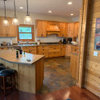
    I used copper slate for my backsplash. I sealed it with an "enhancing" sealer both before and after grouting. They don't look as shiny in person as they do in this pic:

  • 16 years ago
    last modified: 11 years ago

    We used the cheap indian slate for our foyer floor. If you can find a cermaic tile with a slate 'look' i would go for that. the slate may flake off, although it seems like for a backsplash that would be less of an issue. but if you are installing yourself, real slate has a very rough surface, which makes applying grout difficult - you have to carefully scrub to get the grout off the surface, WITHOUT getting too much water in the grout. Also, we used a neutral grout that was really hard to see on the slate when wet, but sure showed up when dry.

    It was our first tile project, and we went with the slate because we loved the look and the price. It's definitely not the easiest tile job to do!

    We used the enhancer in the blue jug from home depot - i think the 511 stuff. We applied one coat after we installed the slate, before grouting, and then we applied two more coats after the grout. I do love the way it looks, but really, really really hated the project! And we never did get the grout off the surface the way I would have liked to.

  • 16 years ago
    last modified: 11 years ago

    Like reedrune, did a small bathroom in slate from Lowes-first tile job. Applied the enhancing sealer before we tiled as it made it easier to get the tiles clean. We laid the tiles out first due to the variation in color. The main problem was some were thicker than others, so you had to be aware of that and compensate. But, it came out beautiful and I'm looking for another project to use slate!