Software
Houzz Logo Print
cindiw2

Paint over wallpaper?

16 years ago

Can I paint over wallpaper? I need to apply plaster for texture before I paint.

Comments (18)

  • 16 years ago

    You should only do that as an absolute last resort and only if the wallpaper is really, really, really, really, really, really, really, really stuck.

    And please only do this if the wallpaper is really stuck well!

    You may think the wallpaper won't come off, but once you add the weight of paint and/or texture to the face of that wallpaper, that added moisture plus weight can actually act like a wallpaper stripper over time. First you may see a bubble here or there and then over time more bubbles and eventually the wallpaper may just start coming off in sheets. If you do decide to paint over the wallpaper, be sure to prime first with an oil based primer or Gardz. This will help prevent any moisture from getting to the paste.

  • 16 years ago

    The wallpaper is vinyl-like. MOST of it is stuck really really well but there is one section where it is coming unhinged at the edge. Since it is behind the refrigerator and will be "hidden," I'm thinking to rip off only the parts that are coming unglued and texture over the rest of it. I'll be sure to prime first. I have Gardz.

  • PRO
    16 years ago

    If you can pull the face of the vinyl off, you should easily be able to remove the backing with maybe just HOT water.As paintguy said, remove the paper if AT ALL possible

  • 16 years ago

    As mentioned, any remaining wallpaper will eventually lead to problems.

    A product made for wallpaper removal called Diff will generally remove any wallpaper with a little (sometimes maybe more than a little) patience.

    It is sold in a liquid form and a gel form. The liquid is mixed with warm water and the gel is applied as is. The gel is generally used on the tough areas.

    Check your local paint stores for this product or something similar and follow the instructions. You will not regret it later on.

  • 16 years ago

    Just some additional info on wallpaper removal if interested.

    Score the Wallpaper
    The key to easy wallpaper removal is to loosen the glue underneath. Do this by perforating the surface with a wallpaper scoring tool like the PaperTiger Scoring Tool. The unique patented cutting action of the PaperTiger perforates the wallpaper without damaging the wall to allow wallpaper stripper to penetrate through the paper. Just use light pressure and perforate the entire wallpapered surface. The more holes you make, the faster and easier the paper will come off.


    Apply DIF Wallpaper Stripper
    After perforating the wallpaper, apply DIF Wallpaper Stripper Liquid Concentrate or DIF Ready to Use Gel to the wall to soften the glue and loosen the wallpaper. The fast acting enzyme formula penetrates and dissolves hard-to-remove glue, like clay-based adhesive, in one-step-- quickly and efficiently. They are faster and more efficient than using plain water or home-brewed solutions like vinegar and water or using heavy, dangerous steamers.
    Apply DIF starting at the top and working your way down, using a sprayer, sponge or WALWorks Adhesive & Stripper Roller. Ideal for applying DIF Gel, WALWorks Rollers hold up to 3 times more than ordinary rollers, delivering the right amount of adhesive or stripper with less effort than with traditional tools. Let DIF soak for 15 to 20 minutes. When the wallpaper turns a dark color or starts to bubble it is ready to be removed.


    Remove the Wallpaper
    Remove loosened wallpaper by using a Paper Scraper Wallpaper Remover and Wall Scraper. An ordinary razor blade or scraping tool can cause damage to walls if held at the wrong angle, or if applied with too much pressure. Paper ScraperÂs angled blade eliminates human error, and scrapes off stubborn sections of paper without damaging the surface.

    Remove the Glue Residue
    Once all the wallpaper has been removed, reapply DIF for 15 to 20 minutes to remove any remaining glue. Use Paper Scraper to scrape away glue residue, then wipe down the walls with a damp sponge WALWorks Wall & Wallcovering Sponge. After all excess glue has been removed youÂre ready to start redecorating!

    Congratulations! You're all finished!
    On your next wallpaper project, apply one coat of SHIELDZ Universal Pre-Wallcovering Primer before hanging. SHIELDZ prepares the surface for hanging any type of wallpaper and makes it easier to position, improves its adhesion, and makes it easier to remove when it comes time to redecorate again.

  • PRO
    16 years ago

    pro painter quotes
    The unique patented cutting action of the PaperTiger perforates the wallpaper without damaging the wall to allow wallpaper stripper to penetrate through the paper
    I am assuming you cut and pasted this info from another site. Most home owners and pros alike use too much pressure with this tool and do serious damage to the drywall. I have seen it countless times.This tool works well but must be used VERY carefully to JUST score the surface or the paper NOT go the whole way to the wall.To make a statement that this tool was designed not to damage drywall is just ludicrous.
    Also, it is called paste or adhesive not glue.Actual glue has not been used for over 50 years. Here is a link to a better removal solution

    Here is a link that might be useful: safe and simple

  • 16 years ago

    Personally I think they should change the name of the Paper Tiger to the Wall Destroyer because nobody ever uses the proper pressure....or just take them off the shelves entirely. I once knew a painter online that invented his own tool like that with a seam roller and pins...I think he called it the 'Holenpoker'. The theory was that you don't need to make huge holes for the stripper to soak through. I don't use any tool....I just do repeated soakings.

  • 16 years ago

    Well, i was wondering about this, because how much damage can you do to the wall behind the paper? I mean like aren't you supposed to prime and paint after you remove the wallpaper? So what's a few pinprick holes between friends?

  • 16 years ago

    It's not always a big deal, but sometimes the holes mean you will have to lightly skimcoat the entire room. Paint won't fill the holes if they are deep; they would have to be patched.

  • 16 years ago

    Yeah, not to beat a dead horse, but I was thinking that you'd have to gouge pretty deep to cause any significant damage ... I did use the Paper Tiger in the past and didn't find myself comfortable with it. I was so afraid of causing damage per all the warnings that I didn't know if I was going too deep or not deep enough. What I would up doing sometimes was literally scoring the paper with a knife...but considering the fact that I'm going to use texture, I can hardly imagine the Paper Tiger would cause any significant problem.

  • PRO
    16 years ago

    ..but considering the fact that I'm going to use texture, I can hardly imagine the Paper Tiger would cause any significant problem.

    If you are going to texture anyway, no problem. As stated, big problem when used improperly.

  • 16 years ago

    Unfortunately, some wall coverings removal (paper, vinyl, fabric or any other type covering) will damage the wall. This is more common on the older restoration jobs that have wall coverings sometimes decades old. Also, on the jobs that were simply preformed wrong in the beginning.

    A damaged wall, most being repaired rather easily and then prepared correctly, will result in an attractive finish for many years

  • 16 years ago

    Yeah, well since this was my very first attempt at doing anything with my walls beyond putting a nail in to hang a picture, I messed up from the very beginning, since I didn't know where the drywall began & so I kept going until I got clear through to the plaster in many cases, lol. I didn't even know what drywall was...
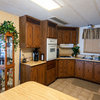
    Now, some of the kitchen wall is partially done in that I have plastered much of it with texture. That was a hard enough job since I also didn't know what I was doing, tried following directions and I convinced myself that it looks good enough, artistic enough so far. But the rest of the kitchen has wallpaper and it needs to come off. It is stuck on pretty good, there is some parting of the material behind the refrigerator where the seam is. However, this is vinyl paper so I doubt anything will leak through.
    Thanks for all your advice and help; I'll take it into consideration.

  • 16 years ago

    Good Luck. With your great attitude you'll do just fine.

  • 16 years ago

    Wow, Cindi, sounds like a bit of a learning experience. The learning curve is never fun, the pleasure you get after you're up it is really just relief from the pain! Welcome to the club of learning the hard way (I belong to the more exclusive chapter where we have to learn the hard way twice before anything sinks in).

    If this isn't turning out so well, you might be interested in learning to patch drywall... well, maybe not really.

    I am going to chime in on the paper tiger to say that no matter how many pinpricks you make, from my experience they don't help much anyway. I use a spray bottle of water (and a towel or two to catch the drips) to soak the glue, which I get at most effectively in one of two ways: either I peel away from one corner or the top edge and spray into the backing, or I rip off the paper surface and then the backing alone absorbs the water quite readily. They key is to wait long enough for the glue to soften so that it comes off easily with gentle scraper use.

    But my spray bottle gets very little water in through the holes made by the paper tiger. If you couldn't get in behind to get a start any other way, it might be worth it. And I have read where someone said to make so many holes that the paper is hardly recognizable. That might be the trick. And yes, it does damage the wall a bit. As I was just doing a border with it, that wasn't much sweat to fix, but would be annoying on a whole wall.

    In addition, I would have to say that painting over wallpaper is almost always the wrong thing to do, so kudos to you for trying. But don't over-punish yourself; for the rest of the wall you could always try painting over, and leave full removal for the next owner of your home.

    KarinL

  • 16 years ago

    Thanks, propainter.

    KarinL, you made me smile. Yes, it seems the pleasure, if you call it that, from looking at the job finished is just that: that I finished it! Yes, I'm in your club of fascinating learning curves. ain't it great?

    Hey, learning to do drywall patchwork sounds good, and you made me smile and further my desire to learn more, in my difficult way...! Oh, no, I forgot, I DID try to do some patchwork, which is what drove me to texturize it when I couldn't get it smooth, I finally figured maybe it would be easier to simply slop the plaster on it and think of it as artwork. I didn't try to cut out any wallboard yet ... I'm waiting for that. I used a small putty knife to lay on the plaster and so there are not big patches, but small rectangular slops of texture. Kind of cute, really...

    I would up spraying sometimes DIF, sometimes fabric softener, sometimes warm water (did the trick), then pulling and then spraying more, then scraping the glue & pieces. I thought of it as as if were crocheting something... It wasn't the wallpaper I had a problem with, it was what was behind the wallpaper. I really don't want to go through that again ...

    Your suggestion to let the next owner worry about it a good one. :-) I might just think that way -- another good brain analyzing things always helps, lol! I'll see how it goes once I get started. First I gotta clean up the rest of my house so I'm not embarrassed when people (like neighbors and friends) walk in. then I'll start on the rest of the wallpaper. Thanks, KarinL and you all for trying to help me as you always do!

    Cindi

  • PRO
    16 years ago

    Your suggestion to let the next owner worry about it a good one. :-)

    You might not think that way if you were the next home owner.

  • 16 years ago

    You might be right if I were the next homeowner...but regardless of the circumstances, values have severely dropped here in south Florida, I owe more than the property is worth and if anybody buys it, they're getting a bargain. Wallpaper under the paint or not.