Software
Houzz Logo Print
thukeri

Native Herbs

23 years ago

Hi,

I am relatively new to herbs and I was wondering if there are any Australian Native herbs,

because I have read American books on herbs with no mention of Aus and I wasn't sure if

that is because there aren't any or if it's because the books were American.

Comments (22)

  • 23 years ago

    There are many, (probably the most famous would be Lemon Myrtle) but information about them is unreliable, and many now claimed to be 'native' are actually introduced plants. Also, the aborigines in the early days were reluctant to share their knowledge, and frequently gave false information - a sort of 'revenge' that has backfired - not to mention language problems. Of course, such information as was given, was also frequently disregarded by the new settlers. All very sad. Tim Low, who has written several books on bush tucker, seems to be regarded as the nearest thing to an authority. You could try contacting ABC TV, who some years ago ran a program called Bush Tucker Man - an ex-soldier who was an expert in survival in the bush who knew a lot about native medicines and food. The Botanical Gardens information centre in Sydney (and presumably elsewhere) could also give you follow-up sources of aboriginal groups running information courses.

  • 23 years ago

    Thukeri - are you interessted in herbs for culinary or medicinal purposes, or both?

  • 23 years ago

    I know that there is sea parsley and native mint - I have some sea parsley growing at home and it is saltier than regular parsley.

    YOu can also get dried bush tomato, lemon myrtle, mountain pepper in some specialty shops.

    Here is a link that might be useful: Bush foods

  • 23 years ago

    Okay, thankyou everyone, I'll check into these, I also found out that Ecalyptus is also a herb (the only aussie herb in the book).
    And Andy- I'm interested in both culinary and medicinal herbs and herb uses. Well, basically anything involving herbs I'll try once. I had no idea dried Cloves were so strong until I chewed on one this morning to freshen my breath (ugh! That was disgusting)

  • 23 years ago

    Check out tea-tree oil (melaleuca), too! Proper spelling is ti-tree, but nobody does it that way any more.

  • 23 years ago

    Follow this link.

    Here is a link that might be useful: Australian native herbs

  • 23 years ago

    There's a book you might be interested in: "Australian medicinal plants", but don't expect it to be conclusive. As Daisy says, info on native herbs isn't all that reliable. The problem with herbal medicines is that there's no patent, so most companies aren't willing to invest in the research.

  • 22 years ago

    Try finding the book "Wild Lime - cooking from the bush food garden" by Juleigh Robbins (Allen & Unwin, 1996) it a recipe book for native foods and herbs and gives cultivation advice as well. It has sections on fruits, nuts, leaf - stem - tuber and seeds. The list of useful native plants is quite long, this book gives you a head start on the more useful ones from a culinary perspective.

    hope this helps, mudlark

  • 22 years ago

    Coming late to this thread but this just occurred to me. My favourite herb book (An Autralian Herbal, by Penny Woodward) has a section at the back that lists "Useful Australian Native Plants". Most of the plants listed are trees (esp. eucualypts, acacias & tea trees) or shrubs.

    The smaller plants listed are:

    Bidgee-widgee - Acaena anserinifolia)
    Australian bugle - Ajuga australis)
    Brown boronia - Boronia megastigma)
    (Native) Pigface - Carpobrotus glaucescens
    Clematis glycinoides
    Australian Bindweed - Convolvulus
    Clustered scent myrtle - Darwinia fascicularis
    Native hollyhock - Lavatera plebia
    River mint - Mentha australis
    Slender mint - M. diemenica
    Native pennyroyal - M. saturioides
    Native sarsparilla - Smilax glyciphylla

    There's a paragraph or so on each but the book is nearly 20 years old (dirty, torn & scribbled in) so it predates current interest in utilising native plants and there's probably better info on the web now.

    (P.S. first post to forum!)

  • 22 years ago

    Check out this site.

    Here is a link that might be useful: bush tucker

  • 22 years ago

    Thukeri,

    Have you seen Daley's fruit web site? They mainly do fruit trees but have a section on Australian bush foods.
    The address is

    Here is a link that might be useful: Daley's fruit nursery

  • 22 years ago

    Has anyone seen, smelt, tasted, the australian native basil (Ocimum americanum)? I've just been reading about? I'm curious about this little plant. :)

  • 22 years ago

    No, haven't seen or tried it. Just wondering about the 'americanum' part of the name, though! With a name like that, are you sure it's indigenous to Australia, or has it just naturalised - or what?

  • 22 years ago

    Seen, tasted and used it, but no varieties of O. americanum (e.g. lime) do particularly well in my garden. Think I got it from Mitre 10 originally, but haven't seen it for a while.
    It is distinctive in its scent and taste, and worth a try if you're a collector.

  • 22 years ago

    Daisy, it's listed as native. Who knows what the botanist was thinking when he named it.

  • 22 years ago

    I have heard, but not tried it, that dichondra has medicinal uses - the Chinese in particular think it helps with arthritis etc. My mum (who is Chinese) says you can boil it up ... haven't been game enough to try though. I'm also wondering whether she might be getting it mixed up with something else ...

    Having said all that, I did a quick google and found this:

    http://www.scs.leeds.ac.uk/cgi-bin/pfaf/arr_html?Dichondra+micrantha

    which pretty much lists its medicinal uses as

    "Diuretic, febrifuge and styptic[147]. The whole plant is used for treating diarrhoea[266]."

    Aggie.

  • 22 years ago

    I suspect there might be untold plants with potential culinary value in Australia that are undiscovered. Particularly the seeds of the Apiaceae family in fertile wet areas. A disproportionate amount of information on 'bush food' is desert food. The aboriginal people rarely made use of spices as such so these would be unexplored. Tasmania lanceolata and Backhousia citriodora are superb spices but this is probably the tip of the iceberg. I intend to taste my way around Australia on holidays to Queensland and NSW etc.

    If anyone has any information on strongly flavoured Australian native seeds or leaves (whether or not you find the taste pleasant) I'd love to hear about it.

  • 22 years ago

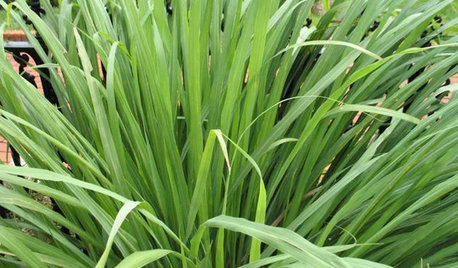
    Cymbopogons are native grasses that are closely related to the Lemongrass that is used in Asian cooking, I have tasted a few different species, and they all taste bloody awful in my opinion (and smell like cats piss!!), but I have been told by a reliable source that it depends on the species and the growing conditions. I think these species have more potential as insect repellants than in any culinary use, as all the lemongrasses produce citronella.

    A lot of spices that come to us from other cultures have become part of a culinary tradition primarily because of their medicinal or practical qualities, I have been reading a lot about this in Indian cooking, the inclusion of things like asfoteida (or hing) in many indian lentil dishes is because of its digestive qualities, this is true of fennel seeds, ginger and many others. This is also true of the spicy liqueurs and appertifs of mostly european origins that we enjoy today simply for their flavour rather than their original intended purposes as digestive aids and remedies.
    I think that this is also true of the way Aboriginal people use plant material, so whilst I agree that they are probably not considered culinary spices, even by Aboriginal people, there are plants used in the preparation of food that have medicinal properties or are used simply for practical reasons (to keep food moist or to insulate it from the intense heat of a fire during slow cooking) and some of these impart some fairly distinctive flavours on the dish being prepared, and as such could also be considered culinary spices. I can imagine that todays use of the spice cinnamon evolved from a similar usage, but that is simpy specultion and the result of a wish to be able to grow my own cinnamon tree, peel some bark off and wrap it around a hunk of lamb and cook in some coals just to see what it tasted like ;-).

    mudlark

  • 22 years ago

    mudlark. I grow the Cymbopogon from the flinders ranges, ambiguus? It has a lovely scent and flavour like grapefruit. Very appealing to my palate. If you're interested in spices and like cooking Indian check out our website!

    Here is a link that might be useful: aroma

  • 22 years ago

    Beautiful site, Jamus - thanks. Much as I love Indian cooking and flavours, my favourite spice blend is probably another that you have listed, the East African Berbere. I'm kinda a sucker for making my own mixes too - I love the smell of freshly ground spices, so I can imagine what your kitchen must smell like.

    Cymbopogon ambiguus is one of the Aussie "lemongrasses" that I've tried and didn't like - I guess it goes to show how subjective our senses are, especially taste and smell!....I love grapefruit though!

    mudlark.

  • 22 years ago

    mudlark, there are some plants of Cymbopogon ambiguus at the botanic gardens in the classground, with the other grasses. Next time you're there wander past and give it another go! It might be seasonal, nutritional etc, as you said.

    Thanks for the positive comment re our webpage. We love it and hope to soon make it more than the paying hobby it is currently.

  • 22 years ago

    I hope people will pardon my resurrection of this thread ... I've just been compiling a list of native edibles that I want to plant in my backyard, and these are the herbs I decided would work. (In no particular order, not comprehensive, herbs/aromatic leaves only, small plants/shrubs only :) ).

    Prostanthera rotundifolia (Native Mint)

    Apium prostratum and filiforme (Sea Parsley or Sea Celery)

    Tasmannia lanceolata (Native pepper)

    Prostanthera incisa (Cut Leaf Mintbush)

    Ocimum tenuiflorum (syn. Ocimum sanctum) (Bush tea leaf, aka native basil or native thyme).

    Ocimum americanum (Hairy Basil - may be introduced?).

    Mentha australis (River mint aka native peppermint)

    Smilax glyciphilla (sweet tea aka botany bay tea, native sarsparilla, thornless smilax).

    Now I've just got to source the buggers :) (I believe Randwick City Nursery has the mint, at least).