Software
Houzz Logo Print
johnnycoleman

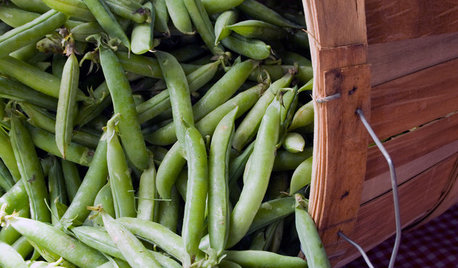
Purple hull peas

11 years ago

I left 1/4 acre standing so I could pick and eat them all winter. They have to soak in water for about 12 hours before cooking. However, they still taste great!

Johnny

Comments (11)

  • 11 years ago
    last modified: 11 years ago

    Oops, I forgot to mention that I use an old pillow case to remove the hulls. Fill the pillow case with the dry pea pods, then smack a wall with it. Crude but effective threshing technique. I separate the peas from the hulls by pouring the mess from bucket to bucket while outside over a tarp.

    Johnny

  • 11 years ago
    last modified: 11 years ago

    Oops, I forgot to mention that I use an old pillow case to remove the hulls. Fill the pillow case with the dry pea pods, then smack a wall with it. Crude but effective threshing technique. I separate the peas from the hulls by pouring the mess from bucket to bucket while outside over a tarp.

    Johnny

  • 11 years ago
    last modified: 11 years ago

    That's a lot o' good eats!

  • 11 years ago
    last modified: 11 years ago

    Yum! I picked all mine and froze them while they were green. Whatever I leave standing in the winter gets devoured by birds, bunnies and anything that can find its way underneath, through or over the fence.

  • 11 years ago
    last modified: 11 years ago

    Dawn,

    We canned thirty quarts of shelling peas. I wanted to see what would happen if I left them standing. Next year I'll pull them up and hang them in the barn.

  • 11 years ago
    last modified: 11 years ago

    To my way of thinking yours is the best way to keep peas as they will take up less room and they will keep a long time. This is the way it used to be done. I like the taste better than canned peas. You can put these up in qt. jars if you want to. My grand parents used to hang them in a stout sack made from cotton sack material and hang them in a back closet.

  • 11 years ago
    last modified: 11 years ago

    Auther,

    I would like to find some cotton feed sacks. I haven't seen them in decades.

    Johnny

  • 11 years ago
    last modified: 11 years ago

    Like so many other things they don't make them anymore.

  • 11 years ago
    last modified: 11 years ago

    Johnny,

    I always leave a few southern pea pods on the vines all winter for the birds, especially with the vining cowpeas (usually Red Ripper or Whippoorwill) that I grow on the garden fence. The ones that the birds and other wildlife don't eat will fall to the ground and some of them will sprout in the springtime. So, I don't have to plant southern peas to climb the garden fence as they will sprout all by their selves. This year, so many Red Rippers sprouted near the fence that I didn't even have to sow any seeds to fill in the gaps because there weren't any gaps. I plant my actual crop within the garden in rows because some years the deer are pretty hard on the vines on the fences. They usually get the peas (and sometimes the leaves) on the outside of the fences but I get to harvest the ones on the inside of the fences.

    I do the same thing with Armenian cukes, which I grow on the back garden's west fence. I grow the southern peas on the east fence, preferring a wall of green vines to a bare fence. The Armenian cukes that self-sowed along the fence in 2013 produced as much of a harvest in 2014 as the ones I planted myself in the garden in proper rows. The more veggies I can encourage to self-sow and perpetuate themselves annually, the happier I am.

    Our local feed store (a Tractor Supply store about 20 miles from our house, so local isn't really all that local) generally sells burlap potato sacks around the time of year when they are selling seed potatoes, but the only cotton feed sacks I've seen in recent years looked more like a craft-type reproduction that might not have been sturdy enough to actually hold anything with real weight to it, and that was several years ago that I saw those. Actually, I just remembered that I saw a stack of them a couple of weeks ago at a new Atwoods store in Gainesville, TX, across the Red River from where we live. They were big cloth feed sacks and were sitting in a big pile near hunting supplies like deer corn (which was in standard paper bag feed sacks), deer stands, camo clothing and such. There wasn't any sort of sign near the cloth feed sacks or any prices on them, and I couldn't figure out what empty cloth feed sacks had to do with hunting supplies, but I'm not a hunter. Maybe there is a hunting use for them that I just can't figure out. Based on the prints and patterns, they looked like they might have come from another country and kinda reminded me of feed sacks like my dad's family made clothing from back in the 1910s, 20s and 30s. It wasn't necessarily the prettiest clothing, but the price was right for a very large family during very hard times.

    I generally either can or freeze most everything that can be stored that way, reserving my dry storage areas for all the potatoes, onions, sweet potatoes and winter squash. We have a large walk-in pantry area, but I can so much (800 jars in 2014) every year that the jars fill up the shelves in our large walk-in pantry, and the overflow gets stored in plastic storage containers with lids that I slide underneath the beds in all the bedrooms. I am not sure where I'd squeeze in dried peas. We have a purple hull pea farm about 5 miles south of us and they sell peas by the bushel, so I could buy them dry and already shelled (yay!) for storage if I wanted to store some that way, but I usually put up more in the freezer than we can eat anyway and then, when the next year's peas are getting close to harvest, we have to hurry up and eat all the ones left in the freezer so there's room for the current year's harvest. There's usually not a single day in summer that I'm not harvesting/processing something for fresh eating right away or for storage so we can eat it long after the fresh eating season ends. Had I known back in the late 1990s that I'd regularly grow such a large garden after we moved here, I would have built a house with a bigger kitchen, a bigger utility room and pantry, and a proper root cellar. As the garden got bigger and bigger over the years, the space available to store crops stayed the same size, which can be a problem sometimes.

    Sometimes I store my root crops and winter squash in the tornado shelter, but I cannot fill it up as much as I'd like because we do have to actually use it for people during tornado warnings, so there has to be room for the people to squeeze into it.

    For additional food storage, I'd like to add a really large butler's pantry to the north side of the house, adjacent to the kitchen, so I could use it just for storing all the food processing, canning and dehydrating supplies, and jars and such, as there just isn't enough room in the house to store the harvest and all the supplies that I use for processing the harvest. I doubt we'll ever find time for a building project that large, at least until Tim retires, which is still a few years off.

    I try to grow as much of our food supply as I can, because I think organic, home-grown food is superior quality to commercial crops shipped hundreds or thousands of miles from where they were grown, but I create problems for us in terms of finding storage space for all of it.

    I imagine if a person wanted to buy actual cotton feed sacks, you could Google and find two different kinds: vintage ones being sold on e-Bay or Etsy and new ones being sold in bulk. The last time I saw some new cotton flour sacks being sold online, though, they didn't have the cool prints and patterns like they once did. They were just plain white or off-white cotton, probably muslin.

    Dawn

  • 11 years ago
    last modified: 11 years ago

    Dawn,

    I really wish I had a root cellar but I doubt I'll ever be able to afford one.

    Sounds like you have a plan that will keep one carpenter busy for some time.

    I'll call Atwoods tomorrow to ask about those cotton sacks. I have plenty of burlap sacks to use if necessary. However, I just don't like how they smell.

    Johnny

  • 11 years ago
    last modified: 11 years ago

    Johnny, Right now "my" carpenter is helping our son build his house on a part of our property. I can help with some things, but lack the upper body strength to hoist big roof beams and things like that into place, so mostly it is my husband and son doing the work themselves on the days both are off work and at home. Because they both work in the public safety field and have non-traditional days off (Tim works 4 10-hours days a week and Chris is a firefighter who works 24 hours on/48 hours off.), they rarely have the same day off, but yesterday they got to work on the house almost all day. My list of things for Tim and I to build and do once he retires is so long it is scary, and maybe he'll just keep on working forever so he doesn't have to tackle that long honey-do list.

    It is likely I'll never have a big, in-ground root cellar, but I want one, so it will stay on the list forever. When I was a kid, my dad and his brother took my cousin and me to visit the old farm where they grew up. The old house, likely unoccupied since the 1940s, was on the verge of collapse and being used at that time to store hay, but my dad and uncle showed us what was left of their combination tornado shelter/root cellar and it was huge. They dug it by hand in either the 1910s or 1920s, and it was lined in the early days with field stone, and later they poured crude concrete walls using homemade concrete. I don't remember what they used for a roof. When we saw it, it was huge---roughly 16 to 20' long and about 8' wide, but the roof had collapsed and wind/rain had mostly filled it in with red, sandy soil. Back in the day when his large family lived there, they had wooden shelves that lined the sidewalls and jars of home-canned food lined the shelves. So, when I think of a root cellar, it is the image of the remains of the cellar that I have in my mind, but I don't want one that will collapse and fill with soil. : )

    In our early years here, we started digging a root cellar by hand, but we have red clay and we quickly saw the error of our ways and abandoned that project.

    Dawn