Software
Houzz Logo Print
alwayslearning2244

Kitchen cracking in back panels

11 years ago
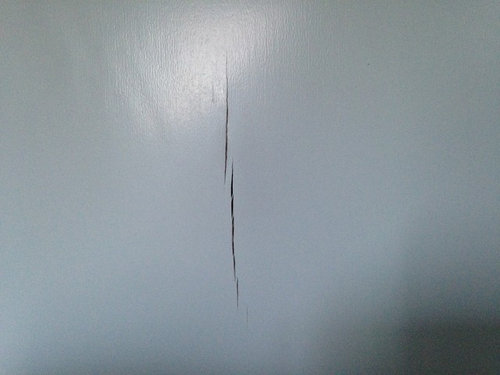
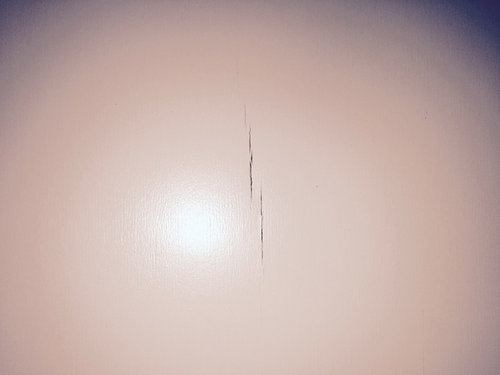
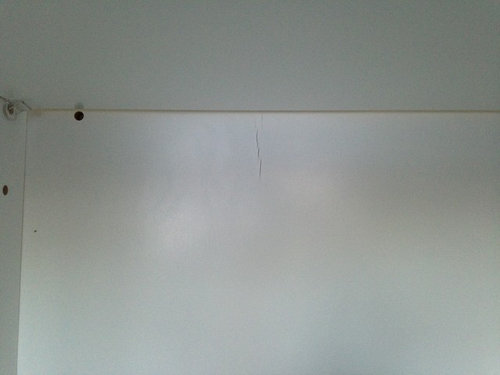
We had brand new white shaker cabinets installed in our home. The back panels of the cabinets are cracking and this cracking occurred either prior to or during installation. The company doesn't think this is a big deal and offered $100 off the total price or said they would caulk the cracks. Being that we paid for brand new cabinets, this is not acceptable. We have yet to make our final payment to them, which is a substantial sum of money. Any suggestions as to what I should do? This isn't the only issue we've had with them, so my patience is wearing thin. Even if we had them cover the backs with a new panel, how do I know the other parts of the cabinets are structurally sound? Will the cracks grow and create problems down the line? Do I negotiate for money off the total price? Refuse to pay the 2nd payment? Ask for an extended warranty? Some pictures of the cracking are below

This one is about 2.75" but you can tell it's not just the paint that's cracked.

The company is acting like I'm a crazy person for even having an issue with it, since it's on the inside back panels of the cabinets. Yet they say they've never seen it happen before either :( There are at least 8 cracks (only 3 are pictured). Thoughts?

Comments (38)

  • 11 years ago

    Site built "custom"?

    IF they used the correct joinery on the faceframes, and used thick enough sides, then the back panel isn't structural at all. It merely squares it up and keeps it from racking. That third picture would not lend confidence as to the overall construction method though. Do you have more pictures of the cabinet interior that doesn't focus on the cracks?

    Also, the cracking would imply some type of stress was applied to the cabinet during installation. Maybe wet wood? Maybe clueless hacks? Both?

  • PRO
    11 years ago

    I have never seen anything like this either. As mentioned above do you have more pictures? Are these base cabinets or wall ones. If they are base has the top been installed and what is it? The cabinet box construction at a minimum should be 3/8" engineered wood or plywood to withstand a stone top. If the pictures shown are wall cabinets I would be very afraid of them falling off the wall as the cracking could be the stress of the cabinet attached to the wall if hanging rails were not used. Who is the manufacturer??

  • 11 years ago

    Thanks Sophie. I don't have any additional interior pics but can take some when I get home from work today. They are considered semi-custom, constructed by the company I hired in one of their warehouses prior to install. The project was delayed a month and I learned recently that the cabinets were stored in a non-temperature controlled warehouse. I live in the Midwest and we did have some super cold days (i.e. 2 degrees) during that time frame. I'm wondering if that's how they cracked. I just don't understand why they wouldn't remedy it BEFORE install!

  • 11 years ago

    Hi Kim. The biggest problem is in the floor to ceiling 24" pantry cabinet, however there are smaller cracks in 1 wall cabinet and another base cabinet, which has granite on top of it. The sides, tops and bottoms are 1/2″ plywood construction. The backs were also supposed to be 1/2" but I'm hearing mixed stories on that from the company now. The cabinet line is Forevermark. I wish had started to wipe down the shelves (& hence noticed the cracks) before the granite was installed. More pics to come.

  • 11 years ago

    Kimberly (not Kim) - sorry!

  • PRO
    11 years ago
    <?xml version="1.0" encoding="UTF-8"?><md>Kim is fine!
  • 11 years ago

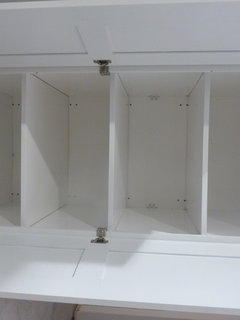
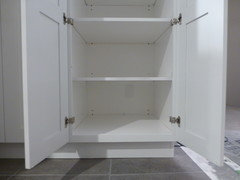
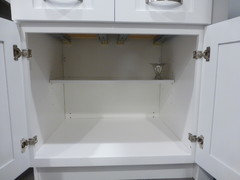
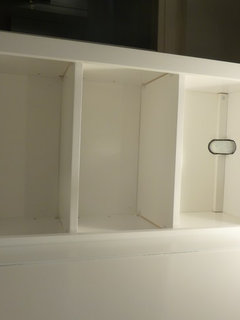
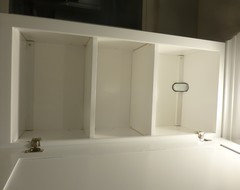
    Ok, so here are some better pictures of the interiors.

    This is the bottom right pantry cabinet. The other lower pantry has issues as well, but this is the worst one with multiple cracks throughout:


    Close-up of the bottom two shelves:


    Base cabinet with granite on top:


    And finally a wall cabinet with a small horizontal crack. The pipe was something pre-existing that they couldn't move and cut in to the cabinet.


    Do these help?

  • 11 years ago

    That is what a plywood crack looks like when it has been bent too far. The outer layer of veneer cracks on the outside radius. If all the cracks are close to the middle of each panel, this is most likely what happened. The cold dry temps in the warehouse did not help in keeping the cracks closed.

    The suggestion to fill the cracks is your only option other than tearing your kitchen apart. I would not use caulk, it shrinks. Use a high quality nail hole filler, the kind that comes out of a can, and work it into the cracks and sand smooth. Then prime and repaint the backs. Considering the alternative, this should be your first option.

    You have every right to expect this to be fixed to your satisfaction.

  • PRO
    11 years ago

    As long as the cabinets are built with hanging rails, the backs are just cover. Fill em and paint. Either way, as soon as you put your stuff back in them, you'll never see the cracks again.

  • 11 years ago
    last modified: 11 years ago

    Crappy Chinese import assembled in the US with a 5 year warranty backed by no one is NOT anyone in the industry's idea of "semi custom". It's not even anyone's idea of "stock". A questionable product was obviously questionably assembled and installed. You've got issues here that you may not even know you have. First of all, the lie that they told you about the quality of the cabinets would be a major sticking point with me for whomever sold you those and told you they were a good semi custom line.

  • 11 years ago

    Thanks for your thoughts rmtdoug. Their current plan is to cover the backs with new 1/4 plywood. I have no idea how this is going to turn out and I am very nervous about it. I feel like they should give me $ off for installing a faulty product. I paid for brand new cabinets, and since they were installed with pre-existing problems and will have a bandaid fix, I feel like I should be compensated.

  • 11 years ago

    Ugh, I know Sophie. I started wondering that with the initial responses yesterday. This company has a Dreamline cabinet brand base in their store, and that is what I thought I was getting. The day after they were installed I remember opening up a drawer and seeing the Forevermark symbol and being really surprised. I looked back at the listing of all the pieces ordered and it does say Forevermark in front of it, yet I didn't realize that was a manufacturer when they were ordered. I thought it was a specific line within the Dreamline brand. That probably sounds really dumb, but they said that was exactly what I was getting, so I didn't have reason to think otherwise. SIGH.

  • 11 years ago

    Oh, and I wouldn't say all the cracks are in the center per se, but none of them are on the edges. I do like the idea of your solution rmtdoug, but do you think all of the cracks are done showing up? Do you think we will be ok structurally?

  • 11 years ago

    How do I know if the cabinets are built with hanging rails? Is there any way to tell post-install?

  • 11 years ago

    With respect to the backs, structurally you are fine. Since you don't know exactly when the cracks originally showed up, nobody can say if they are all revealed or not. Your cabinets will acclimate within a couple of weeks in your house. Any original cracks should have showed up by then.

  • 11 years ago

    Our new kitchen cabinets were installed in June of 2013 and by January of 2014 I had a huge number of them crack ( the cracking started January 24th and continued for several months) . It was awful. It was mostly on the cabinet doors. Fortunately the company replaced every door and made sure that all the staining and glazing matched the components that weren't affected. We were pleased that they did all the affected doors and end panels over. They didn't charge anything for materials or installation as they deemed it wood that hadn't been properly cured. I can tell you I have really held my breath all winter but so far so good.

    I hope the company you are dealing with will stand behind their product and make it right for you.

  • 11 years ago
    last modified: 11 years ago

    Holly - Don't know where you live but depending on your climate, winter is when wood items in houses crack because of having the heat on. So, yeah, time of year when the cabinets are built and installed can make a difference. Was your heat on for a while before they started cracking?

    I put some air-dried wood beams in a heated shop a few years ago and after a week or so, when it was quiet, you could hear the checks opening up in them. Little ticking noises and outright pops. They settled down after about three months.

  • 11 years ago

    Rmt, yes it was winter. They were actually installed in the Summer and the first cracked cabinet happened January 24th. I live in south central PA so it gets cold. Heat was probably on from late October. The sound of them cracking sounded like gun shots. My kd said in all of his years he never saw cabinets crack like mine did.

  • PRO
    11 years ago

    I'd pop a cabinet down and look for a grade stamp of the plywood. From the deflection in your first picture, this looks like CDX, not cabinet grade plywood.

  • 11 years ago

    With Chinese sources, there's not gonna be grade stamping. They don't have to use US spec anything. And they don't.

  • 11 years ago

    I think rmtdoug had the best solution to the checks in the cabinets. I don't think I would have plywood installed on the backs because all the shelves would then have to be shortened. The wood that is checking is very thin and it's for aesthetics (not structural). Filling, sanding and painting should be enough to make the cabinets look brand new.

  • PRO
    11 years ago

    This plywood belongs on a roof as sheathing, not as cabinet backing.

  • 11 years ago

    At least it's plywood - it could have been fiberboard.

  • 11 years ago

    In face frame cabinet construction, cabinet backs are not a structural element (so long as upper cabinets have a hanging rail. The backs are on there to help square the cabinet up during construction and to keep it square (i.e., prevent wracking) during installation.

    If you have access to some old school built in place cabinets, you can see that those are built without any backs at all.

    The cabinet backs don't need to be top notch material--I often use the reverse side of old 4 x 8 wall paneling when I need a cabinet back.

    That said, you are buying new cabinets so you expect & deserve more than what was delivered so the company needs to make good. But from a purely structural perspective, those cracked panels aren't anything to worry about.

  • 11 years ago

    Thanks for everyone's feedback. It's good to hear that it's likely not structural. Does anyone know how I can tell if the company used hanging rails? I'm not exactly comfortable taking one of them down to look. Are there any key features to look for?

    Any thoughts on what 'making good' would be? Keep in mind this was supposed to be 1/2 inch plywood.

  • PRO
    11 years ago
    last modified: 11 years ago

    If the backs were MDF or even particleboard, there would be no cracks.

    While backs will help square a cabinet, they do not prevent wracking during installation. If you have a bowed wall and install cabinets without shims to put the cabinet on plane, it will wrack, back or not. A flat door can't lie on or in a wracked cabinet no matter how much you adjust the hinges. I see it all the time.

  • PRO
    11 years ago

    siegel438:

    Back a screw out and check it, your cabinets won't fall. It should not be a flathead and/or a "drywall" screw which have little strength in shear. If these guys can't tell roof sheathing from Baltic Birch plywood, I doubt they know which screws to use.

    Even if they're built with roof sheathing, your cabinets may be structurally fine, depending on the joinery, adhesives, and fasteners used. This is very difficult to diagnose by chat board, but more pictures may help.

    I'd hammer these guys for a large discount, show them the door, and use the savings to pay someone who knows what they're doing to make the best of it.

  • 11 years ago

    I would also be curious about the cost of the cabinets you received and the ones you thought you were buying. Is there a price difference? Even if the receipt states that Forevermark were ordered, where they at the Dreamline prices? I don't know about any of these brands, but your confusion as to which product you thought you were buying made me wonder if you were overcharged for what you received.


  • 11 years ago

    On the Forevermark Cabinets web site are videos of how to construct the cabinets. From what I can see on the video the backs do look like they are 1/2" thick. In fact, you can learn a lot about these cabinets from looking at the assembly videos.
    http://forevermarkcabinetry.com/assembly-installation/


  • 11 years ago

    I watched the assembly videos--the back panel is not 1/2'' material. It is much thinner stuff that is reinforced around the perimeter.

    Another thing. I would absolutely use glue when assembling them because there is NO WAY that I would trust those plastic bracket things to hold up over the long haul--i.e., over 5 years-- which is the length of their 'warranty'. The demonstrator in the video says that using glue is optional. IMO, glue is mandatory if you want a reasonable service life out of those cabinets.


  • 11 years ago

    I agree about the glue. It would seem mandatory to me. I wonder if the op's installer took that step.


  • PRO
    11 years ago

    More and more this is what's passing as "cabinetry". You can blame the guy selling it, but the simple fact of the matter is it sells because consumers want a low price, while looking nice. I see these put in large, expensive "custom" spec homes. I get calls about putting these together and installing them for homeowners. And sure, if they are put together correctly, with glue and staples, and installed correctly, they'll probably be fine. Of course, the homeowners that buy these, don't want to pay what it costs to properly assemble and install, or they would have bought a much better product at a marginal increase in cost.

    All that said, once you put you stuff in the cabinets, you won't see the cracks. I would be more concerned with what you were "sold", and what you got.


  • 11 years ago

    Thanks again everyone, all of these comments are helpful. The guy is here right now trying to fix some things (we also had a major issue with our exterior venting, which they didn't vent exteriorly at all, but anyway). I do know that the cabinets were NOT installed using hanging rails, which a lot of people have mentioned. Just screwed in to the studs. I hope this isn't something we need and that our kitchen doesn't fall apart. Such a frustrating experience. We just bought this house too :(

  • 11 years ago

    The thin back of the cabinets is NOT structural. And that's why you CANNOT screw cabinets to the wall willynilly through the back. There is a thicker structural piece across the top, maybe 1/5 of the way down from the cabinet top. That piece is the structural weight bearing member, and that is where the cabinets should have been attached to the wall through. If they screwed through the back in a couple of places, the cabinets are not secured, and could fall off the walls. Seriously. Don't put anything in them at all until that is corrected.

  • 11 years ago

    Thanks Sophie. I know some of them have a piece of wood attached to them / a piece that they added in at either the very top or very bottom of the cabinet (sometimes both), like in the picture below. This particular one has one screw on each piece.

    I'm guessing the base cabinets and floor to ceiling pantry should have something like this as well. I need to look for those, because right now they seem pretty willy-nilly to me.

  • 11 years ago

    Besides the back panel cracks, what do you think about the overall look and quality of the cabinets. I'm considering the Shakertown door.

  • 7 years ago
    last modified: 7 years ago


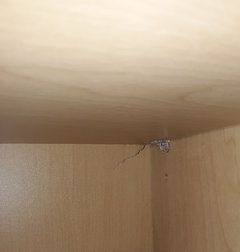
    I have cracks along the back wall of one of my kitchen cabinets as well. I got some relief that many said the thin backing is not structural but wanted to attach some photos just to be sure this isn't a big, huge,


    scary issue.