Software
Houzz Logo Print
hzdeleted_19693228

Rehabilitating Problematic H. obovata

11 years ago
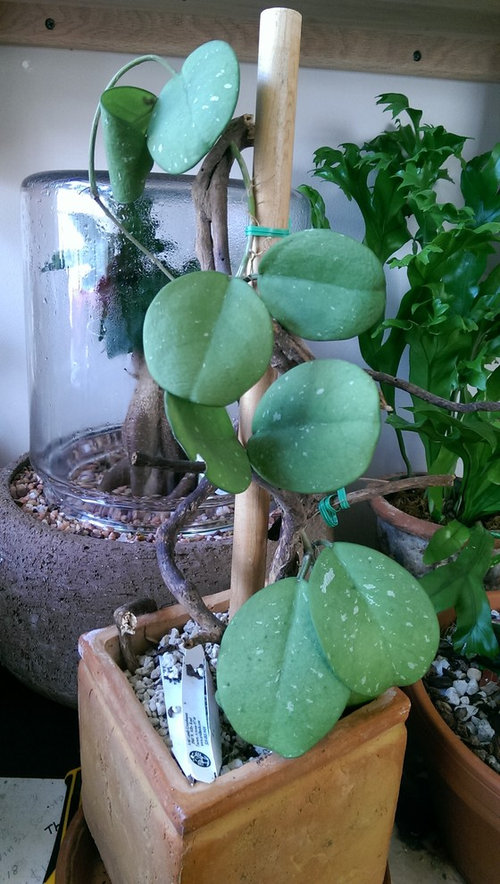
Hello.
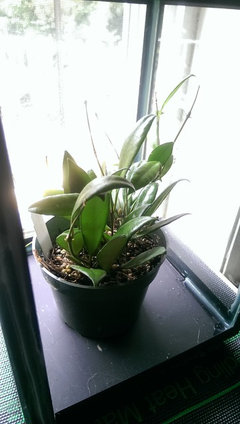
I acquired H. obovata sometime last autumn and I read here that it isn't supposed to be a difficult plant but mine has been struggling since it arrived. It is planted in crushed pumice and watered thoroughly when the pot is very light. There were three rooted cuttings in the pot and I have so far lost two, with only the biggest one remaining. It has wrinkled leaves that perk up for only about a day whenever I water it. Then it wrinkles up again. It's in a warm room (never below 18C at night and up to 25C during the day) with a humidifier running during the day. I've only fed it twice since I got it. The plant is located about 5 feet away from an east-facing and a south-facing window.

At this point, having eliminated the possibility of pests above the soil, I am planning to unpot it to check the roots but I have no idea what to do after that.

  1. If the roots are alright, should the substrate be amended with something else?
  2. If the roots are not alright, what should be done then?
  3. Since it is not an established plant, should I apply bottom heating?
  4. At night the humidity in the room drops to 25 percent, should I bag it or something?

Thanks in advance.

Pagan

Comments (15)

  • 11 years ago

    Your obovata looks fine in the photo. However, I don't like what you're growing it in. Pumice is ok for true succulents - granted, obovata is a very succulent Hoya, but I think it needs something that will hold the water longer. First clue is that it does perk up for a day. The roots are getting too dry. I would unpot it and change the soil. Everyone has a different mix they use - my favorite is coir with perlite, 2 to 1 ratio. Some people don't like coir because you have to always feed the plant. You can find all kinds of suggestions on mixes here, but a lot of people use an all purpose potting mix with perlite added to it, at about the same ratio as I use with coir. If you don't like perlite, you could use the pumice as your "loosening agent."

    Obovata is easy to grow, so once you make it happy, it'll become a beautiful plant.

    Denise in Omaha


    User thanked Denise
  • 11 years ago

    Thank you so much, Denise. Will it be enough to add bark fines in the pumice? And does that mean everything else is okay for this plant (light, humidity, temperature, etc)? I prefer soil-less substrates too.

  • 11 years ago

    fakechucki - I don't think there is anything wrong with growing in a completely inorganic mix, I do it. Although I don't use pumice, many many people grow tropical plants in it. But in order to do so, you have to realize that fertilizing is much more important. When a plant is grown in organic media, the media contributes as it breaks down with fertilizing the plant. As inorganic medias do not, all nutrients have to be supplied by the grower. You wrote you only fertilized twice in the last few months. For inorganic media, that is simply not often enough.


    If you want to continue to grow in a completely inorganic media, I would suggest that you use a balanced fertilizer that contains micronutrients. And water about once a week with the fertilizer solution at 1/4 the strength recommended on the container.

    This can be done well. I have over 100 Hoyas growing well in completely inorganic media. I use various ones, but I fertilize with a weak solution often.


    Good luck!


    Renee

    User thanked rennfl
  • 11 years ago

    Renee, I agree with you completely. Most of my plants are in soil-less substrate because I never got the hang of organic media. I also prefer being able to control the nutrients that go into the plant. This hoya is really the only one giving me trouble since it is my first and only one. I actually lurked around in this forum for a long time before deciding to get one after determining I can provide the heat, humidity and light that it will need. It doesn't seem to be working though and I do not have the hoya experience to pinpoint what I have to correct.

    Thank you for taking the time.
    Pagan

  • 11 years ago
    I agree that pumice is perfectly fine to grow in, but I also will change things for particular plants, if they don't seem to be working.
    Since most hoya are epiphytes, meaning they root in tree trunks and limbs, one could surmise that maybe tree bark (or another substrate that holds moisture and nutrients better, and releases them in a more controlled way than pumice does)would be preferential to their growth.
    Your obovata looks very nice, though.
  • 11 years ago

    Thank you, thank you for such wealth of information.
    We're getting another five inches of snow tomorrow so it will be a long while yet before this hoya can go outside. I have already been spraying it with a dilute alcohol solution for the past week, even though I didn't see any infestation even with a magnifying glass (my favorite tool!). The leaves are still limp and wrinkled.

    So the only thing left, really, is to examine the roots. I think I may be underestimating its water requirements. I really have no experience to judge. I will do as you suggest and dig it out to check as well as to amend my substrate. I will also put it under light.

    Thank you again, I will update.
    Pagan


  • 11 years ago
    last modified: 11 years ago

    Hello,

    I'm updating to let you know my hoya has bounced back. As you suggested, I dug it out to check the roots and they were intact with no rot but very dry.

    So I just planted it back in the same pot with the same substrate of pure pumice. It got morning sun in a room with 50 percent humidity and average temperature of 23C. However I increased the watering frequency to about once every 3 days. It has now firmed up dramatically and the wrinkling on the leaves are gone. No new growth yet but I am optimistic.

    I have reduced watering to once a week after it regained its turgor.

    Thank you, everyone. I hope this helps anyone with similar issues.

    Pagan

  • 10 years ago

    Hi all.

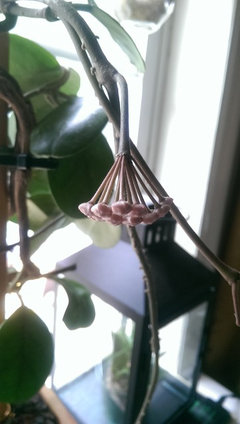
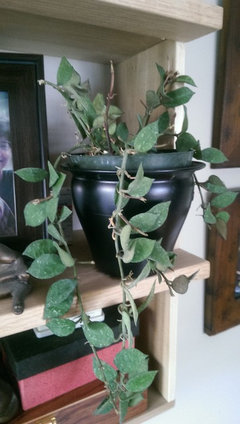
    She has recovered so well, she's actually blooming!

    To celebrate, I ordered two more hoyas which I am thinking now might have been a mistake.

    H. lacunosa var lacunosa

    H. davidcummingii

    I'm not usually this irresponsible when getting new plants. I usually research them obsessively first. But I have vivid memories of that H. davidcummingii. I'm now very afraid of it!

    Pagan

    p.s. apologies for the phonecam pics. I was in a rush.

  • 10 years ago

    Great to hear that your plant is doing better. Wrinkled leaves can usually mean that the plant is dehydrated and usually from under watering. It is important to make sure that your plants have some shade. Most Hoyas can't tolerate full sun, it will burn their leaves especially if it gets really hot in summer.

    User thanked Lisa McEachern
  • 10 years ago

    Glad to see your plant recover! Beautiful!

    User thanked aurorawa
  • 10 years ago

    Really, thank you. I thought this obovata was toast.

    I'll probably be back when my H. davidcummingii starts throwing a hissyfit.

    Pagan

  • 10 years ago

    Beautiful plants Pagan. If you haven't checked Doug's website Vermont Hoyas yet for how he grows H. davidcummingii, I recommend it. He grows this one in semihydro, and his is of course gorgeous. I am doing the same with 2 cuttings I got earlier this spring, and so far so good! Mine have rooted and have a couple new vines already. Happy growing!

    User thanked Kim
  • 10 years ago
    last modified: 10 years ago

    OMG. It's exactly that site that got me into this hoya kick, to start with, Kim. Except for the three I now have, succulents are really more my thing. I just literally searched for "hoya butter candy smell" because I remember the plant. If I look at that website again, I'll end up with six thousand more plants.

  • 10 years ago
    last modified: 10 years ago

    The struggle is real, I feel your pain. So many plants I now have because of that site, hahahaha. Really though, the take away is semihydro, apparently he cant get it to flourish any other way.

    I love succulents, but they do not like Washington state so I do not grow many.

Sponsored