Software
Houzz Logo Print

Quick question, does anyone use a bed shaper?

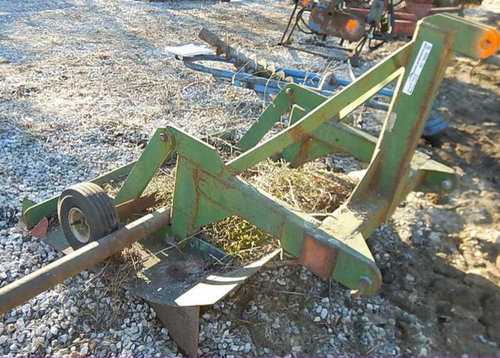
I am bidding on this old unit that has a pipe welded to it and a tire mounted on it. I am guessing it was for a row marker or something. That will come off. It will make a 30 inch wide bed with a sloped top. The raised bed will be only about 4 inches tall. I hope I get it to make my raised beds in the high tunnels and also make close spaced raised beds to plant onions in. Currently I use disc hillers to make a 30 inch bed and then rake them out flat. It work well, but I thought this would be a real time saver and give me a better bed in the end. Can't find much information online about bed shapers this small. Based on the info I have found, I don't think I should have any problems pulling this with my Kubota B7100.

Comments (12)

  • 11 years ago

    Never mind, I have had the high bid for this for the last 5 days, then today the bid is almost double my high. I guess I will have to just let it go.


  • 11 years ago

    Very true, I could do that. But it would be too long to make it useful at my tight quartered farm. I think I will just stick with my disc hillers. Kinda bummed.


  • 11 years ago

    I never saw a shaper as a seperate piece of equipment. Most of those available in this region are in combination with plastic layers. IMO the advantages of bed shapers are an wash with disadvantages. They may help with disease problems in a wet year but almost always require drip tape which I don't use on field laid plastic.

    For greenhouses (tunnels) the key is to be sure you construct the house on elevated ground and you won't need raised beds. A flat surface is much easier to manage from various standpoints. I'll admit I'm at odds with many professionals with my opinion but I've worked without raised beds for over 40 years without missing them.

  • 11 years ago

    Do you lay field plastic? If so, how do you water your crop? I use raised beds to manage rainfall. My farm is all on a slope/hill. I make raised beds across the hill to control run off and help keep moisture in the field in the same manner as a terrace. I used raised beds in my high tunnels to help bring the plants up off the ground and to make better soil to grow carrots.


  • 11 years ago

    Yes, I lay over a mile of plastic every year. For some crops I do put driptape under the plastic but for the distant field crops (most of plastic laid) I no longer bother putting driptape down. I have come to accept a few aspects of the plastic mulch that govern how I use it:

    1. the soil under plastic is almost always more moist than uncovered soil. During a drought the plants on unirrigated plastic fare better. I've never lost plants on plastic due to drought. Plastic minimizes the evaporative loss of soil moisture from both soil exposure and thru weeds around plants.

    2. When it rains the water will "Wick" under the plastic (30" wide) and the soil under the plastic will remain moist longer after a rain. The only exception is when a light rain (<.5") occurs after a drought which may be insufficient to reach plant roots under plastic.

    3. Laying driptape under plastic is time consuming and very expensive, especially if it is never hooked up. Not everyone has unlimited water resources so allocation of available water is important.

  • 11 years ago

    I wish we could get by with not having to water. But I have learned that I do conserve moisture with plastic usage, so I have to water.

    Water does wick under the plastic, but when it doesn't rain for 45-50 days, the moisture is gone. That was 2012, we went for 48 days without any rainfall. Then we got a 1/4 inch. That didn't do much. We watered and watered and watered that year.

    We lay our tape the same time we lay plastic so it doesn't take anymore time than laying the plastic.


  • 11 years ago

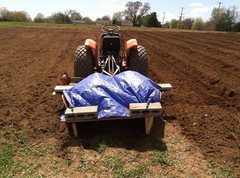
    Easy bed shaper = tractor tires. I'm not sure how well the pic shows it but the bed is 32" wide and just as straight as I can drive.


  • 11 years ago

    Looks straight & great but where's the plastic? I'll admit that I also use drip lines for Sweet Onions (not bunching); in fact I hand lay 2 lines of driptape to plant 4 rows per plastic row as you show. I'll also admit that you are right in severe drought situations and especially when you raise the bed which brings us back to your original post. I just calculated (estimated) my water use for the year and my well is maxed-out during dryer weather. My distant field crops of peppers, eggplant, squash and field tomatoes only slightly suffer during most summers - after all farming is a gamble and wet weather can be as damaging as dry weather. With fields as flat as your's I don't see an advantage of raised beds.

  • 11 years ago

    Last year I built a bedshaper out of wood just like the one in the youtube vid chardy posted. It worked great for about a half acre then all of the abuse it was taking started messing with it. I kept having to tighten things up and what not but I won't be using it this year since I sold my tiller. I plan on using the disc hillers on the chisel plow this year. I had to add a tarp to keep the soil from jumping out.


  • 11 years ago

    This is my second year gardening for market; last year we made raised beds using the bucket on the tractor and good old fashioned shovels. This year we will be using a garden bedder from everythingattachments.com, which is basically a toolbar with discs mounted to it. It should arrive early next week so I'll update once I play with it a bit.

    Regarding plastic - we will be using the bio 360 degradable film this year and I had planned on laying drip tape under the plastic...it seems like this may not be necessary? I have not used plastic in the past.


  • 11 years ago

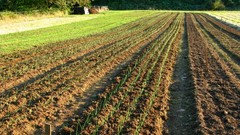
    I shot this earlier this week while making raised beds. While I didn't get the shaper, I am still happy with the results.


Sponsored
Miller Woodworks
Average rating: 5 out of 5 stars23 Reviews
Franklin County's Trusted Custom Cabinetry Solutions