Software
Houzz Logo Print
mariorg

First time gardener. need help with pest

11 years ago
last modified: 11 years ago
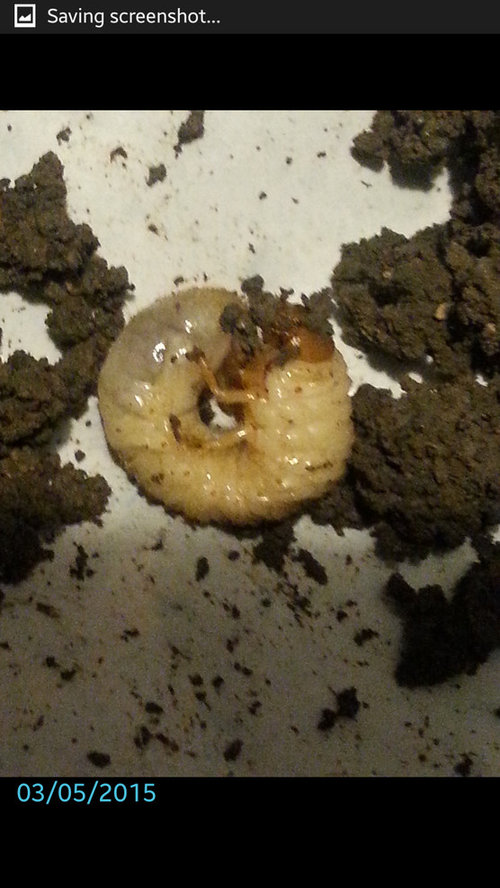
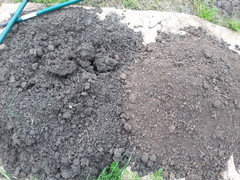
This is the first time I will be planting a vegetable garden. I live in San Antonio, Texas. While I was getting the soil ready with compost and manure (I have clay soil ) I noticed these slugs in the ground. I looked online and it wasn't specific on what I wanted to know. It said it could be a beetle. My question is , if that kind of slug/beetle would be bad for my vegetables. I was planning on planting corn, carrots, onion, lettuce, tomato, sunflowers and watermelon. And feedback will be greatly appreciated. Thank you . Mario.

Comments (27)

  • 11 years ago

    I can't id it exactly for you but it isn't a slug. It's the larva of some species of beetle. If you could tell people the size of the creature it would help id it. But most of these larvae feed on roots and underground organic matter until they pupate and finally turn into adult beetles. So, in short, they are not usually something you want in a vegetable garden.

  • 11 years ago

    The bad news is you have thousands and thousands of these grubs in your dirt and you will never get rid of them, even with aggressive poisoning. The ground is huge and the shovel is puny. But it's not all that bad.

    I don't dig hardly at all so I don't find many, but when I do I just toss them on the roof (flat, one story) and the birds eat them lickety-split. They don't seem to cause any real problems, either the big ones which here turn into a huge green beetle, the mid sized ones which turn into i-don't-know-what, or the little ones that become June Bugs. Ignoring their armies seems to work for me.

  • 11 years ago

    Here is my understanding of grubs or June Bug larvae. They aren't feeding until they emerge in their adult form and you see them swarming the porch lights. In your area that's probably in April or May. They won't eat baits in this stage of their development. Unless you are seeing more than a dozen per square foot, they shouldn't do too much damage to your veggie roots. Toss them in the yard and let the birds have them.


  • 11 years ago

    That is a Scarab Beetle larva which includes the June Bug, Japanese Beetle, and numerous others. The larva feed on plant roots starting when they hatch from eggs laid in July and are most active from early September until the cold drives them deep in the soil. In the spring they move back up to again feed on plant roots for a time and then they will pupate and emerge as the adults at the proper time.

    Control at this time of year, and at this time of their development, is very limited, although this is when the yard and garden stores sell the poisons to kill them. Five, or fewer, per square foot are not much of a problem while 10 per square foot can be. Since these buggers will be pupating soon and emerging as adults in May, June, and July they will not be doing any damage to the vegetables you will be growing.

    kimmq is kimmsr

  • 11 years ago

    I'd better now say that I would never advocate poisoning the odd beetle larva either. But I would leave them out for the birds. Quite a few of the chafer larvae do eat plant roots. There's one here which is a pest of grassland and cereals.

  • 11 years ago

    The grub itself might not be a problem for the vegetables but depending
    on what the grub actually is the adults might decide to munch your
    plants. You'll have to wait and see and deal with them if or when the
    time comes. I wouldn't worry about the larvae now.

    Rodney

  • 11 years ago
    last modified: 11 years ago

    Terrible for your lawn. GrubX works great. They will multiply by the millions and can destroy an entire lawn if not taken care of. Chemicals are the only thing that can correct this.

  • 11 years ago

    For garden soil they are great, but for your tiny seedlings it will snip off at the stem depending upon the type of beetle. Their movement under ground creates a lot of air holes and they also poop enriching the soil.

    I'm not a purist, but I don't kill them because some of the larger grub worms turn into this really big black beetle that preys on other grub worms. I'm big on letting my soil work itself out naturally. I usually pick them out and toss them into a different part of the garden when I'm working dirt.


    In the veggie garden when I'm planting tons of tiny seedlings I must kill off the grub worms (in that area) to give the little baby plants a chance. Once the seedling stems are large enough (the stems are too big for the grub worms to cut down) it doesn't matter. Mind you, I have 5000 sq feet of garden so there's more grubs to go around (and come in). I use liquid Spinosad in the form of a soil drench. No matter what you read, Spinosad is NOT organic. It will kill bees and other bugs, but that's above ground. I don't use it as a pesticide above ground. I use it as a drench and it probably kills more than just the grubs even though it is much more harmless than chemicals. It's a specific type of bacteria, not a chemical. It washes away or becomes severely diluted after a rain.

    Good luck!

  • 11 years ago
    last modified: 11 years ago

    The worst part about them is when the skunks decide to dig them out of your lawn or garden.

    Or the curved-bill thrashers and various woodpeckers and flickers mining the yard for bugs.

    They leave craters!

  • 11 years ago
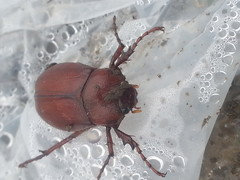
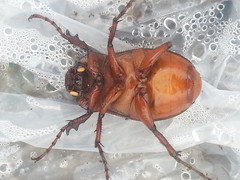
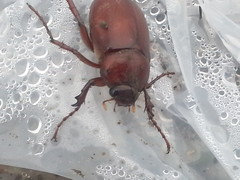
    I would like to thank everyone for responding. As I was digging today to get the watermelon hill ready. I found this guy. Im assuming that the larve will turn into this?
  • 11 years ago

    My guess is that you are right.

    I'm not a purist either, but a lot of bugs, spiders, caterpillars and lizards are interesting to me. Even snakes, these days.

    If I were readying an area for seedlings and came across a lot of little scarab grubs, with suspicious looks on their faces, I probably would fling them to the birds. It's all a question of what you are doing and where the scarabs are and the numbers of scarab grubs. A witchety grub I would not kill, but those pesky root-eating small scarab grubs in lawns might be a different matter. Not because of my lawn, but because those ones just can't control themselves. BUT, with those ones, you can put the sprinkler on and then invite the birds onto the lawn to dig them up with their beaks. It's quick, kind and useful. And you will win many friends.

    The trouble with poison is that it mucks up the system a bit.

  • 11 years ago

    That does look like a June Bug, or maybe a May Beetle (same thing) or one of the other members of that family. The adult beetles eat the leaves of trees and shrubs while the3y flit around looking to mate and lay eggs that will become the grubs that will become the adults. Most often they are not much of a problem and spreading poisons in the spring are not effective. Keep in mind that the poisons used to kill this insect will also kill other, beneficial, insects and birds as well.

    Perhaps this may be of some interest.

    http://mdc.mo.gov/discover-nature/field-guide/may-beetles-june-bugs

    kimmq is kimmsr

  • 11 years ago

    And please be careful if you choose to use chemicals in your vegetable garden.


  • 11 years ago
    I really didn't want to use chemicals in the garden. I am trying to be as organic as possible.
  • 11 years ago

    It's very possible. If your survival does not depend on your vegetable garden, you can accept some losses, grow more of what does well and less of what you have problems with.

  • 11 years ago
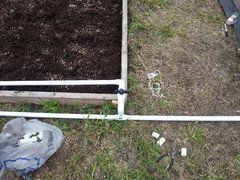
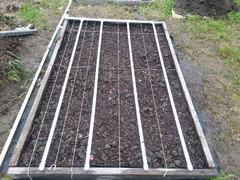
    I took all the ones that I saw out. it wasn't too too many. Maybe 2-3. per sq ft( guesstimate). I just figured its part of the ecosystem so im going to plant a few extra veggies in the ground and some in containers. I had to do a lot of work to amend my wonderful clay soil but its going. Just got done with my root bed and tomato / peppers bed. I also installed a pvc drip system. so lets see how it goes. Thanks to everyone that responded it was all good info.
  • 11 years ago

    The proof is in the pudding. If you don't see severe damage to lawn or garden, don't worry about a few insects. It's all part of the food web. I find these when I dig but I've never had a big problem, except one year when a big hatching of Japanese beetles attacked a small oak tree we had planted. We sprayed just that one tree and it cleared up. It's all in the numbers and the damage. Otherwise I leave nature alone.

    Happy gardening!

  • 11 years ago

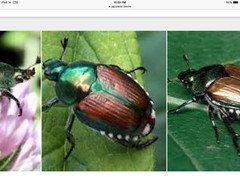
    Here is a picture of what they are in San Diego. Japanese Beetle


  • 11 years ago

    One thing about Japanese beetles, they often feed at night. We learned this when our tree was getting eaten up but we never saw any bugs. Went out at night with a flashlight and it was loaded with iridescent green beetles munching away so loud you could hear it. :-o A little spritz of highly toxic stuff and BAM. :-D

  • 11 years ago

    I'm surprised you sprayed, tox, not because it's inorganic, but because I read there's nothing to works on Jap Beetles? I hope I never have them.


  • 11 years ago

    I made up a quart size spray bottle of Malathion. It wiped them out. The stuff is pretty toxic and I wouldn't spray it all over the place, but it's a nice weapon to have.

    They were not only feasting but MATING. It was a regular Roman orgy.

  • 11 years ago

    I'll remember that. There's no need in me letting the Jap Beetles get established when they show up. And they will show up since I'm the only one provide real food. We use malathion around the perimeter of the house every year. The house is very old. We must manage the brown recluse spider that likes to make our home their home. We still live with them, believe it or not. I know where they are pretty much. We need to bomb. It's the only way but I hate those chemicals.


  • 11 years ago

    I'd be remiss if I did not add: We are partially immune to brown recluse spider bites.


  • 11 years ago
    yea I have found a few spiders in the ground as well. I just leave until they leave. I dont like them. lol
  • 11 years ago

    The Brown Recluse is serious business.

    Only reason I pulled out the malathion is that it was a new tree we had spent considerable money on and it was just getting started. I was not going to let it be defoliated! But I would put up with Jap beetles any day over brown recluses. Ugh.

  • 11 years ago
    last modified: 11 years ago

    Insecticidal soap kills Japanese beetles. One tablespoon soap (I use Dr. Bronners) to one quart of water. Doesn't take long for them to die once sprayed.

    Rodney

Sponsored
AIS Renovations
Average rating: 4.5 out of 5 stars15 Reviews
Custom Craftsmanship & Construction Solutions in Franklin County, Ohio