Software
Houzz Logo Print
johnnycoleman

Raised rows

11 years ago
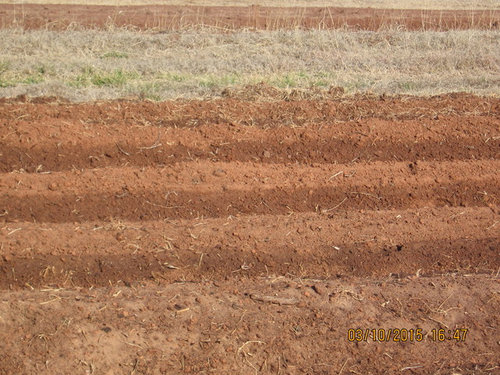
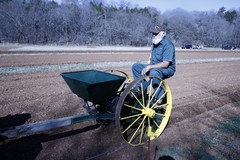
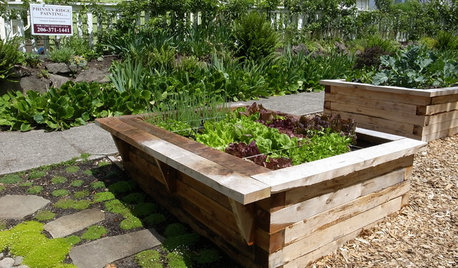
We got 1" of rain over two days. Most of our raised rows are already drying (one day later) from the top down. See attached photo.

No wet feet around here. These rows are about 8 inches tall.

Comments (23)

  • 11 years ago

    It looks great, Johnny. It is good that it is drying out so quickly.

    Every inch of our place is mud and our feet are wet here, but that's okay. We are dry most of the time, so being wet is a somewhat novel experience. My raised beds in the garden are looking a lot better today than they were a couple of days ago. It helps that it was warm and sunny today.

    More and more plants are blooming every day so at least it is starting to look more like spring, and we're not missing the ice and snow at all.

  • 11 years ago

    Yay dry rows! Good-looking soil.


  • 11 years ago

    Very nice!

  • 11 years ago

    wow... must be nice to have your garden all tilled up already. :) Mine is still full of last fall's dead and decaying stuff.


  • 11 years ago

    We have already planted: turnips, beets, snow peas, kale, potatoes and ...
    Some are already coming up. We will be planting our second 500 pounds of Kennebec potatoes soon.

    Wish us luck.


  • 11 years ago

    so impressed!!! So I guess I can go ahead and put snow peas and kale in or am I too late?

  • 11 years ago

    According to OSU, it is the correct time. See their planning info.

    http://oklahoma4h.okstate.edu/aitc/lessons/extras/gardenplan.pdf


  • 11 years ago

    If I had teeth, I'd have been grinning. We all had a great day Feb. 15.


  • 11 years ago

    That's really cool! And thanks for pointing me to the OSU guide.

  • 11 years ago

    Thanks so much! I want to get snow peas, broccoli, and spinach in but was worried I might be late. Do you think you should still start peas inside and then transplant?

  • 11 years ago

    I just noticed our snow peas are about 1/2 inch tall. We planted 2,400 row feet of them Feb. 15th. It will be interesting to see how it comes out. I hope to start our U-PICK-IT season with them.


  • 11 years ago

    I'm glad to hear that, Mr. Coleman cuz it always seems I'm so busy with warm crop seedlings, potatoes and onions to even bother with these peas. I should work on their plot in the fall including the trellises so I can just direct sow next spring.


  • 11 years ago

    Bon,
    I plant a bush type snow pea. I grow them as a normal row crop. I need to find some inoculate to match them so I can build soil at the same time. We inoculated the hairy vetch last Fall. I pulled some up Jan. 31 just to look at the nodules on the roots. I'm guessing we got at least 50 pounds per acre of N plus the various sugars and organic matter. It was well worth the cost.
    Johnny


  • 11 years ago

    That is totally awesome!! I have Austrian pea innoculant that needs to be used up. Will that work on other peas?

  • 11 years ago

    Great reading material for a rainy day. Thanks!


  • 11 years ago

    Shaer, It is hard to know if you can direct-sow peas since I have no idea what your soil temperatures are or how wet your soil is. I believe soil temperatures pretty much statewide are plenty warm enough now, so if your soil is not excessively wet, you probably could sow pea seeds directly in the ground and they'd grow. If your ground is extremely soggy, it might be too wet for the pea seeds to sprout before they rot, but if it is only moderately moist, they should be fine.

    I do know how wet my soil is (it squishes when you walk on it), so I sprouted Round One of my peas indoors and hope to put them in the ground when the rain stops here, so likely on Sunday. Those plants are getting kinda tall and I may have to cut off a few inches to make transplanting easier. They were ready to go into the ground when the snow arrived, so I have been holding them in the greenhouse for a while now.

    I just started Round Two of the pea seeds a couple of days ago, and those will go into the ground the minute I see sprouts popping up out of the soil in the paper cups. We have had months of consistent rainfall and our ground is far too wet for peas or beans to sprout now, but we have clay soil in the front garden. If I grew my peas in the sandy soil out back, I could direct-sow the seed, but I can't grow legumes back there or the voles will eat them. I learned that last summer.

    Johnny and Bon, The general inoculant that I use for peas and beans is Nature's Aid. It works well for all peas, peanuts and beans except for soybeans. I've never found it in stores, so order it online every winter. Sometimes I'll see small packets of bean inoculant on a seed rack in Home Depot early in the season but it sells out fairly fast, and is such a small amount that I don't buy it. It likely would be enough for someone who grows fewer beans and peas than I do in their home garden.

    Bon, If you are going to buy inoculant, only buy the amount you need for the current year. Because it involves live bacteria, it has an expiration date. I think the ones I buy fresh for the new year usually are good for at least a year. I buy the Nature's Aid in an 8.7 oz. shaker can that treats 150' of row, which is sometimes enough to last me about a year. I usually inoculate the peas and beans that I plant in spring, but not the succession plantings that I put in the ground in summer as they often are going into the same ground where I grew the early plantings that were inoculated.

    If I am planting peas or beans in an area where I grew them the previous year, I don't inoculate because there should be enough of the rhizobia in the ground from the previous year. You don't have to inoculate every year because what happens is that over the years, especially when you work the spend legume plants into the soil to decay, the rhizobia population builds up in the soil on its own. Since I usually rotate bean and pea plantings to a different area every year to avoid the buildup of disease, it seems like I'm always inoculating in the spring though.

  • 11 years ago

    Dawn,
    According to some articles I have read, the rhizobia population will persist for many years. Does that apply to Oklahoma?


  • 11 years ago

    I can only find inoculant at tractor supply its small bags the size of a seed packet mixed in with the seeds.

    Tree

  • 11 years ago
    last modified: 11 years ago

    seeker1122

    I have bought it at Amazon and I have bought it at my local Farmers COOP.

  • 11 years ago

    Johnny, I think it generally does apply as long as your soil has adequate organic matter (no less than 3-5%) in it. I am not sure they'd survive in sandy soil largely devoid of organic matter, but they probably would survive in sandy loam with even a small amount of organic matter. All you have to do is plow under your spent legume plants and leave them in the soil. Or, grow winter legumes like Austrian winter peas, or even some sort of clover. Based on the way I informally rotate beans and peas around the garden, each area gets freshly-innoculated bean or pea seeds planted in it about once every 4 years. Sometimes I'll drop southern pea seeds into a bed at midsummer as a succession crop and even though no legume has grown in that area in several years, I still get big yields so I think I have a thriving population of rhizobia that is surviving on its own. It isn't that I forget to inoculate the seed in mid-summer. I just don't bother doing it.

    Tree, That's the only size I find in the stores, so I order the larger canister online every year in winter. If anyone hear carries it in a larger size, I've never found it---not even at stores that have a huge supply of organic supplies.

    Dawn

Sponsored
Peabody Landscape Group
Average rating: 3.5 out of 5 stars8 Reviews
Franklin County's Reliable Landscape Design & Contracting