Software
Houzz Logo Print
canokie

Intercropping rattlesnake beans with melons, winter squash?

11 years ago

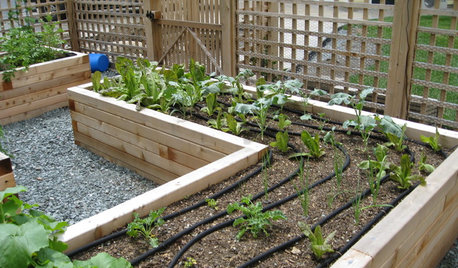
Even though my garden is twice the size it was last year, I seem to have run out of space already lol! All of my beds are 2' wide and are against the fence and I plan to trellis everything I can.

Do you think I could sneak in some rattlesnake beans in the beds with the winter squash and melons? Would they have time/space to grow and produce before the squash/melons take over? I am growing Seminole Pumpkin and Butternut squash, a charentais melon and Ha' Ogden, an Israeli variety.

I'm pretty sure they would get crowded out in the tomato beds... maybe behind the dwarf varieties Purple Heart and Sarandipity?

Comments (3)

  • 11 years ago

    Shelley, Simply trellis your rattlesnake beans alongside the fence and grown them wherever you want. I grow beans on my woven wire fences all the time with little space between them and the shorter plants growing in the ground alongside them. You'll be amazed how happily other, shorter plants grow with trellised beans (and cucumbers, icebox melons, muskmelons, winter squash, gourds, etc.) growing right beside them or behind them. I trellis everything that is remotely vining in nature.

    Your dwarf tomato plants from The Dwarf Project ought to coexist peacefully with trellised beans growing on the fence behind them. The Dwarf Project tomato plants only get 2.5 to 4' tall, more or less, and are stocky and sturdy and won't mind having trellised beans (or anything else) growing behind them. Obviously taller indeterminate tomato varieties wouldn't be as tolerant of beans growing on the fence behind them.

    Scout your beds regularly because the bean plants will want to climb onto the tomato plants and cages to grow. When the vining plants do that, I just remove them from whatever cage or plant they're trying to latch onto and work that errant grown back through its trellis. Then I lecture it about not trying to take over the world.

    Luckily pole beans climb fast, so your bean plants should grow fast enough that the dwarf tomato plants cannot shade them out while they are small, and once the dwarf tomato plants are tall enough and wide enough that they might shade them out, the beans will be growing taller than the tomato plants.

    You also can grow Ha'ogen on a trellis. In the beginning, when I first trellised cantaloupes and muskmelons, I used knee-high stockings tied to the trellises to serve as slings or supports to hold the melons. I was afraid the weight of the melons would pull down the vines or that the weight would cause the melons to fall off the vines prematurely. I did that every year with great results, and then in one bad fire year, I didn't have time to tend the garden, and the melons grew fine without any sort of sling or support to keep the vine or fruit from falling off the trellis. Because I mulch heavily, I don't even worry about the muskmelons falling off the vines when they are mature. Usually, I can see and smell them and know when they are maturing and just pull them when they are forming the abscission layer and preparing to fall, but even if I miss one and it falls to the ground, it lands on that nice cushy 4-6" layer of mulch and doesn't crack. Once I knew the stocking slings or supports weren't necessary, I stopped wasting my time.

    To some extent you can control how your beans, squash and melons interact by planting the beans first and then waiting another month or six weeks before your plant the squash and melons. That gives the beans time to grow and gain some height before you plant the melons and squash.

    In my garden, all the trellised plants that are growing close together tend to run all together into one big massive wall of green, and I don't mind it at all. They still produce loads more than we can eat fresh, leaving plenty to be preserved for future meals.

    Sometimes it is fun to watch them slug it out to see who wins. (In my garden, so far, Seminole pumpkin outgrows and outlasts everything else, so it is the queen of my garden.)

    Don't be afraid to try trellising one plant behind another. You never will know what will work for you, in your soil and growing condtions and with your set-up, until you try it. Some of my most favorite growing methods and plant combinations were nothing but experiments the first time I tried them.

    One year my beloved pink eye purple hull southern peas decided they wanted to be tomatoes. They outgrew their bed, reached across the 2' -wide garden pathway, and climbed the tomato cages all the way to the top....then cascaded back down again. Was it a problem? Well, it was a problem as far as using the pathway was concerned, but it wasn't a problem in terms of growth and production. We had huge yields of tomatoes and huge yields of PEPH peas. You would have thought the tomatoes wouldn't have liked having pea vines climbing all over their cages and partially shading them, but they didn't seem to mind at all. Since sunscald sometimes is a problem on tomatoes in the hottest part of the summer, maybe I should routinely add one PEPH plant to each tomato cage. (grin) I now grow all the southern peas in the back garden since it has sandier soil, and I don't grow a lot of tomatoes back there, but in the year they shared those tomato cages, it wasn't a problem. Clearly, it isn't a planting combination I ever would have thought of or planted on my own. I like little garden surprises like that, although they don't always end well. It is just that this particular garden combination worked.

    If you're already running out of space with your 2' wide beds, are we going to see 3' wide or 4' wide beds next year? Lawn grass? Who needs a lawn?

    Dawn

  • 11 years ago
    last modified: 11 years ago

    Ha ha Dawn, you did warn me this gardening thing would be addictive! Here the soil hasn't even settled in my new raised beds and I'm already plotting how to squeeze more in :) The dogs are so happy to be able to run and play in the backyard, which is tiny (only 21 feet from back of house to back fence). The old potager filled up over a third of it but this new layout makes the backyard seem so much more open, even though it provides twice the growing area. I may see about getting a couple of sections of culvert or even tall stock troughs to put in each corner for growing greens and sweet potatoes and other low crops. If they were high enough I wouldn't need to worry about any kind of fence, and they would be rounded and easy for the dogs to run around. Maybe next year... we'll see :)

    As for the front yard, our HOA is not very understanding and specifically prohibits grown vegetables and fruit trees where they can be seen (like growing food is somehow shameful and must be done in secret...) I have converted my front flower garden, which follows the front walkway and wraps around the front of the house, into an herb garden though, and this year I plan to add even more herbs and maybe even a dwarf tomato plant or two since I have extra seedlings. Something like Cherry Falls or Purple Dwarf or Sarandipity would probably look nice and not generate any complaints. I just can't grow anything out front that the rabbits would eat. They love okra apparently... But if the HOA allowed, I would have my huge, south facing front yard one big kitchen garden by now :)

    Thank you for the ideas and all the interesting information about intercropping and trellising. I always learn so much from your posts! I think I will plant rattlesnake beans along the fence in the bed that has the four dwarf tomatoes. Even though the dwarf tomatoes are still pretty small, I can see that they are very different from standard tomato plants. They are short and the stem is incredibly thick - they look like little trees! It will be fun to watch them grow.

    I plan to grow the charentais and Ha' Ogden melons, butternut squash and Seminole Pumpkin in the beds that face west and get the most sun. Those beds are adjacent to the corner of the backyard where the fence juts out around a manhole and I may just trellis that area as well and let the squash and melons run wild beyond the confines of their beds. It will be interesting to see what my backyard looks like mid summer - and how much it produces!

  • 11 years ago

    I suspect your backyard will be a jungle, will be highly productive and will keep you both happy and busy. You can grow an amazing amount of food in a small space with careful planning and lots of trellising. If you haven't read Rosalind Creasy's 2010 edition of her book "Edible Landscaping", you would love it. It includes photos of not only her own yard in different years and seasons but of edible landscapes she designed across the country. They are incredibly beautiful and there's lots of edibles mixed in with ornamentals.

Sponsored
Industry Leading Kitchen & Bath Remodelers in Franklin County, Ohio