

Coconuts in the Mediterranean?
Is this climate warm enough for a coconut palm?
Comments (75)
 8 years ago
Exactly. Yesterday David at 644,you mentioned Turkey. That was because the poster had maps and questions about Turkey. That plus mentions of OP Greece,kind of threw me off on who's asking what?
What does it matter about Nepal? Coconuts grow there!
- 8 years agolast modified: 8 years ago
https://plus.google.com/photos/photo/102945713784011113541/6370478098623717794
thoroughbred tropik; mediterranean posture dressed
https://plus.google.com/photos/photo/112111051148456308531/6399510989634448178 Related Professionals
Pensacola Landscape Architects & Landscape Designers · Chambersburg Landscape Architects & Landscape Designers · Norfolk Landscape Architects & Landscape Designers · Scranton Landscape Architects & Landscape Designers · Bakersfield Landscape Architects & Landscape Designers · Lubbock Landscape Architects & Landscape Designers · Elkton Landscape Contractors · Abilene Landscape Contractors · Cedar Rapids Landscape Contractors · Boise Landscape Contractors · Idaho Falls Landscape Contractors · Pine Bluff Architects & Building Designers · Daytona Beach Architects & Building Designers · Watertown Architects & Building Designers · Eugene Architects & Building Designers- 8 years ago
davidrt28, all that verbiage to say you agree with me, LOL. "......long running feud....." I think you're dreaming now.
 8 years agolast modified: 8 years ago
"all that verbiage"
Sometimes setting the record straight is tedious, particularly when, at the same time, one is dealing with a troll who deletes some of their comments.- 8 years agolast modified: 8 years ago
Again(!)
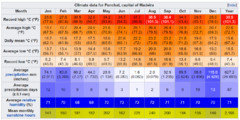
▃https://en.climate-data.org/location/51466/
▃ https://www.accuweather.com/tr/au/northampton/16734/month/16734?monyr=7/01/2017
Strange (: My comments have been destroyed :(
▃ https://www.accuweather.com/tr/tr/bozburun/1308958/month/1308958?monyr=1/01/2017
▃ https://en.climate-data.org/location/193804/
Other:
- 8 years agolast modified: 8 years ago
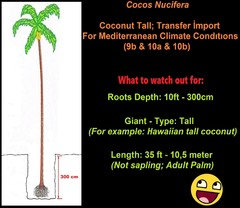
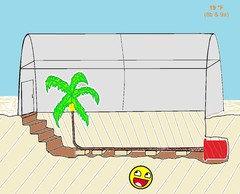
Despite the last cartoon's happy face,no Coconut would be happy kept that way.
Also- the original poster? You are close in warmest mildest Greece..I did look at Cuernavaca Mexico at 5,000' elevation..very consistent sub tropical conditions. about 80f and with cool 55f nights every day of the year. Coconut palms grow there. I don't know if they have ripe coconut fruits,but the coco tree's look MUCH better then the ones in Perth in one of those links.
- 8 years ago
The same images and posts are also posted on another forum under a different username, with posters on that site giving the same answers. If you want to try that style of planting, go for it. I'm going to bet that it doesn't work. Please let us know if you can prove otherwise.
- 8 years agolast modified: 8 years ago
Its kind of amusing. I know every year around July...I start to feel like I could grow any tropical plant. After weeks and months of warm weather the winter seems like a short period,something weatherable you might say. THEN, in December..I get reminded of my totally non sub or semi tropical climate-lol. By January? I'm amazed I can grown ANYTHING sub or tropical outdoors!...when its like an open freezer door out there with low 30's in the early morns-lol.
Happens to me every year.
- 8 years ago
@stanofh, A few nice winters can lull you to sleep, but at least in the continental US, there is always a wake up call on the horizon. Here in Florida, that was January 2010. A lot of out of zone plants bit the dust. There were also the 1980's freezes, with 1989 being the overall worst one. We hit 20F here in 1985, and that is our record low. That's the mark I shoot for other than with my coconuts and a few other marginals I could live without.
- 8 years ago
I haven't seen the original post about Turkey being a suitable place for coconuts, but after reading some comments here I would like to contribute to the discussion.
1) I am totally amazed by the fact that some people claim that Turkey is not that warm. Turkey is slightly bigger than Texas so it's not a small place about which one can make generalized comments like that. On the Northeastern parts the temperatures occasionally drop to 40 below zero (Kars and Erzurum regions) and at the same time some towns along the Mediterranean cost has occasional frost free winters. So it's a huge land mass with proper seasons but also microclimates.2) I know south western Turkey pretty well. The region between Alanya and Anamur has spots that offer a microclimate suitable for commercial banana farming (and these small bananas are way more delicious than the bigger tropical ones). Although tourism has destroyed many plantations one can find huge stretches of banana plantations in Gazipasa and Anamur even today (they also experiment with tropical plants like papaya in greenhouses). Here is a video showing one of those regions (The music is not related to the video-the banana plantations start after 1.09): https://www.youtube.com/watch?v=UiuhWNpiWeQ
As you can see the steep mountains diving right into the sea provides protection from the cold of central Anatolian plateau and the surrounding highlands. In well known places Antalya and Manavgat , where there is a stretch between the Taurus mountain range and the plain allowing northerly cold and dry winds occasionally blow with gale like forces , one can see bananas and other subtropical and tropical plants, but one can occasionally lose the crop when northern wind drops the temperatures below zero with accompanying dry weather. So, it's only for aesthetic use, not commercial. But in Alanya or Anamur, especially at hillsides as one can see in the video one can have a frost free winter, and most of the time the night temperatures are above 5-8 C. These places are rare, and believe me being there in February or March is magical, especially if you are coming from the mountains where there is a lot of snow and you end up in a hidden tropical hillside overlooking the Mediterranean sea covered with banana trees. So if you see that the night temperature in the middle of January for midtown Alanya is 5 degrees, it's a couple of degrees warmer in those remote plantation hillsides. You just see the measurements from "civilized" centers.To sum up, I don't think that much of the Mediterranean coast is suitable for coconut trees, but there are some of places that are not shown on climate maps or weather forecasts like these hidden and remote hillsides running into the Mediterranean that offer spots worthy to examine that possibility.
- 8 years agolast modified: 8 years ago
Yeah, but Turkey and the Mediterranean coast have been there for a long time - and coconuts have been coconuts for a long time. (i.e., a staple crop in suitable climates) If coconuts could grow in sheltered parts of Med. coast, there would be pictures of them, whether in Cyprus, Turkey, Egypt or Israel.
Nobody said parts of Turkey weren't warm. They just aren't warm enough. Bananas are bananas! The toughest cultivars Orinoco have been grown in SoCal for decades. Along with various places around the Med., and in coastal NSW and Victoria. In fact the biggest commercial banana growing town in Australia is around where coconuts become barely possible to grow. They can't even grow in Sydney and environs, parts of which are otherwise incredibly tropical looking.
- 8 years ago
Quote: "Nobody said parts of Turkey weren't warm."
Here is my original sentence "I am totally amazed by the fact that some people claim that Turkey is not that warm." This sentence does not mean that someone said that Turkey is not warm. Please do not accuse me of things I did not write at all.
And here are the original claims from this thread (I know this is not yours but I am amazed by the lack of proper comparison here):"stanofh 10a Hayward,Ca S.F. bay area
That's a wholly Tropical area of low land Nepal. Perth is about the same as Los Angeles. All are well warmer then Turkey."
Perth in terms of its winter averages and year average of low temperatures is actually colder than Anamur town center (again the hillsides are much warmer than the city). So actually this claim is unfounded. (Btw. Perth 31 south, Anamur 36 north, still warmer). Anamur is also warmer than Los Angeles in average.
Moreover, how is it possible that a person compares specific locations, cities to a whole country (which as you can see also turned out to be completely wrong)? Hamburg is warmer than South Pole? How does that sound? Is it a proper comparison? No!And your original comment regarding the Nepalese city (or region) of Dhankuta was "I just pointed out it was an area with very mild winters, and certainly milder than anywhere in Turkey." I doubt that as you also mentioned "I doubt the warmest town in Turkey is much above 15C in winter," comparing it to an average high of 19 degrees in Dhankuta (I hope you refer to the low elevation parts of Dhankuta). Anyways, as you mentioned the average high and without providng proof you doubted that it is above 15 degrees anywhere in Turkey in winter, here is your data: Average daytime temperature for December, January, February and March for Anamur is 17.3, 15.7, 15.9, 18.2 celcius degrees respectively. So get your facts straight. The night temperatures for these mounts are 9.6, 8.1, 8.1, 9.6. I would like to remind again that the hillsides I mentioned are warmer than the records for Anamur town center. So add an average of 1 to 3 degrees to those measurements for the Banana garden locations.
So, before trying to belittle other people, and intimidating them with unfounded doubts, use Google and search beforehand. You belief or doubt does not count. Anamur has an average winter high of 16.8 for December, January, February, March Combined, and 15.8 for January and February combined. I live in northern Europe and we call that summer here.
People are reading this thread to have an idea, instead they are confronted with unfounded claims.
Secondly, part of my last sentence is "To sum up, I don't think that much of the Mediterranean coast is suitable for coconut trees, but there are some of places that are not shown on climate maps or
weather forecasts like these hidden and remote hillsides running into
the Mediterranean that offer spots worthy to examine that possibility," which is pointing to the fact that Although it's unlikely that a coconut tree can survive there I actually would like to see someone from that region find the best spot and give it a try. No need to be aggressive, no need to claim people for things they don't write (a little bit close reading is more than welcome, you also complained about that before). We are exchanging ideas and I suspect that not many people have seen the places I mentioned let alone spend many winters there, so as the original question was "coconuts in the Mediterranean?" (although vague I think we all share the enthusiasm of the person who asked it) I wanted to share my opinion as people were writing about places they have no substantial knowledge about.I don't claim that coconut tree grow in Turkey. I just say if you want to give it a try, the regions I mentioned are the only candidates. In order to support my claim that these are good candidates I also add that these are very small and rare microclima zones almost exempt from frost (the likes of which I saw in southern Crete but Cretan winters are way more colder). Anyways, there is a considerable increase in annual temperatures in the Mediterranean basin and already tropical fish is migrating from the Red Sea as the sea temperatures are not getting as cold as it used to be. Maybe in the future these region will have a suitable climate then the peasants might venture into real tropical trees.
P.S.: http://www.palmiyemerkezi.com/ this is an interesting place on the western side of Turkish Mediterranean coast. The founder of this center is fascinated by palm trees and they also work on the endemic Palm trees of Datça, Bodrum and Crete. Might be of interest. - 8 years ago
İt will be - it will be - it will be - it will be; why coconuts never grow upuntil now? Why did not you succeed until this time?Because it is impossible and impossible.
Mediterranean climate is a secret desert and cold climate. The tropical climate can not even imitate, there is no common point.
(Turkey)Even in the hottest areas there are long-term colds up to minus 6 degrees in these regions.
November - December - January - February (even cold in April) So; Goodbye coconut palms :))
Americans love to waste. Why is there no coconut forest in California? Because coconut, never likes the mediterranean climate. - 8 years ago
In Turkey, coconut is not recognized, or society; incurious-indifferent.
Coconut palms should be given chance. They are rightly criticizing; because we do not like research. We do not have statistical data. They're implying that we're talking empty-handed.
Also! The minus 6 degrees is not detected, you are wrong. For example: Almost there is climate similarity with Miami.
But the beginnings could be this way.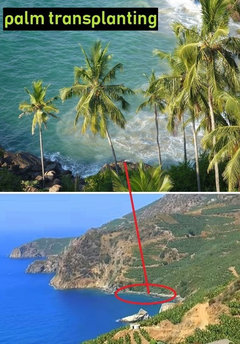
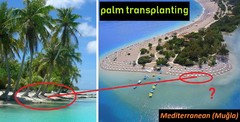
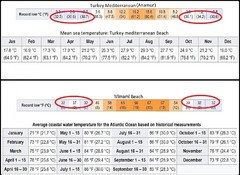
- 8 years agolast modified: 8 years ago
"You belief or doubt does not count."
NO, but the fact that there are no mature, in-ground coconuts anywhere NEAR Turkey, certainly does. I really cannot further indulge your pathetic attempts at argumentative logic. If the points you are so strenuously trying to make were true, there would be coconuts in Turkey. Please go plant them, or find real photographic evidence. Not hideous made-up collages. I mean, seriously: "This sentence does not mean that someone said that Turkey is not warm. Please do not accuse me of things I did not write at all." Whhhhhaaaaaa! Someone put woots in my mouth!!!! (widdle baby voice!)
WTF is going with this thread? I've been on GW since 2000 or so and in 17 years have never seen something so bizarre. It's like a hilariously misguided attempt at a professional trolling operation. Is there some company in Turkey that wants to start selling coconuts all over the south coast and is afraid Turks will come here and read they are likely to fail? I would NOT worry about! Just execute your business plan as intended, and please leave us alone! (what is the count up to now? 5 made up, brand new accounts since the thread was reactivated, and 3 already deleted?) Plenty of garden variety* idiots come and go. This is completely new and I must say, strangely amusing.
* - no pun intended!
- 8 years agolast modified: 8 years ago
"Coconut palms should be given chance."
Fine. Try one. Or a whole bunch. Report back in 15 years. We anxiously await your results.
- 8 years ago
Here we see a person who first gives unfounded climate data for Turkey, when that unfounded claims (or doubts as articulated in the original message) are totally shattered into pieces, he chooses to resort to mocking people instead of apologizing for spreading 100 % false climate data regularly on this thread.
The situation of our world: people offering statistical data together with first hand experience and observation are ridiculed by people who actually systematically give wrong information to the reader.
First, claim that certain places are warmer than "Turkey" (as if it's a city-wrong comparison basis to start with), then also claim that there is no place with winter highs more than 15 c, when these unfounded personal claims projected as truths are refuted and collapsed in the face of real data resort to belittling, ridicule and attack. Sounds like kindergarten.
I do wonder if some people have real, well founded ideas, or are they just trying to make people believe in junk as long as other people don't understand what they hear is absolutely wrong. Claims refuted, end of story (for logical people).
- 8 years agolast modified: 8 years ago
You're the one who's been playing childish games from the start, my dear. With your ridiculous pedantism concerning what was said earlier in the thread: "I am totally amazed by the fact that some people claim that Turkey is
not that warm."Nobody claimed that. Your whole argument started with a false premise. Stan said "That's a wholly Tropical area of low land Nepal. Perth is about the same as Los Angeles. All are well warmer then Turkey."
Saying one thing is warmer than another, does not mean one is saying one of them is "not that warm" or "not warm". At any rate, why would you concern yourself with this statement? When the thread had already established they don't actually grow in Perth or LA anyhow? Wow - we are comparing three places where coconuts don't grow. Whoopty doo! BTW I visited a couple other www forums which were the 'primary source' for some of the earlier comments. The guy in Perth is protecting his, and it isn't very old. And anyhow, 'a couple rabid collectors sheltered plants for a few years in a protected parts of their garden', is never used as a criteria for 'something grows somewhere' anyhow. I talk about rare plants I have collected in my garden. I don't run around saying that they 'grow in the mid-Atlantic' because I happen to have one for a couple years in my garden.
"Turkey is slightly bigger than Texas so it's not a small
place about which one can make generalized comments like that"Which is why I clarified that obviously, we had only ever been discussing a "part of Turkey" all along. ("Nobody said parts of Turkey weren't warm.") Nobody, not Stan, me, or even the original idiotic troll who bumped this thread, thought coconuts would grow at the top of Mt. Ararat! Normal human beings make these sort of inferences in conversations all the time. Sorry, this isn't junior debate society.
I could easily dissect the rest of your sniveling, dissembling "talking points" but I needn't waste my time. The coconuts are listening to mother nature, not to you.
- 8 years agolast modified: 8 years ago
Final minor point: I just remembered the original troll had posted climate stats for a town much cooler than Anamur. So Stan might well have been responding to those figures; but again it hardly makes a difference when there are still no established coconuts in any of those places anyhow.
We - the original users of the forum and not random people coming along and creating accounts to make a single post - are the ones being reasonable here. The notion that one of the tropical world's main staple crops wouldn't have been tried in the cradle of humanity is just, on the face of it, easily dismissible. But let's just say by some fluke it hasn't been. Fine. Go try them. If you have towering coconuts in 10 years along the coast of Turkey, we will accept that.
- 8 years agolast modified: 8 years ago
The closest large, established coconuts to Turkey that I could find:
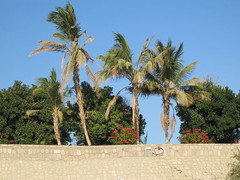
800 miles away. I looked for several minutes for pictures of Coconuts in Cairo. Couldn't find any. Found an old document from about 100 years ago saying the British had been trying some there. Maybe they didn't try hard enough.
File:Cocos nucifera (Aswan Botanical Garden - Egypt).jpg - Wikimedia Commons
Oman:
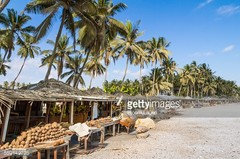
1700 miles or so.
Feel free to post some that are closer.
- 8 years agolast modified: 8 years ago
Still no apologies for lying about climate data. You lied about climate data, and when confronted with statistics that are opposing your claims you try to intimidate by changing the course of discussion to sth that has nothing to do with you misinforming people here. No one claims that there are coconut trees in Turkey. But if you say that it's impossible and you doubt that there is no place in Turkey that has winter highs above 15 c, stop that. ıf that's the line of your reasoning, your doubt is unfounded as shown in the previous messages of mine. There are multiple places that have winter highs above 15c. That doesn't mean that you can grow coconuts there. But those places might offer the most suitable climate for any attempt especially the places with a microclimate with winter highs close to 20 c mentioned above as well. rather than accepting that you made a mistake because your prejudice clouded your reasoning you just prefer not to refer to the fact that the information you provided about the climate of certain places is Turkey is totally, I mean totally wrong. You have no idea what this discussion is about.
Moreover, there are some attempts at introducing tropical and subtropical trees to landscape. Check this photo:
http://www.antalya-ulasim.com/uploads/1/3/0/4/13047816/4329404_orig.jpg
The palms at the front line are most probably royal palm (not sure but definitely not the common palm or dates one sees around). They are at the entrance of the main bus terminal in Antalya. This species is suitable for USDA 10a, and are native to Cuba and Florida. As the annual temperatures, mainly winter averages, are constantly rising in the last 3 decades, now places like Antalya can host trees that was impossible to grow before.
Here is another photo from Alanya, which has a warmer winter than Antalya:
Again this tree is not a coconut tree, but it is worth seeing that there are some experimentation going on (this promenade is colder than the banana plantation region and exposed to chilly winds unlike the hillsides where they grow bananas).
Again, as I said:
1) Your claims about the climate of southern Turkey is wrong and unfounded. People are misinformed, please stop spreading ignorance. I and any sane person knows that even the climate of Alanya or Anamur is not suitable for coconut trees. If the temperatures allow, heavy torrents during winter might cause harm. What I'm trying to correct here is that, you are ignorantly giving false information about the climate. That part of your argument is straightforward wrong. I'm actually doing you good to correct a substantial mistake in your line of reasoning.
2) Everyone knows that there are no coconut trees in Turkey. For people who are interested in the possibility I want to give the right information that if someone wants to try that the coastline hillsides between Alanya and Anamur offering microclimate pockets are the only candidates (not the town centers, although they are pretty warm, the protected spots on hillsides are much warmer). If you can have that tropical palm on the promenade you can actually have a more fragile one in one of those pockets; still coconut is pretty unlikely. But there are many experimentations going on in that region. If it doesn't work, it doesn't work. I would actually go for royal palm or a similar tropical species that can be grown there and can offer a tropical flair coupled with the banana plantations around.
- 8 years agolast modified: 8 years ago
Anamur for three months of winter- is closer to winters in my bay area then it is to Los Angeles,with highs of about 61f for three months.
Right now,the only Coconut in all of California even remotely close to Los Angeles is in Corona. I would guess the whole L.A. basin to San Diego is about 10f warmer in winter then Amamur.
Here with winter of lows of 42 and highs of about 60f ( in the city) I can grow banana's and Mangoes too. Palms adapted to high tropical living or like the Lord Howe Island palms used to that cool semi tropical climes..also thrive here- Howea and Rhopalostylus palms. Ceroxylons from the high Andes.
I once tried a coconut. Had to see what would happen. It was dead by mid December and a couple of frosts.
Anamur is sort of a bridge in climate between the bay area and Los Angeles. I would guess the Plumeria that are very marginal here..would do fine in Anamur. So,I can see why a vacation there in winter would be so much unlike the cold farther north.
One more- you mention the closest coconut growing to Anamur is 800 mile south in Egypt? Those coconuts look as worn as those in Perth I notice. Well,800 mile south of me is mid Baja California and..guess what? Coconut palms grow there..but look like they do in Cairo. Not like they do in a 100% tropical climate.
- 8 years ago
Hey Stan,
Thanks for the clarification. I based my assumption on the annual average (Wikipedia info) but winter highs in Los Angeles is higher. Thanks also for sharing your first hand experience in a friendly manner :) I will edit the part I mentioned your name in my previous post.
I didn't share the Cairo coconut info, so I have no idea. Frankly speaking I believe that the trees of northern Mediterranean basin are olives, cypress, pine and date palm. I am disturbed by the disneyfication-"tropicalification" (ok I made up the second term) of touristic places in the Mediterranean via excessive use of ornamental palm trees to create a false tropical atmosphere for mass tourism. I actually enjoy the pine trees in Rome or Antalya more (used to collect pine nut by myself before the forest was destroyed by 5 star hotels). Yet, I also like garden enthusiasts attempts at trying sth new. Just saw that some guys from Gazipasa introduced local papaya to the market :)
I am from the Mediterranean and has spent my entire childhood and early life there. Unfortunately, I think due to global warming, the temperatures at that protected strip of southwestern Turkey are on the rise constantly. The summers are humid and extremely hot (not to mention forest fires) and in winters weather extremes are observed more frequently. I hope that the climate won't be proper subtropical; I love the Mediterranean climate (despite residing in far north for the time being).
- 8 years ago
Did coconut grow in Turkey? A weak possibility; maybe impossible.
Most of the countries in the south do not have advantageous climate.
Climates is not different from Turkey. Even more, maybe there are worse climates in there.
Meridian-parallel and maps are not enough! In the desert regions; very cold. Yes, you can not predict the coolness in the desert.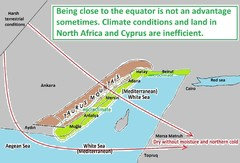
- 8 years ago
No coconuts on Cyprus,but Royal Poinciana's. Cyprus said to be mildest and warmest area in that part of Mediterranean. I think Southern Spain,can grow them. Malaga.
- 8 years ago
I traveled to many countries, i made holiday on the beaches. Although it is very humid there is a very different and pleasant nature in (south)Turkey. If I'm not mistaken i saw coconut trees there. Fruits were quite mature but i guess they do not eat them. But one of the palms seemed too miserable.
- 8 years agolast modified: 8 years ago
They hate a cool wet winter. So if you live in a desert far from the tropics,you have a better chance then say, frost free Melbourne or Sydney.
- 8 years ago
People are very interested. For a spicy fruit flavor with limited use, as if exaggerated. I guess it's like obsession(coconut)
- 8 years agolast modified: 8 years ago
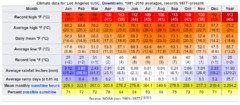
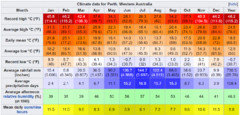
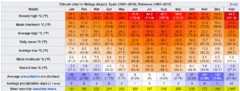
No one said Turkey was cold.
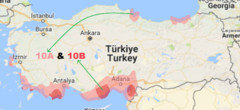
 http://www.plantmaps.com/interactive-turkey-plant-hardiness-zone-map-celsius.php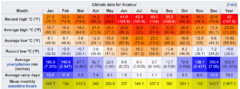
- 8 years ago
Haywards all year average of 68f for a high is close to Funchal...then you get to lows and our ave low of 48f vs 62f for Funchal makes the difference. Although I wonder if our last 20 years low average wouldn't go up to 50F +? Because,almost everyday all year,we seem to be above average in lows. More then highs above average.
Then,you have soucal that are closer equal to Funchal's. Coronoa averages 79f high and 50f low. Hence,they have the one Coconut in California that looks perfect.
For me..too cool in winter too long,and Im far from frost or freeze free. Maybe in 2070 GW will have us in the hunt.
- 8 years ago
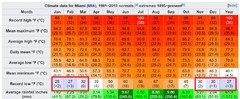
Do you have coconuts in these areas? Is there any coconut in the south of Turkey?
If you do not have coconut, the rainy winter is the only criminal of the month.
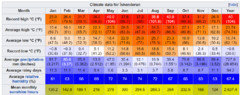
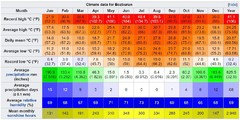
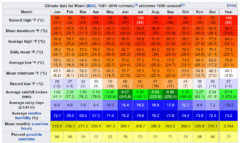
Like Miami, short-term, record-low colds. For Coconuts this is promising, just try it.
But, rainy and winter months; maybe the roots get caught in fungal disease. I am not sure. Ashes and sea water can prevent fungal disease.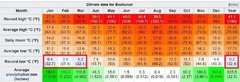
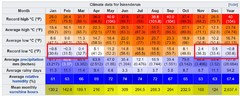
tropicnyc7
Original Author8 years agolast modified: 8 years agoIt's true that record lows may be similar in Turkey and Miami, but the problem is the combination of rainy winters and lack of very warm winter days. Miami's average high temperature in January is near 80F/27C, while Bozburun and Iskenderun both have average highs near 60F/16C which is just too cold.
also, back to my original post- places like southern turkey and southern Greece have very warm climates- warm enough for other tropical trees and fruits such as avocado, lychee, mango, and hundreds of species of palms. The coconut is just not hardy at all, so even a very short term cold snap which is not uncommon for the Mediterranean would prove fatal.- 8 years ago
Ok, you win. There are towering coconuts not all over the eastern Mediterranean, but in special Turkish towns that are warmed by the Turkish sun. Can we just close this thread so it stops showing up in my notifications?
- 8 years ago
Do you know in the Coconut growing areas of the world 2.8% of hospital visits are caused by falling coconuts?
I just read that about a week ago..but can't remember the exact country..hence I fudged.
- 8 years agolast modified: 8 years ago
When you think about it? Coconuts can be grown over the majority of the Earth. In the America's they can be grown from Southern California 32N down to Argentina and maybe 37S can Coconuts be tried. Follow that band around the world and - that's most of the world!
Funny too? Some people might say its a better climate for people where Coconuts CANT be grown!..no uncomfortable heat. I wouldn't be in that category..but some are.
- 8 years ago
They survive a little in the inner regions, after a while they get sick and die. The interior, is influenced by too the north. They are very rare in Turkey. But it is close to the sea and there are a few secluded rocky and secluded bay places, you can see a few of them. They are not under protection. People too insensitive, trees not well-maintained. And it has coconut fruits, it is not delicious at all. It's obvious they do not belong here. They do not like this area, majority is right in this regard.
Tam çevrisi: Hindistan cevizleri Türkiyede varlar, sahile yakın 7-8 kilometre mesafede olan iç kesimlerde pek uzun süre hayatta kalamıyorlar, sanırım kuzey esintilerden etkileniyorlar.
Sorun tam olarak nedir bilinmesede, onlar hakkında birşeylerin eksik yapıldığı kesin, yada ortalama sıcaklıklar düşük. Türkiyede nadiren görülüyorlar, ancak o da, denize yakın olan bazı tenha yada kayalık kuytu koy yerlerinde büyük birkaç hindistan cevizine rast gelebilirsiniz.
Koruma altında değiller, tohumların nereden geldiği hakkında fikrim yok, yeni yeni çimlenenler de gördüm, sanırım torosların yarattığı yarı tropik koşullar onların hayata tutunmasına yardımcı oluyor.Ocak ayında birkaç kilometre ötede sıfır derece söz konusu iken buradaki birkaç derece fark ile ılık iklim farkını hissedebiliyorsunuz, bence bu mini alanlar, akdeniz ikliminden ayrı gizli tropik koşullardır, yoksa o ağaçlar orada asla yaşamazlardı. Edindiğim bilgilere göre ortalama yüksek sıcaklıklar: aralık, ocak, şubat ve mart aylarında 22 derece altında olmaması gerekiyor, dolayısı ile bu saptamalarda bunu haklı çıkarıyor.
Bu konuda yöre halkı duyarsız, onlar koruma altında değiller, ağaçlar bakımlı değil. Üzerlerinde olgunlaşmış meyveleride var, fakat hiç lezzetli değiller, belkide buraya ait olmadıkları için olabilir ve bu bölgeyi sevmiyor olabilirler, dolayısı ile burada yapılan yorumlarda çoğunluk bu açıdan haklı gibi görünüyor, çoğu endemik bitki kendi ana vatanında güzeldir. Gerçi hindistan cevizi çok nazik ve tuhaf bir ağaç kendi bölgesinde bile ihmale gelmiyor, zor bir bitki, akdenizde bununla zaman kaybetmek akıl karı değil gibi görünüyor. - 8 years ago
How long have they been living there, do any of you know that? Could there be global warming? Maybe they can be endemic coconut? In addition to your findings(microclimate), are these two factors likely? Pictures and GPS coordinates, please?
- 8 years ago
Malta might have a good chance to grow coconuts. Its yearly average low of 60f is very mild for a Med Climate. In fact lows average 68f- 73f for the summer. But,the three months of winter are about 60h and 50l. Good enough for most tropical's you might see in a semitropical climate. Coconuts? Close call.
- 8 years ago
I was looking at some new maps and statistics put out by a local meteorologist. It included one of "Months of seawater above average"..starting at 20 and going to 36. Wouldn't you know it,one of those to reach the maximum was the southeastern Mediterranean.
Warmer ocean means warmer climate. California was in the next stage.
- 8 years agolast modified: 8 years ago
Sometimes miracles are easy. There is a lot of difference between looking and seeing... This secret beach imitates mini tropical air; yes, it may be possible to have coconut trees on the beach. Just do afforestation and see ;)
- 8 years agolast modified: 8 years ago
A few have grown in California to trunk. Only all but two are in the desert..no longer a "Med Climate". With the death of the Newport Beach plant..its just one in the whole of California not in the desert as of right now.
It can be done...but who has access to plant a large trunking plant on all of the west coast? Nobody. They aren't here and nobody I guess is willing to shell out big $$$$ to bring one in from Mexico and take the chance its the worlds most expensive annual?
Or,it does take. Gambling.
 8 years ago
Actually two guys started growing coconut trees in Cyprus and Israel in 2014 and still continue today http://www.palmtalk.org/forum/index.php?/topic/43890-coconut-madness-in-israel/
- 8 years ago
No images of them fully established in a garden setting, after several years.
And comments like this from February of this year:
Thank you for your Compliments, I should have done better, there
where a few weeks here and there that i just neglected my palms and i
haven't paid too much attention to them during winter months and
therefore i lost them





GreenTwilight