Software
Houzz Logo Print
garystpaul_zone_4

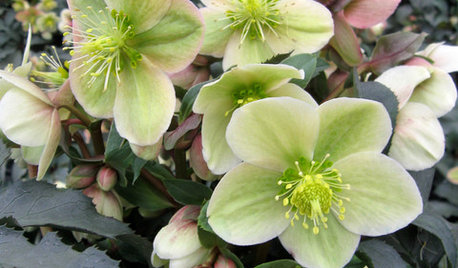
Hellebores!

11 years ago

Now into my second year trying to get a single hellebore through the winter (I did get several seedings through in a cold frame). These were healthy plants, put in partial sun, mostly light shade, humus-rich soil, covering of marsh hay for winter protection. The only thing I can think of: the soil is not yet quite well-drained enough, despite addition of coarse sand; and some were given a mulch of shredded leaves as well as the marsh hay. I suppose my failure is due to crown rot. Very disappointing, especially after all the fussing I've done.

Can anyone help with the diagnosis or offer suggestions based on experience with these in MN or close-by?

Many thanks in advance. (I also posted this on the Minnesota forum; I hope it's OK to cross-post here).

Gary

Comments (9)

  • 11 years ago

    Hi Gary, I suspect you are right about the crown rot, based on your description. Digging sand in to the soil, while it seems logical, is not really going to help your situation, unfortunately. You need to find a site that is naturally drier, or build a raised bed, and I suspect that will solve the problem. Good luck!

  • 11 years ago
    last modified: 11 years ago

    I also wonder about having a hay as a covering. I leave my completely unprotected other than the snow ma nature supplies, and haven't had issues with them not making it. My soil is well-drained though, so not apples to apples. I might try planting them on a mound.

  • 11 years ago

    I don't cover mine in any way over the winter either. But I think it's more their wet feet than anything else that is causing them to fail for Gary.

  • 11 years ago

    I've never had trouble with them, and I live in a high rainfall area with heavy soil. My first thought was also that the real problem is the covering. That kind of thing always rings alarm bells for me.

    BTW, what is this 'sand' of which you speak? I think I have seen it on visits to far places, but it may just be a myth.


  • 11 years ago

    Gary - I don't comment often on Gardenweb although I've been a member for years. In Zone 4 without good drainage and reliable snow cover, hellebores can die. I lived in Montreal, Canada (USDA Zone 4B /Canada Zone 5B) most of my life and the only type of Hellebore that would reliably winter for me was Helleborus niger ( I had plants for 20 years). I would regularly lose the orientalis types in exposed conditions. I agree with Kirstin, the soil has to be very well-drained - you need to either 1) mix compost and organic matter with clay soil, 2) remove the clay altogether and replace with loamy garden soil, or 3) plant them in raise beds. The orientalis types are not as hardy. Besides niger, you might want to try Hellebore Ivory Prince which also was very hardy for me although I only had it for about 3 years before moving to the Chicago area.

  • 11 years ago

    I've had hellebores several years. A couple of years ago I mulched heavily with pine needles and lost one of the plants to crown rot. I suspected the mulch, although there were so many seedlings around it, I thought maybe they just crowded it out. I didn't worry because plenty more, but after your experience, I imagine it is the mulch also.


  • 11 years ago

    I only have two of them and they grow under a high deck (more balcony size but high enough to be able to plant under). They get no mulch, not much water except for rain passing through the floor boards above. Supplemental water only if no rain forecast.

    No winter cover either. Some snow cover but predominantly they are exposed all winter. The soil is not clay but loose and free draining. So far I've had no issues. They bloom very well and I trim ALL last year's leaves off every spring even though they are pristine.

    I saw a YouTube video once that showed a horticulturalist trim off all old foliage, claiming better growth and tidier plant, but more importantly, it allowed the flowers to be showcased. I've followed that practice since and the new foliage is always abundant as are flower buds.

    'Ivory Prince' is gorgeous but my dark purple/black double flowered one has decreased in size by half. My error! While spring cleaning I inadvertently tore up half of it, root and all. The remainder is doing fine. The photo doesn't show all new growth but there are three more shoots that camera did not capture. Flower facing brick wall, lol.

    These pics were taken earlier in the week. Right now we are blanketed with snow and cold! Yuck! I have not trimmed off foliage yet.


  • 11 years ago
    last modified: 11 years ago

    Wondering what sort of hellebores you are referring to? If it is the tricky H.Niger, you are not alone in struggling with this picky hellebore. The Europeans (H.lividus, H.argutifolius) can also be fussy (although H.sternii, a corsican hybrid is hardier). The indestructible H.orientalis, on the other hand or the common H.foetidus are easier, as are (surprisingly), some of the Ericsmithii and Thibetanus types (although, noting your zone (belatedly), I probably wouldn't chance it on anything other than the reliable lenten roses, orientalis and near relatives.
    I generally remove the old leaves before flowering (to get rid of the unsightly leaf blotch and they do rather prefer an alkaline, reasonably well drained soil - winter wet is a bit of a killer.

    If you are referring to the Christmas Rose (H.Niger), put yourself out of misery and get a tougher, hardier species. Life is too short to fuss with plant divas.

  • 11 years ago

    Well, my goodness, I can't remember when I've received so much in the way of thoughtful, detailed, and helpful comments to a post on the Gardenweb. I've copied the entire thread to a document I can and will refer to often. Thank you all.

    (Meanwhile I've noticed a whole forum devoted to the hellebore, which I will check out in due course).

    I think I now have what I need to go into Round Three: buying new plants, replacing some soil, mounding in some cases, eliminating the soggy shredded leaves but keeping the marsh hay (which is wonderful stuff: very light, porous, and forgiving—often a life-saver in MN winters without sufficient snow cover, such as the one we just endured; the hellebores weren't the only victims.

    Again, thank you.

    Gary