Software
Houzz Logo Print
bkay2000

Olive has problems

11 years ago
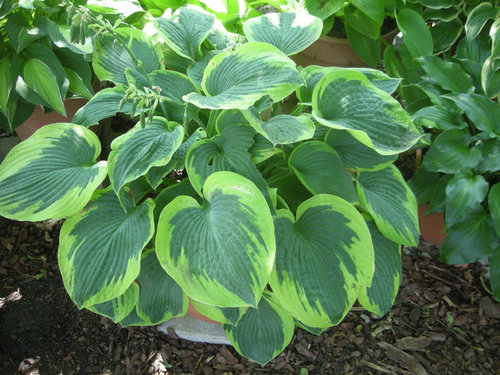
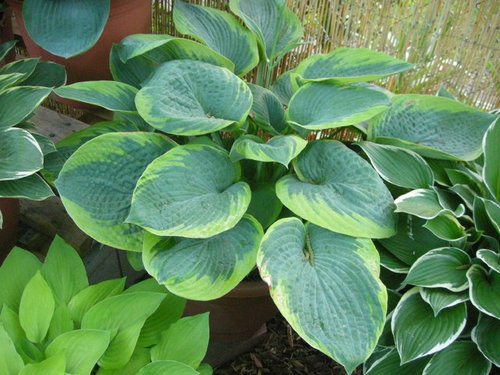
Olive Bailey Langdon has been a mediocre performer for me. I paid some where in the $30.00 range for it in 2013. It had 15 or so fat pips. It has had burned edges like Frances Williams for me since the first year. It was nice sized in spite of the uglies. (The damage is grasshoppers.)

2013

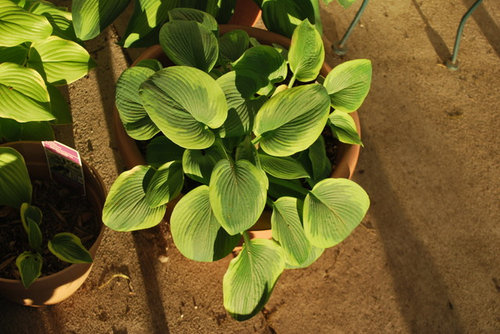
It got too much sun in 2014, but looked pretty good

2015

Not a good photo, but shows what I'm trying to convey. It's smaller and the leaves are smaller. (Francee, next to it last year has the same symptoms.)

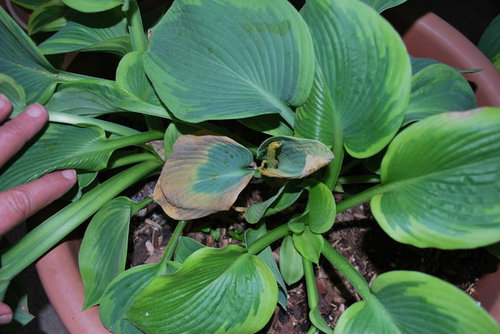
I found this today


This looks like the problem with u. albomarginata. No sign of yellow balls in this pot or the albomarginata pot. Nothing strange in the Francee pot.


Any ideas? Do I have some kind of fungus? virus? bacteria? insect?

bk

Comments (29)

  • 11 years ago

    Bk, so sorry to see this kind of damage. Unfortunately I have no idea but I can sympathize. I just bought OBL this week as I love my Francis Williams and I'm hoping for no dessication burn. Your first two pics look really good. Hope it recovers :)


  • 11 years ago

    What a beautiful plant. I hope you get some answers to this and it is savable.

  • 11 years ago

    Give one of those leaves that are browned a gentle tug and see if it comes of the crown easily. If it does you may have a fungal attack happening. If it's firmly attached its not Southern Blight. If it pops off easily get some Flutolanil or some tebuconazole.

    I hope it's not because I've been thinking of SB as a summer kind of problem, not springtime.

    Kathy

  • 11 years ago

    Gosh that's a beauty. I'm sorry she is ailing and I hope you get to the root of the problem (no pun intended). Retail therapy is always a good back-up ;-)

  • 11 years ago

    I'm back because I came up with not a solution but merely a suggestion, for what it's worth. If it was mine I would pull a Ken ;-) and "bust it out of the pot" all taped up for easier handling....(no, no driveway treatment yet, that's a last resort, lol). .. hose all the potting mix off, rinse the plant from crown to root with the 10% ammonia wash just to disinfect it. Then repot in fresh media and watch the kettle boil (wait-and-see) :)

    It won't hurt, may or may not stop the regression but at least it will disinfect the plant. You could disinfect it by watering it now, still in pot, with the ammonia rinse but you were going to check the roots anyway, maybe?

    It sure would be nice to know what's going on with it though.

  • 11 years ago

    I wouldn't use ammonia, as it won't kill some bacteria. 10% bleach has been the norm for saving hostas for many years. I get a few like that every year and still don't know what causes the rot in the roots or crowns, but you CAN save it if you catch it early with bleach.

    -Babka

  • 11 years ago

    Isn't ammonia and bleach basically the same? I got the idea originally from the forum back in 2013.

  • 11 years ago
    last modified: 11 years ago

    I just read up on the difference between the two. Both can be used as cleansers and yes, bleach disinfects but it also affects the colour on whatever you use it on where ammonia does not (inadvertent splash on leaves). Ammonia can exist in nature, is made up of 1 atom of nitrogen and 3 atoms of hydrogen. Bleach is made of chlorine, caustic soda and water.

    Since ammonia use can benefit the hosta (nitrogen/fertilizer) at any rate , I think I prefer to use it over bleach. If there is rot, it's usually a moot point.

  • 11 years ago

    Jo- If it works for you, fine. I am just relating what has worked well for me based on the advice I've heard from nurserymen over the last 20 years or so, including some hostas growers. Here is a differing point of view:

    http://homeguides.sfgate.com/effect-household-ammonia-plant-growth-102287.html

    -Babka

  • 11 years ago

    I'm going to dump a few tomorrow and see what gives. OBL, Francee and Brother Stephan come to mind at this moment.

    Thanks, guys

    bk


  • 11 years ago

    Bkay- I wonder if it comes from growing them in an area that doesn't freeze hard. It has happened to some of mine that were fine for ten years! Just when you think you have it all figured out...blamo! I have saved most if mine, but it gets discouraging when what was a full mature plant is reduced to an immature few eyes not much biggercthan a tc plug. All the more reason to pull it out and take a look-see at the first sign. I don't always do that.

    I hope as the rest of the hosta world wakes up, that some of them can tell us if it happens to them in Spring in their climates.

    -Babka

  • 11 years ago

    That was an interesting article, Babka as were the cautionary notes when using ammonia, helpful. Thank you for sharing the link.

  • 11 years ago

    Jo,

    That cited reference article is full of very weak science on the referenced chemicals and the application cited. Sorry, not good advice from a scientific or gardening standpoint.

    As always, be careful of what you read on the web for subjects that need a scientific explanation, when not from truly valid sources with good scientific backing, something that article lacks.

    Like me doing medical analysis of sicknesses instead of working with chemicals, which I have knowledge and practice in.

    Bleach and ammonia by themselves when dilute will not kill plants: if they are too strong, they behave like acetic acid ( vinegar anyone?) or concentrated salt solutions which are quite effective at killing plants.

    The proven chemical to use for disinfecting roots after the rotten plant material has been cutaway/removed from living root material, whether from fungal attack or bacterial attack, is dilute bleach. Period. Never ammonia.

    I have dunked whole hosta plants leaves and roots in cold dilute bleach solution overnight after cleaning away dead or rotted roots; the danger is if the water solution temp gets warm the plant leaves wilt badly. The roots should turn white if the bleach has worked its effect. 10% bleach solutions.

    The safety of using any chemical (bleach, ammonia, vinegar) has to be priority for the person handling it.

    Be aware of the warnings for contact of any chemicals to your skin and eyes!!!!


  • 11 years ago

    Bruce- this is your specialty, and thanks for the clarification. I will continue as you suggested and with what has been successful for me.. 10% household bleach and water. I just noticed that the person writing the story in SF is a " is a well traveled model, writer and licensed physical fitness trainer who was first published in 1997. " So well qualified, yeah right. Silly me shouldn't have posted the link at all. I should know better, and just go with my own experience with 50 years of gardening and your advice. Thank you!

    -Babka

  • 11 years ago
    last modified: 11 years ago

    Thank you for taking the time to weigh in, Bruce. I had a lot more to say after reading it, but I thought it best to refer to the article as "interesting" and cautionary practices when handling these products as helpful and leave it at that. As you stated, "be careful of what you read..."

    What you have to say on the subject, as a chemical engineer, carries weight. I thank you for expounding on the dilute bleach solution when disinfecting roots, which Babka also stated above she has used that method for many years.

    I rarely use bleach or ammonia inside the home and have used diluted ammonia in early spring on the hostas, and the ground around it to kill slug eggs and the slugs themselves by spraying them (read about it on the forum couple years ago) but that's about the extent of it. I thought I was disinfecting with it also!

    Next time there is a need, I'll be using a bleach dilutive for disinfecting my plants, not ammonia. :-)

  • 11 years ago

    Brother Stephen has always been a dud for me. My OBL returned good this year but this is it second year here. I bought her to replace Frances Williams who took 3 years to get growing. Turn them out and see what is up. I have had some hostas lower them selves in the pot. I blame earthworms. Chemicals are always a last resort.

    My car battery is dead and I cannot get to work. I am ok with this but don't tell my boss. Off to water something in the backyard. Just getting light.

  • 11 years ago
    Bruce, is this cold water 10% bleach solution overnight bath effective in killing nematodes? my twist of lime has them and I was wondering about splitting it and trying the bleach bath on just half. if effective great, if not, no loss.
  • 11 years ago

    Barb, I have not tried dilute bleach soak especially for nematodes. Recall bleach is a contact disinfectant, so unless it penetrates the plant tissue and impacts the active nematodes, it won't kill them.

    Could you spray it around the plant in the dormant state and expect some impact ( Fall-Winter)? Probably not.

    If you left the whole roots and plants in cold bleach for 1-2 days, maybe......

    When I have left plants to soak and "forgot" them, I would let them air dry to regain some vigor from the soft tissue wet state before replanting them, maybe 8-12 hours in cool shade.

    You can see when they have regained their tissue strength. If you plant them moist the leaf tissue may rot.


  • 11 years ago

    Just so you know you are not the first, about 30 years ago when OBL was first introduced i paid $XXX for a 5-10 division clump, which I potted to watch in its beauty.

    Over the next 3 months (probably should have put it directly into the ground, as it is seiboldiana parentage which does not do pots well) it withered like that in your photo and died.

  • 11 years ago

    Bruce, I have used a full bleach solution followed with a fresh water rinse for Iris borers with very good success. There is also a soaking with 10% as an alternative (not overnight). Please see the method in the link.

    Iris borer cure

    Babka, the referenced article shows harm when continuously watering with an ammonia and dish soap mixture. Others warn against using detergent dish soap (I don't know why) but the article doesn't specify what was used except it was dish soap. Soap is alkaline and ammonia initially creates an alkaline situation that then becomes acidic as the nitride, nitrate reaction progresses in the soil. Perhaps the combination of soap with the initial ammonia reaction is the cause of death for the 'plants' (another problem is that the 'plants' in the experiment are not defined). This would cause alkalinity greater than an ammonia mixture alone and it is unknown if anti-bacterial or detergent soap was used which others say should not be used (why???, I can only guess).

    Reportedly many well known hosta growers (such as Papou) have used 25% ammonia twice a week regularly and undeniably had very good results. Would more continuous watering with dilute ammonia kill hosta; who knows, and why fool around trying it? I would say the referenced experiment is not indicative for the use of simple dilute ammonia on hosta and nothing succeeds better than success. If bleach works for you, then I say keep using it.

    Jon

  • 11 years ago

    I also have bleached iris borer roots - someone gave me three bushel of cleaned roots, so I simply dunked them in dilute bleach overnight to make sure everything was clean, then planted. Giving away those next weekend!

  • 11 years ago

    I have a large selection of Iris from a now deceased friend who was a hybridizer of iris and daylilies. I am going to have to give them another treatment. I think July would be best as that is when Iris are transplanted. I like the full strength dip and rinse as it just gets it over with. Dunk, rinse, replant. My friend used to snip off 2/3 of the leaves when selling them, so I will do that as well.

    Jon

  • 11 years ago

    Well, I pretty much have an answer. OBL, Francee, Elegans and Paradigm had drainage problems and were rotting. It looked just like what was bothering u. albomarginata. OBL and Elegans were 2013 aquisitions. I don't have a record of the potting soil I was using. It might have still be the homemade disaster. I think I up potted Francee and Paradigm in 2013. I believe I got Fragrant Dream that year, too, so I'll have to check that one, too.

    I hosed off the roots and bleached the above. I down potted them all in new soil. I'm pretty sure that Francee and Paradigm will do fine. We'll see about Elegans and OBL. They looked as good as the Francee and Paradigm, but I'm not sure they are as hardy here as the others.

    There was nothing wrong with Brother Stephan. I guess it just doesn't like Texas. I'm beginning to think Olga's hosta don't like Texas. I'm 0 for three on getting a nice Olga to grow. That might be a hint from above (or Florida) to buy more Lakesides.

    On the bright side, I had to up pot Stained Glass and Old Glory as they are growing gangbusters. I still have lots of work to do. I'm going to have to check nearly everything. Plus, I still don't have the shade structure built. So many jobs, so little time.

    Here's what I saw:

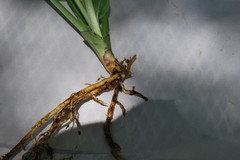
    This is OBL. Many of the roots were rotted. The plant was attempting to put out new roots at the soil level (good survival strategy).
    ]

    This is Paradigm. The end of the roots were all rotted.

    I have no idea if this is a named disease or not. It's not Southern Blight, as there are not little yellow balls. As far as I know, it's just plain ol' root rot.

    bk


  • 11 years ago

    I hope you have success with your repotting bk. If you lived closer I would offer up a generous piece of my Paradigm but I'm afraid that is a bit far to go for a Hosta. :)

  • 11 years ago

    I've had it for a while. That's why I'm so positive it will recover. I think I've had it since 2010 or 2011. It's been smashed on it's face, and every other indignity that can befall in Texas.

    bk

    2012


  • 11 years ago

    Glad you found the drainage problem, BKay! You saved your hostas! I don't envy you all the work ahead of you but when you are done, sitting back with a lovely drink in hand , you'll be satisfied you did all you could to ensure a good growing season for your hosta. :)

  • 11 years ago

    Oh good, Bkay! When the leaves look like crap, it has to be for a reason. Finding out the problem is what takes the sleuthing. You done good. I wish I had a good reason for "why", as sometimes I can have two divisions, potted at the same time in the same stuff, grown under same conditions, and one thrives and one dies. I blame myself, then go nuts watching them daily for ANY changes, and then I stop to think. Poo. If it makes it fine, I have done everything I know how to do. If it doesn't make it, I'll order another one and start over, if it was worth keeping. That happened with my Ivory necklace and after going a few years w/o it, I decided it was so recognizable that I wanted to have another. I'm on my 4th Great Expectations, and it is 1/2 the size it was last year. Duh, there are some that just won't grow for me, or for you or for anyone. Finally, I am giving up on that one. With hundreds to pick from in any given year you will most likely be able to find one that looks similar or maybe something completely different. Keep on truckin'.

    -Babka

  • 11 years ago

    It's genetics. Some just grow better than others. There is no other explanation for it.

    bk