Software
Houzz Logo Print
pawneetrader

Garlic being "stolen"

11 years ago

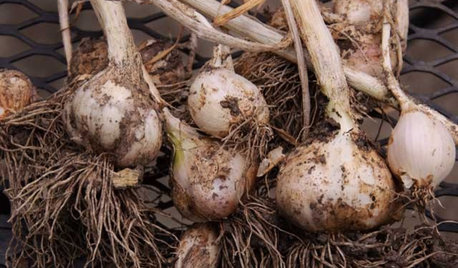
My garlic plants are disappearing, literally. Nothing left but a hole in the ground. They are being pulled out from underneath as I found one that was just started, pulled down about 4 inches but not totally removed. Any ideas about what is doing it and how to control the problem. Voles? Mice traps?

Comments (18)

  • 11 years ago

    Pocket Gophers

    Traps are probably the most affective and safest way of getting rid of them.

  • 11 years ago

    happening to me too. been setting traps for days and havent got one yet. Next is the shotgun, LOL

  • 11 years ago

    Thanks, guys, I think. Traps are going to be tricky in the garden bed. I may do more damage than the gophers! Wonder what would happen if I pulled the rest of the garlic a month early? At least I know what is going on now.


  • 11 years ago

    Gopher trapping isn't easy. Attention to scent control on the traps and surrounding area are crucial.

    My success using box type traps versus wire traps is about 10 to 1 in favor of the box type. If they don't come with it, I drill a 1/4-3/8" hole in the end to allow a little light for them to see. This seems to encourage them to come and try to block the light from coming in their run.

    I typically use a probe to follow the run to a suitable area. Normally that will be outside the garden area or at least an unplanted area. Once you have a hole dug, you can either set a trap on each side or leave it open and see which side they bury.

    Keep in mind, the runs they use to pull plants down are generally new or seldom used runs and your trapping efforts won't be as affective as the main or high usage runs.

    Here is another option, I have seriously thought about buying or building!

    http://www.rodenator.com

  • 11 years ago

    It could be gophers, voles or mice....or all three. I think traps (or a hungry cat who is a good mouser) are the best option, but they don't always work. Some rodents outwit traps.

    If you harvest early, there could be several repercussions, and the ones you see might even vary from one type of garlic to another. Early harvesting tends to give you smaller bulbs, with fewer layers of wrappers protecting the cloves. Because they are immature, the bulbs are more likely to cure poorly and to rot. You could work around that by chopping the immature garlic and either freezing it in small amounts suitable for cooking, or by dehydrating it throughly and using it in cooking. Have you dug into the ground a little bit to see how the bulbs are shaping up? I believe that in order for the garlic to properly bulb up, you have to have the right daylength (around 13 hours), soil temperature'air temperature and proper cold vernalization as required by the garlic you're growing, which is why we do better from fall plantings. I doubt the air temperature has reached the right range yet, but soil temperature may have and I think we probably were cold enough over the course of the winter to meet the vernalization requirement. Daylength now is long enough, though. If you harvest before the air temperature has reached the right range, your bulbs may be small or not yet formed into cloves. However, if it seems you're more likely to lose the garlic to rodents, it seems that harvesting it early and processing it in a way to preserve it for as long as possible might be your best option.

    If you harvest while the garlic is very wet, especially when it also is immature, it may rot, so if you could wait for next week's run of sunny/rain-free days to arrive and harvest after it dries out a bit, that might help it store a bit longer.

  • 11 years ago

    ok so What benefit short of soil aeration do gophers serve? I give moles a small pass if they are eating grubs but thats it.

  • 11 years ago

    Zero, as far as I'm concerned!

    The way the ground smells when I dig into it, I can only hope it's coming from dozens of them drowning.

  • 11 years ago

    Well, they not only aerate the soil, but also mix together different layers of soil---sort of like a natural rototiller. I'm not sure that's a reason to let them stay around though. Oh, and like every other animal that eats, they excrete manure, so I guess you could consider the gopher manure to be useful by improving the soil as it decomposes. And, let us not forget the role they play in the food web either----they can/may be eaten by coyotes, foxes, bobcats, skunks, and some predatory fowl like owls and probably hawks. Are any of those reasons to put up with them? Hmmm. Maybe for a non-gardener, I cannot imagine why a gardener would let them stick around though. They not only still your crops, but also can damage and girdle fruit trees.

    Our ground has that sinky, soured soil smell of ground that has been far too wet for far too long too. If that is the smell of dead rodents, it doesn't stink quite so much now as I thought it did.

    We are developing epic sinkholes all along the front garden's western and northern fences, where the forest meets the garden. So far the sinkholes all are outside the fence, and none of them are directly under it as far as I can tell. Apparently all the vole tunnels are collapsing. I'm not sure what the ultimate solution will be there, but we'll have to do something. I just hope that lots of voles died when heavy rainfall and wet soil collapsed their tunnels. I haven't seen a vole in days and days, and that's a good thing.

  • 11 years ago

    update to my gopher problem. yesterday the little jerk(s) got a Roma tomato. It had 3 nice fruit on it already. I placed a trap in the run by the tomato and last night around 10 I checked it and to my surprise I actually caught one. Didnt hurt my feelings one bit to kill it.

    so the score is gopher 6 plants, Mike 1 gopher


    This brings a question. At what point will i be wasting my time re planting tomatoes now that we are starting to get into summer. I picked up a couple more today but if they get another one I may not. I have also been making cages to go around the roots of the new ones to hopefully keep them safe.

  • 11 years ago

    I am already planning what tomato seeds I will start in June for planting in July. I expect to replace any poor performers with new plants and hpe for tomatoes when it cools in Sept. I am trying to save seeds from several varieties for seed swaps, so some of them only have to produce seeds. Another possibility would be to start cloning yor plants now so you have replacements if they go down the mole hole.


    What I have in my garlic is a rabbit. And it isn't looking as robust as it was. I pulled one today with a small scape, but the leaves were all brown and yellow. Not very big bulb, but some of what I planted last year came from smaller bulbs, so could be I'm just growing a runt.

  • 11 years ago

    Good point, Amy. Capture a clone and hope for a decent fall harvest? a clone now, would still be subject to the dreaded heat and bugs and stress unless one could protect it gently and transplant later? Just thinking out loud cuz starting clones sounds like a great idea, even for me.


  • 11 years ago

    Good idea. I have never taken cuttings from tomatoes. Is that fairly easy?

  • 11 years ago

    Very easy. I'm not going to offer up how because I'm an immature gardener for tomatoes, but those little nodes at the base of the stem? Those are wannabe roots. The vining plant is designed to capture new root systems as its vines sprawl along a soft ground, not unlike some pumpkin vines.


  • 11 years ago

    I have a Cherokee Purple in a solo cup with roots on the stem (yeah, those plants have been in cups too long.) I have never tried to root tomato cuttings, but if you have a vatiety you can't replace easily it couldn't hurt to try. I have Cherokee Purole, Prudens Purple, Opalka and Rutgers plants that are extras Mike, if you need them.

  • 11 years ago

    I read your title and then the thread. My garlic that was drying actually got stolen by gardeners. Previous home had a HOA who hired workers to trim things. I always hung my garlic on a bougainvillaea vine to dry, but they'd come along, prune it and take my garlic!

    We've since moved to a hillside covered with gophers, so now we have a different brand of thief! We poison ours. Not sure if it works, but too lazy to trap.


  • 11 years ago

    Thanks for the offer Amy. I have what i need for now. I need to prune some suckers and I found a few tricks on the web on cuttings.

    Mike

  • 11 years ago

    Mike, That's a hard question to answer because none of us knows what the weather will do. My best guess it will stay hot and dry but that maybe we'll get occasional rainfall.

    Once daytime highs are exceeding about 92-95 and daytime lows are hitting the 70s, tomato blossoms often drop without setting fruit. My temperatures down here are already hitting the 90s but our nights are still only in the upper 60s, so I might get new fruit set for a few more days yet. If your weather is a little cooler than mine, you might get fruit set for another couple of weeks. However, that doesn't mean the plants you just put in the ground will not be productive. Whenever a little cool spell comes through, the temperatures can drop back down into the right range for fruit set.

    If I was planting tomato plants now, I'd be planting cherry types or paste types because the temperatures that cause blossom drop don't affect them as much as they affect tomato varieties that produce large fruit. Of, I'd be planting some of the tomato varieties known to set well in heat because often they set fruit at higher temps than most tomato varieties do. If the weather stays relatively nice and your plants that you have just planted late make it through the summer in good condition, they'll set plenty of fruit in the fall.

    To start a tomato cutting, cut off a sucker and stick it in a container (I use Solo cups) of soil in the shade and water it. Keep the soil-less mix moist. In a few days new roots will form. Then you can gradually expose it to more sunlight to harden it off once it has roots, and you can put it in the ground whenever you want. Some people just stick the cutting in the ground, but in our hot climate, that can be kinda risky. Or, you can root it in water and then move the rooted cutting to soil. That works almost as well, but it is a little harder on the roots. Roots that develop in water have to then adjust to growing in soil, so to me, it seems easier to root the cuttings in soil in the first place. Some people make rooting tomato cuttings a lot harder than it has to be---they don't need rooting hormone powders, they don't need a propagation chamber, they don't need to be enclosed in a plastic bag (they'd roast!) and they don't need continual misting. Just keep the soil-less growing medium moist, not sopping wet.

    I generally don't root cuttings of spring plants for fall because I want to use fall as an opportunity to grow a whole different group of varieties, but I can use cuttings in a pinch if I'm too busy with canning in June to root cuttings to stick into the ground at the end of June or early in July.

    I'm going to link one of my favorite old threads on rooting cuttings because there's a reply in there from GoneFishin' that includes photos. As it happens, he lived and gardened in the eastern part of the DFW metro area, so he was starting cuttings in the same kind of weather we have here, and his photos always told his story so well. Bill P., who posted as GoneFishin' passed away several years ago, but I keep him alive here by mentioning him occasionally and by sometimes posting an old thread he was a part of. I learned a great deal from him over the years, and he got me started on ordering onions from Dixondale, and I've done my best to get all of you on the Dixondale bandwagon as well. : )

    Suzi, That is just terrible. It has become apparent over the years that there are some people who will steal anything. I think the gophers might be a worse problem than human thieves, but, as you pointed out, at least you can poison the gophers.

    Amy, The garlic thing is probably all the excess moisture. It could have kept them waterlogged long enough that they didn't grow much in May.

    Dawn

    Previous Thread: The Best Way To Root Cuttings