Software
Houzz Logo Print
ewn4

Sustainable growing medium

11 years ago

Hello All. I recently re-potted my first orchid in a commercially-bought bark mixture, but the materials did get me thinking... In general I've been trying to increase my level of environmental sustainability in pretty much every arena.

After lots of research into growing media, including water culture, semi-hydro, coconut-based varieties, etc...I'm left with one burning question. Why can't I just grow my phal using whatever shedding bark I find in my local park mixed with some stones from the yard, some larger sticks or pieces of mulch, and a couple leaves? Let's assume it's all sterilized.

Why the mix? I've spent hours trying to find someone who has done this, but the internet is full of those who seek the perfect highly-specialized media, not the most sustainable. So, can what I propose be done?

Comments (9)

  • 11 years ago

    Thanks for your comment. I was thinking quite literally one or two leaves, mixed with wood and bark, but mostly rock/stones, and changing the mix enough to account for breakdown into soil. The leaves would act like a very small amount of moss essentially, to retain moisture.

    I've done quite a lot of research and am not a newbie grower of plants overall. The problem is, most of what's available research-wise is industry driven, or at least, representative of a culture of growers that rely on mass-produced products and corresponding literature. I guess my question, more specifically, is the following: can't I just make a mix on my own out of locally sourced materials from my yard and immediately surrounding areas? And has anyone tried exactly that? With what results?

  • 11 years ago

    Though I absolutely agree with Jane, lets see if what you are suggesting might be possible.

    If I were "Going Native" I would first determine the best kind of pot to use for the phally.

    You would need a deep pot and one with lots of aeration if possible. So I would go with a net pot, such as the kind used in hydroponics gardening. But instead of using bark I would opt for pieces of hardwood branches cut to a minimum of 3 inches wide. To this I would add not any type of leaf but specifically pine needles. And if you have any green moss growing on your property then I would harvest the type that is common and forms large masses. Get just enough to cover the surface of the pot.

    Stir or shake together the pine needles and the cut up branch pieces. Position your phally in the net pot, pour in the needle-branch mix and then cover with the moss. Then proceed with the usual cultural practice of watering and feeding of the plant being placed in the ideal location where it will get the heat and light it needs plus maintaining a high humidity, around 70%.

    I actually think this method will work.

    ewn4 thanked theterrestrialman
  • 11 years ago

    Just curious, why pine needles?

    Thanks,


    Bob

  • 11 years ago

    .01 .01 Ok, here comes my two cents worth, for what its worth. I'm going to disagree with ewn4 a bit. Here's my take on the subject of orchid bark mixes.

    I believe the current heavy use of fir bark for orchid mixes is not so much "industry driven", as it is orchid plant driven. When I first began to grow orchids (more years ago than I want to relate at this point) I also wondered: why fir bark? The answer I always got was "It works best for the greatest number of orchid species". I, being much younger, and harder to convince of things at the time, kept asking people I met (who were either in the industry, or large scale growers at the time) "why not try something like pine bark? You have to understand I am from the central part of SC, and Long leaf and Loblolly pine feed what is probably the largest industry in the state. At the time I am speaking of, the pine bark was burned to produce steam to run a great number of the saw mills. Why not pine bark? Everyone I spoke to told me that it just does not work as well as fir bark. They did not know why, and no one was willing to spend millions of dollars to determine why it did not work, everyone who had tried it found that the orchids just did not like to grow in it. Some of these folks had tried boiling it, adding things to it, removing things from it, but the bottom line was the plants wouldn't grow well in it.

    As I got deeper into my study of orchid culture, I began to notice when the early botanists discovered a new orchid somewhere, they occasionally noted that it grew mainly, or exclusively on certain types of trees, or perhaps on rock outcroppings, or ........ They did not offer a "reason" why, they just noted the fact, occasionally.

    Somewhere in my early readings, I learned that there was one epiphytic orchid that was supposed to grow in SC. ("The most cold hearty epiphytic known".) That's about all I could find, but it did trigger my curiosity.

    I grew up in the swamps near the coast of the state, and loved to prowl around in the dark recesses of those places, so now I had a reason to begin to look up a bit more than usual. (Looking down in our swamps is a life preserving activity, since you are in reality treading in the territory of certain reptiles called Alligators, and Cottonmouths)

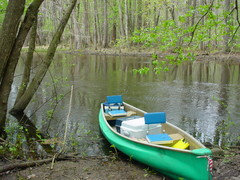
    One afternoon while fishing in one of these dark swamps with my new bride, I noticed a tiny plant growing on the bottom of the tree trunk we had the boat tied to. (The tree grew out almost horizontally over the water) It looked like a tiny little Cattleya orchid with one new growth about half mature. I could trace the tiny roots along the tree trunk for a foot or more on either side of the little plant. Could it be?

    We returned a few weeks later, and found this little fellow in bloom, and YES, it was certainly an orchid. The search began in earnest, and soon I found lots of this plant in full bloom.

    This is how you orchid hunt in SC.

    Let me cut to the chase.......In all my years of searching for this illusive little plant, I have never found it growing outside a fairly narrow band of habitat across the state, and have never found it growing naturally on any but three species of trees. To me this confirms the theory that orchids are often very selective about their natural hosts.

    Here's my theory about why orchids are so specific. Orchid seeds are for the most part microscopic in size, and have NO stored food supply, as do say,, beans or corn. The seeds are dispersed by the wind. and when they land and germinate, if they do not find moisture and food immediately, they perish. now, there are certain fungi that are found in nature that secrete substances that certain orchids can use as food. Different orchids use the secretions from different fungi, and once this symbiotic relationship is established, it continues for the life of the orchid. If the fungus fails in that location, the orchid usually fails.

    I do not have the resources necessary to discover what these specific mechanisms are, that are working in these instances, but I do believe that they are there, and perhaps Fir bark contains something, or does not contain something that allows these mechanisms to work.

    I do know that Fir bark has become nearly impossible to find in this area (when I left the business we had to purchase an entire 18 wheeler full in order to get any, and could only get a truck load once or twice a year), and now the company I worked for has changed to cedar chips as the primary ingredient in their primary mix. I have a small box of this material, but have not gotten the courage to use it yet.....I'm waiting until I absolutely have to....☺

    So, I say the orchids have told us over the years what they prefer to grow in, and we will continue to use this material as long as it is available, and then change to what ever the orchids decide is second best.

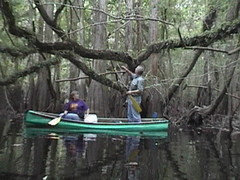
    This is where you orchid hunt in SC

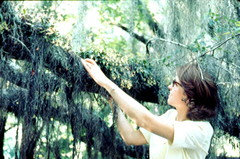
    And if you are really lucky, this is what you find when you orchid hunt in SC.

    That's my story, and I'm sticking by it.

    Bill


    ewn4 thanked Bill
  • 11 years ago

    Also why re-invent the wheel? Because humans have been growing orchids for many years a lot must have been learned. Starting over with a blind eye to past conclusions can slow your learning and improvements. One must be careful of the source of information and choices of culture. There certainly conflicts of interests out there. Just because it is sold at Home Depot does not make it added knowledge. But info from fellow growers and sources like the AOS gives us an opportunity to go beyond. But ignoring what has been learned is not healthy.


    And to complicate the matter I'm certain that there are multiple methods to success. Even with the same plant in the same climate. I know this to be true.


    Building on quality knowledge is the key to making things better. Ignoring knowledge will cause loss of time and advancements.

    ewn4 thanked shavedmonkey (Harvey in South Fl.)Z10b
  • 11 years ago

    I don't have any advice regarding sticks etc. But the various medium-growing experiment OrchidNick did might be of interest to you:

    http://forums.gardenweb.com/discussions/1551788/phaelanopsis-experiment?n=104

    http://forums.gardenweb.com/discussions/3042014/phaelanosis-experiment?n=7

    ewn4 thanked suzabanana (6b Boston/N. Shore)
  • 11 years ago

    Suza, you beat me to the punch! I was searching for Nicks posts regarding his experiment with various materials. That might be helpful to the OP.

    Experiment and see what happens. I've found people growing orchids in dirt and they were in full bloom. My neighbor has a large Oncidium-type orchid growing in a large pot of miracle grow potting mix in full Florida sun and that plant had about 15 spikes of flowers. I had chastised him over the past year about how he was killing his orchid until the sucker proved me wrong.

    I've seen stranger things over the years.

    Jane


    ewn4 thanked jane__ny
  • 11 years ago

    Thank you all for the helpful advice. I am a former South Floridian myself, and though I now enjoy the mild winters of New England, I am jealous of the southern growing potential. There just happened to be a phal for sale as I was walking out of the subway this evening, so I'll have another chance to repot. I'll use the bark mix until I run out, but terrestrial man, you have a fine idea. I have all the ingredients right outside, and the moss sounds like a super cool accent. Happy growing!

Sponsored
Bella Casa LLC
Average rating: 5 out of 5 stars17 Reviews
The Leading Interior Design Studio in Franklin County