Software
Houzz Logo Print
bloomcin

Cut to ground or dig out this old rhody

11 years ago
last modified: 11 years ago
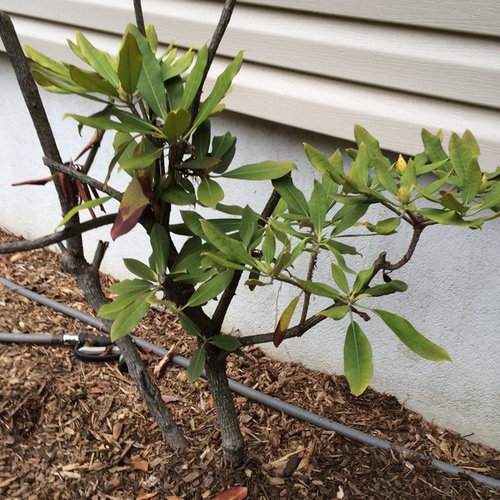
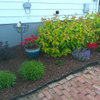
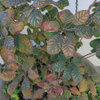
I have this rhododendron as you can see is not doing well at all. This is actually a quite old one planted by previous owner. It used to be about 5 feet tall and very very spindly. Now I want to remove it and plant something else. I really want to avoid digging it out. It won't be an easy job and the plant is way too close to foundation. If I just cut it to the ground, will the root attract termite and risk making damage to my house? I will plant something away from foundation so space is not an issue.

Please please tell me what you think. Thank you!

Comments (12)

  • 11 years ago

    Great. I will give it a try. Thank you gardengal48

  • 11 years ago

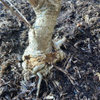
    Chronically stunted rhododendrons with gouty looking stems tend to have stem phytophthora infestations.


  • 11 years ago

    and it could be frying planted that close to the house [reflected heat and sun light] ... they are plants that like to be cool.. especially the root mass ... and rarely do well in full sun ... in many parts of the country ...

    as well as winter sun repeatedly thawing it all winter long ... against that siding ... only to refreeze at night ....

    not to mention.. if there is a basemnt.. the root mass might not be staying properly chilled all winter long... its very stressful on a plant.. for the top to be in dormancy ... and the roots not ...

    if you cant pull that up by hand .... i would be very surprised ...

    a replacement should be 2 to 3 feet from the house ... maybe 4 ... so as to leave at least two feet for you to maintain the house when needed ...

    foundation plants are planted to hide the foundation .. this one was planted on the foundation .. and it rarely works out well ... either the plant suffering ... or worse ... growing into the ten foot ball of hate its supposed to be.. and ruining your siding.. etc ....

    ken


  • 11 years ago
    Ken I agree with you. It is not a right spot for that plant and I plan to replace it with something else, away from the foundation. It's facing east (and slightly to the south)and got half day sun. What would you suggest to plant there? We have high deer pressure. I do have a forsythia ready to dig out and I think it will do well there. Zone 6 North Jersey. Thank you.
  • 11 years ago

    As I'm pretty sure the rhododendron has phythophthora you may not want to stick another shrub right in that same spot, at least not without doing something like replacing the soil.


  • 11 years ago
    last modified: 11 years ago

    My experience with growing well over 100 rhodie cultivars in an incredibly humid (though not particularly hot) east coast climate is ALL broad-leaved evergreens (and garden plants, generally) will eventually encounter one or more of the various cosmopolitan phytophthora species common to gardens in any settled parts of the western world. Whether or not they survive the encounter is the issue. This is why typical rhododendrons, even relatively fancy cultivars if you keep your eyes peeled for them, are ubiquitous in the suburbs of Philly, all the way up to Boston...but almost never seen in gardens much south of Richmond, VA. The root rot organisms are everywhere, they are just more virulent the further south you can go. Here they are able to eventually kill most yellows derived from R. wardii but not most other cultivars, assuming they are correctly planted. Proper care plays a role too, I hardly ever fertilize rhododendrons. I think rhodyman's advice is good - once every 5 years, very lightly.

    So a rhododendron here doesn't have or not have root rot. They all have it it's a matter of whether they are tolerating it and managing to outpace the infection. This variety or plant might not be worth saving but until it's completely dead, and it certainly doesn't look it, you could dig it up and replant it on a mound in a more ideal spot. (the heat possibly reflected from that wall could be a problem...though here along the upper Ches. Bay I know of a couple ironclads happily growing along the south wall of a house. Importantly: the soil is sloping away from these walls so they never get very wet feet.) I have saved far more sensitive cultivars, that looked much sicker, merely by replanting them much higher and giving a one-time treatment of Aliette. No, this always doesn't work. But they now appear to be flourishing and should be OK barring a summer like 2011, when almost 40 inches of rain fell in 40 days around the time of Hurricane Irene. The soil here drains just a bit better than the Virginia clay you'd get a mere 40 miles south along the I-95 corridor so that helps too. In New Jersey, such mucky red clay soils are incredibly rare so that is again in your favor.

  • 11 years ago

    The gouty looking stems are caused by stem rots.


  • 11 years ago

    Yes but if this plant were re-positioned in a better location, 5-15 years it could fully recover and the stems would outgrow the damage and look like any other rhododendron that had always been healthy. Believe me,this plant isn't a goner, but that doesn't mean it's worth saving either. For one thing it's probably just an ironclad and if it's growing so poorly in northern NJ, which should be prime ironclad growing territory, it must have been mishandled pretty badly at some point in the past. Planted too deeply and/or with circling roots, etc. etc. If you visited Rutgers and their poorly maintained plants you would think rhododendrons were not wise to plant in New Jersey, you'd have to visit Rarefind to see what 4 acres of them grown well can look like to make the correct assumption that they can be grown well there.

  • 11 years ago
    Thanks everybody. The plant is already gone. Another one is gonna be out tomorrow due to serious stem rot. Both plants had seen their better days ages ago. It's just easier for me to start fresh.
  • 11 years ago

    If you ever plant a rhodie (I know you didn't plant that one) review rarefind nursery's advice for correct planting procedure.


  • 11 years ago

    Sometimes just moving a rhododendron to a different location will solve the problem. That's what I would have done.
    Mike