Software
Houzz Logo Print
hummersteve

Tomato Curl knot problem!

11 years ago
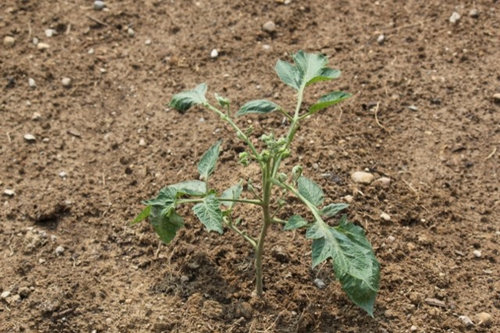
This year I turned over some new ground for a small garden mainly for tomatoes. I add a good bit of compost probably not enough. Anyway several of my toms developed this curly knot problem , What caused this and what can I do to better next time, can I do anything now for this.


Comments (7)

  • 11 years ago

    Did you mix in manure, composted or not? If so, consider herbicide carryover.
    Herbicide Carryover in Hay, Manure, Compost, and Grass Clippings

    http://smallfarms.oregonstate.edu/sfn/f09Herbicide

    Read the info at the above link, then do the suggested bio-assay.


  • 11 years ago

    I added several bags of black kow from home depot. Tilled it in good. In the planting holes I added , worm castings, bone meal, and gypsum, pulverized egg shells. and tomato tone.

    I first thought that the problem arrised from spraying some spectricide around the foundation of home , garden is in close relation to home. So then I replaced the damaged plants with new plants which looked the same so something in the soil seems to be causing this or possibly insects?


  • 11 years ago

    That sort of tightly curled damage is from herbicide, usually inadvertent drift. The herbicides which do that sort of damage are 2,4-D, dicamba, and several agricultural chemicals which may be in straw and/or manure.

    So, yes, likely something in the soil.
    Please do the suggested bio-assay with the Black Kow. If you don't have any left, plant the test seeds in the same area of the garden.

    If you get the same result, I'd contact the BK company. When you call them, it would be helpful if you still have the package and can determine the lot # or something similar.


  • 11 years ago

    If that be the case why does it only affect toms. I have peppers, broccoli onions, bush beans in same ground and are growing beatifully, unaffected as best I can tell.

    No I have no black kow left, but certainly wont be using anymore of it which I bought from home depot.


  • 11 years ago

    Since there is no more black kow left could I do a bioassay out of the same area where affect plants were. As I said before I had replaced the affected tomato plants with new plants and the same thing happened to them. I have some bean seed left so I could conceivably do the bioassay. I could take soil from the immediate area where the affected plants are.

    If it is herbicide in the bk how long would the effects remain in that soil area? I do still have an empty package of the black kow.


  • 11 years ago

    Jean is correct - this is usually caused by herbicide damage - either spray-based herbicides or soil-based herbicides.

    90+% of the time, these types of symptoms are directly caused by herbicide damage, not disease. CTV is much less common than herbicide damage, unless you're in a hot spot for the disease.

    I don't know where you live, but Curly Top Virus does seem to be a problem in some geographic areas, primarily the Southwest - Texas, Arizona, California, Mexico, some other parts of the Western US, and the like - tropical or subtropical warm climates where the beet leafhopper lives. The virus is transmitted via beet leafhoppers.

    The virus is uncommon in the East and North. Unless you purchased the plants and they were already infected, the chances of of it being Curly Top Virus (CTV) in the East and the North are small. The more likely explanation would be herbicide damage.

    Viruses are generally uncommon; herbicides are everywhere. We're playing the odds here. :-)

    Both CTV and herbicide damage should also affect other plants, so neither one would be limited to just tomatoes; it simply may show up earlier on tomatoes. Both CTV and herbicides will also affect peppers, beans, squash and many other plants, although probably later than tomatoes.

    Tomatoes are pretty sensitive and will show overt signs of disease or herbicide damage before other affected plants show the same problems.

    See link HERE for more info on curly top.

    I would do the bio-assay to rule out soil based herbicides. Then work from there. If it is a soil-based herbicide, it won't do any good to replace the plants and it may eventually affect other plants.

    The half-life of 2,4-D is 7-14 days in aerobic mineral soil (from what I could find using my google-fu). Much longer in anaerobic situations. That doesn't tell us much except that half will be gone in 7-14 days under ideal circumstances, then half of that remainder in another 7-14 days, and half of the remainder again in another 7-14 days.

    Dicamba has a half-life of 30 to 60 days in the soil. There are other possible herbicides that you would need to look up individually.

    I didn't look up any other soil based herbicides.

    I think you're pretty safe after 6 months, however. Not in time for this year's growing season.

    If you rule out soil based herbicides with the bio-assay, then it's not something you have to worry about. It would be either CTV or a spray herbicide problem (like Roundup or other herbicides that were sprayed and drifted to your garden).

    If it IS curly top virus, you'll need to destroy the plants. They will die anyway and, if they produce any fruit, the fruit won't taste good. Pull them up and bag them to minimize the spread of the disease. Realize that other plants could also have the disease and simply are not showing symptoms yet. Keep on eye on other fruit/vegetable plants too.

    If you have some sort of Cooperative Extension in the state where you live, give them a call. The services these extensions provide for gardeners and farmers tend to be good to excellent, and they will be familiar with local conditions and problems.

  • 11 years ago

    If I do indeed have herbicide contamination, what would cause it to show in only certain strains of tomato plants? The plants pictured were grown from some heirloom seeds given to me. All my other tomato plants (cherry, big boy, some that sprouted from seeds left in the ground from last years garden) look healthy. Also, if herbicide contamination is the culprit what are the health concerns. We have already harvested and eaten lots of squash and cucumbers.


Sponsored
Haus Studio
Average rating: 4.8 out of 5 stars28 Reviews
Franklin County's Preferred Custom Cabinetry & Design Studio
More Discussions