Software
Houzz Logo Print
elishah_flores

What's wrong with my phal keikis

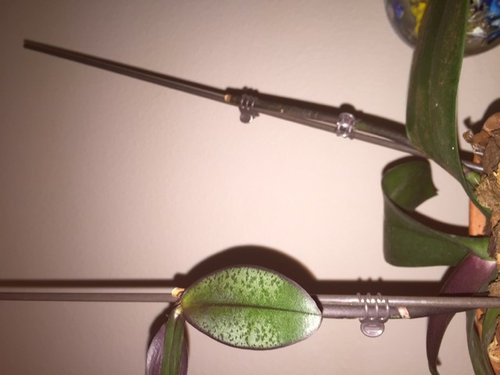
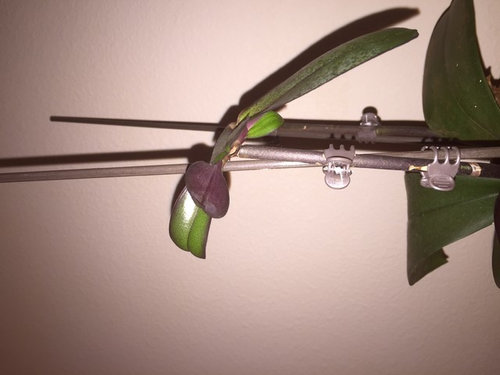
It's been about a year since I applied hormone paste to my phal. and the the leaves are growing quite nicely. But one of the larger leaves is turning a light grayish-green color with dark green spots. I need help trying to figuring out what is wrong.


Comments (9)

  • 11 years ago

    Agree with Arthur. Where do you live and how are you growing this plant?

    Jane


  • 11 years ago

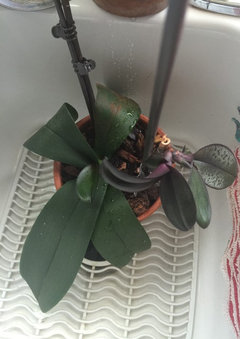
    I live in west Texas which is in zone 7. I'm growing the plant in a 4 in diameter pot with better gro specialty growing mix. On a stand by my bedroom window. It gets good indirect light for most of the day there and I try to water it about every week and a half

  • 11 years ago

    I'm curious.....Does the main plant not have mottled leaves? What do the flowers look like? There are a number of Phal. species that have mottled leaves, but I would expect the mother plant to exhibit this trait as well as any keikis it might produce. The dark purple under the leaves...I think I see this on both the plant and keiki...are also an indicator that you have a "short line" hybrid. ( a plant that is not but a couple of generations from species) Phal. species generally are pretty good at producing keikis without any help. I notice you put hormone paste - I presume on a node of the bloom spike - so that may be a reason your keiki is not producing roots. I've never seen one that did not have enough roots to pot up by the time they had two leaves. I've also seen Phal. schilleriana plants in full bloom with blooming keikis who themselves had blooming keikis. It was quite a sight.

    You probably don't have any clue as to the parentage or name of the plant you have, but be advised that many of the Phal. species have a tendency to rebloom on an old spike, so I would not cut any spikes on a species or a short line hybrid until it actually started to turn brown.

    Let us know what the blooms look like......I'm betting they are not as large, full, and round as most Phals. you see on the market. I would also bet on light pink for a color

    Bill .

  • 11 years ago

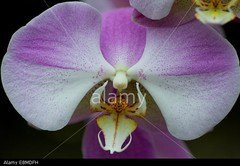
    I don't know what it's called but you right bill the flowers were some what decent and they were a light pink color with a lighter pink on the bottom half the picture here I'd not q picture I took but it's what they looked like and I did manage to find a picture from the 14 th of June at my grandmothers house where it was before the 14th of the mother and keikis ( there's a bit of cinnamon on the back leaf as I was cutting down one on the past flower spikes)


  • 11 years ago

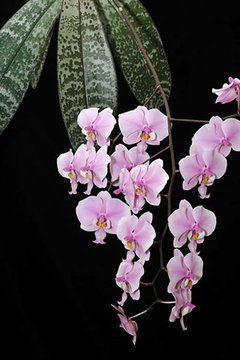
    here's a photo of Phal. schilleriana.....My guess would be that it is not very far back in the lineage of your plant at all....maybe two or three generations. Schilleriana is a prolific bloomer along with being an attractive pant, so get the plant back on its feet health wise and you can have a stunning show plant.

    Bill


  • 11 years ago

    So this keiki could look similar to Phal. schilleriana and the mother plant? But I thought keikis were exact clones of the mother plant

  • 11 years ago

    Keikis are exactly like the mother plant, unless in a very very rare incidence where it is a genetic throwback, and your use of hormone paste (could) have caused something like that to happen. Can you tell I'm not a big fan of hormones to force plants to do things? ☺ What I am saying is that it appears that your plant is a "short line" hybrid, with a significant amount of P. schilleriana in its genes, (some modern orchid (long line) hybrids can trace their ancestors back for many many [perhaps as many as 100] crosses in some cases)The fact that your mother plant apparently does not show the leaf mottling like the keiki is a bit puzzling to me, but your mother plant has apparently been under some stress for a while, and that may have caused the mottling to become less distinct. It may return with better culture. I hope this has helped and not confused.....

    Bill

  • 11 years ago

    I will chime in here about hormones. I use them a lot. The only time that my keikis have failed to grow roots very quickly has been when the mother plant isn't that happy to begin with. Yours looks okay so I'm not sure what the cause is. But if anything hormones tend to make a lot of roots rather than leaves, though it's usually a balance of the two.

Sponsored
Peabody Landscape Group
Average rating: 3.5 out of 5 stars8 Reviews
Columbus' Reliable Landscape Design & Contracting